Western Governesses Educate Putin's Alleged Children, Highlighting Foreign Language Investments
Putin's purported children receive Western language tutoring, reflecting significant private spending and meticulous educational oversight.
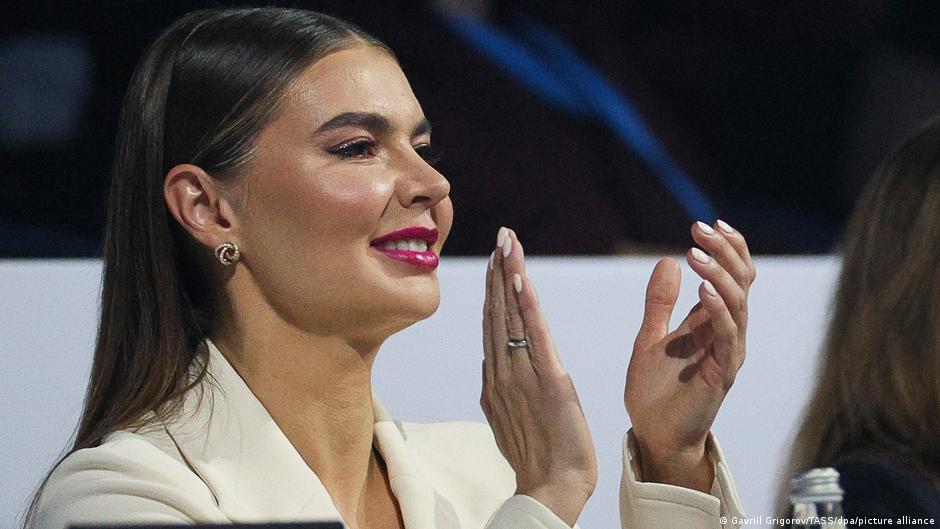
Alleged children of Russian President Vladimir Putin and Olympic champion Alina Kabaeva are receiving education in foreign languages from Western governesses, according to a recent investigation by the "Sistema" project. Over the period from 2017 to 2026, around 20 language instructors from countries including the United Kingdom, New Zealand, Germany, Austria, and Ireland have been involved in their education.
This substantial commitment to foreign-language skills is underscored by annual expenditures reaching into the hundreds of thousands of dollars. For instance, in January 2026 alone, salaries for three governesses reportedly amounted to no less than 3.5 million rubles (approximately $47,000).
Structured Employment and Educational Approach
Official documentation reveals that these educators were formally employed as "leading translators" at the Institute of Professional Retraining within the International Medical Center "Sogaz." This classification facilitated their access to visas and work permits in Russia under the category of "highly qualified specialists."
Employment and hiring of these foreign language instructors have been managed by Alina Kabaeva's cousins, Olesya Fedina and Ekaterina Golovacheva. The children are only referenced in documents as "wards," with no explicit mention of Putin or Kabaeva. Still, one document from 2019 includes the name Ivan Fedin — a name that differs from Fedina’s son’s name, further fueling speculation about the children's identities.
Previous journalistic investigations have suggested that Putin and Kabaeva's sons are named Ivan (born 2015) and Vladimir (born 2019), tying into these educational arrangements.
"By age four, Ivan should be fully immersed in a 'language bath' with English speech resembling that of a literate European," Olesya Fedina reportedly instructed language tutors in 2019.
Such directives reflect a rigorous educational strategy emphasizing linguistic proficiency in English and German, with governesses living alongside the children at the presidential residence in Valdai. This arrangement necessitated strict health monitoring and medical examinations for the educators. Additionally, they were explicitly prohibited from imposing religious, political, ideological views or discussing topics related to sexual education and LGBTQ+ issues.
Implications for Digital Economy and Fintech
While primarily a private and political matter, the financing and structuring of such high-level foreign education for Putin's family members carry broader implications for Russia's digital economy and fintech sectors. The substantial international payments for education services, channelled through specialized institutions, underscore the complexity and scale of cross-border financial transactions in Russia's elite circles.
Additionally, the reliance on foreign specialists with specialized visa statuses points to an intersection between international labor mobility and cybersecurity considerations, especially given the sensitivity around the children's identities and locations. The management of sensitive personal data and secure contractual arrangements is critical in this context.
This case exemplifies how private expenditures within influential Russian families intertwine with international financial flows, offering insights into how elite networks operate amid growing scrutiny, technological surveillance, and sanctions regimes.
Requests for comment sent to the instructors, Kabaeva’s representatives, and Kremlin spokesperson Dmitry Peskov went unanswered, highlighting the opaque nature of these arrangements despite investigative efforts.