Macron Urges EU Ban on Social Media for Children Under 15
The French president is seeking a bloc-wide law after France’s Constitutional Council blocked a national measure on free-expression grounds.
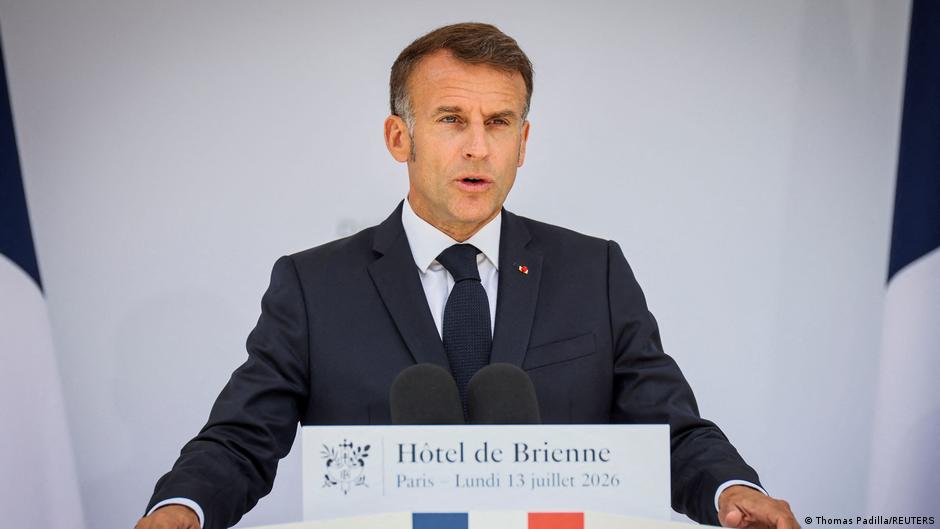
French President Emmanuel Macron has asked European Commission President Ursula von der Leyen to prepare a “European legislative act” that would ban children under 15 from using social media, according to AFP, which reviewed a letter dated August 29. The request, reported on Monday, September 7, marks a push to move a politically sensitive online-safety initiative from the French national level to the European Union’s regulatory agenda.
For Europe’s digital economy, the proposal would reach well beyond social media companies. A harmonized age-based restriction could reshape how platforms verify users, how digital identity systems are deployed, and how payments, crypto services, digital banks and cybersecurity vendors manage minors’ access to online products. While the source text focuses on social platforms, the enforcement mechanics of any EU-wide rule would likely sit inside a broader digital compliance environment already affecting technology firms and online service providers.
France’s Constitutional Council blocked the corresponding national law on August 14. The country’s highest constitutional review body said the provision violated freedom of expression. That decision dealt a setback to Macron, Reuters noted, and prompted the president to instruct Prime Minister Sébastien Lecornu to prepare a new, “legally impeccable” draft law.
Macron wrote that it is now “essential to go further and harmonize this provision through a new European text.”
Macron, who is due to leave office after elections in April 2027, has said he hopes to “find a way forward” in the coming months through a “revised legislative act” at the national level that would be “in line with EU law and the Constitution.” His letter to von der Leyen indicates that Paris is also seeking a wider European route, potentially reducing the legal and operational fragmentation that can arise when individual member states set different rules for online platforms.
Digital Compliance Moves to the Center
The proposed ban comes at a time when European regulators are increasingly tying consumer protection, platform accountability and digital identity into the same policy conversation. If a restriction on social media access for children under 15 were advanced at the EU level, companies could face new obligations to determine age without creating disproportionate privacy risks. That problem is especially relevant for fintech and digital banking, where identity checks, parental consent flows and fraud controls are already central to product design.
Age verification is not a narrow feature. It can require identity documents, biometric checks, device-level controls, telecom data, app-store validation, parental approvals or third-party verification services. Each approach carries trade-offs for privacy, cybersecurity and inclusion. Financial technology firms have experience with know-your-customer checks, anti-money-laundering controls and fraud prevention, but extending similar infrastructure into everyday social media access would raise questions about data minimization and whether private platforms should hold or process sensitive information about minors.
The measure could also influence digital wallet and payments ecosystems. Many social platforms increasingly blend entertainment, messaging, shopping, subscriptions, creator payments and advertising. A ban on under-15 access would affect not only user growth but also payment flows linked to in-app purchases, influencer commerce and platform-based marketplaces. It could place additional pressure on app stores, payment intermediaries and compliance vendors to distinguish between child and adult users in ways that remain consistent with European law.
For crypto and Web3 companies, the signal is also important. European policymakers have already shown a willingness to regulate digital services that combine financial incentives, online communities and consumer risk. A stronger age-gating regime for major social platforms could spill into debates over access to tokenized gaming, crypto promotion, decentralized social networks and online communities where financial products are marketed. The source article does not state that the French proposal targets crypto services, but the wider compliance logic could matter for firms operating at the edge of social media and finance.
Political Pressure on Platforms
The bill emerged after a December 2025 report by France’s health watchdog warned about the harmful effects on children of platforms such as TikTok, Instagram and Snapchat. The potential risks cited included lower self-esteem and possible increases in self-harm, suicide and drug use. According to the statistics cited in the source, every second teenager spends between two and five hours a day on a smartphone, and 58% use phones to access social networks.
The initiative gained momentum after Macron made the ban a key point of his domestic agenda in his final year in office. The Constitutional Council’s decision forced the French government to reconsider the legal structure of the measure, but it did not end the political campaign behind it. By asking von der Leyen to prepare a European act, Macron is effectively seeking a framework that could withstand national constitutional objections while aligning with EU law.
For listed technology companies and investors, the issue adds another layer of regulatory risk in Europe. Social platforms, ad-tech companies and app ecosystems have already adjusted to EU rules on data protection, digital services, competition and artificial intelligence. A child-access ban would affect engagement metrics, advertising inventory and product development for companies with large youth audiences. Cybersecurity and identity-verification providers, by contrast, could see demand for tools that help platforms comply with any future age-control obligations.
Australia offers one recent precedent. In December 2025, people under 16 were blocked from accessing most social networks there. Macron’s request suggests that France wants the EU to consider a similar direction, though the path to a bloc-wide law would require political agreement, legal drafting and scrutiny over fundamental rights.
The central tension is now clear: European governments are under pressure to protect children from online harms, while courts and regulators must preserve freedom of expression and privacy. For the digital economy, the outcome could define how far age verification, identity infrastructure and platform compliance expand across consumer technology in the years ahead.