AfD Victory in Saxony-Anhalt Raises Political Risk for Europe’s Digital Economy
Poland, France and Czech leaders reacted sharply after the far-right party’s projected win in a German state election.
Political shock waves from eastern Germany reached Warsaw, Prague and Paris after preliminary results showed the far-right Alternative for Germany, or AfD, winning the election to the state parliament in Saxony-Anhalt with 44 percent of the vote. The result, if confirmed, would mark a major regional breakthrough for a party whose rise is being watched closely across Europe not only for its migration and security implications, but also for its potential impact on the region’s investment climate, digital economy policy and cross-border business confidence.
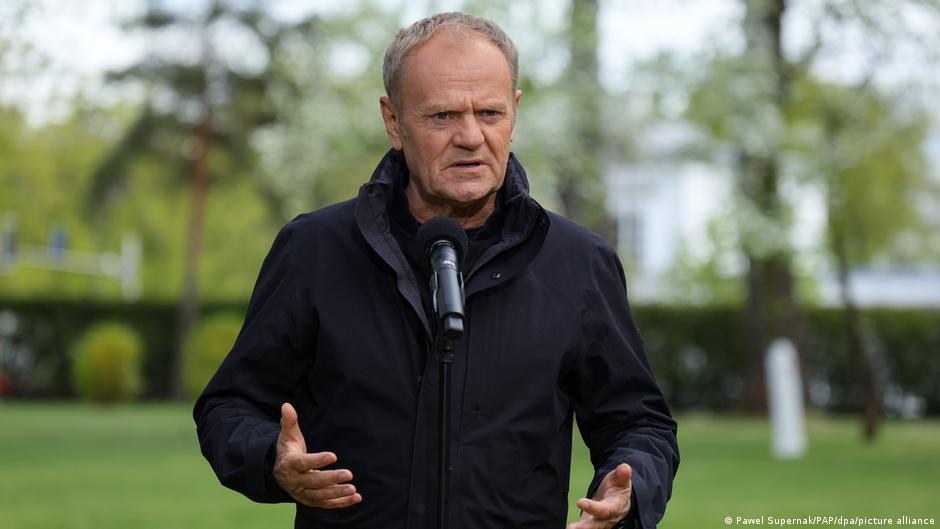
Polish Prime Minister Donald Tusk gave one of the sharpest reactions from a neighboring country. Writing on X on Sunday evening, September 6, he said he was stunned by the AfD’s success and warned against celebrating it in Poland. His comments underlined how political shifts inside Germany, the European Union’s largest economy, can quickly become a regional issue for governments that depend on German demand, supply chains, banking links and technology markets.
“In Poland, only idiots or traitors can rejoice at the triumph of the AfD party in Germany,” Tusk wrote on X.
Tusk added that such people had, in his view, “accumulated” in the Polish opposition parties Confederation and Law and Justice, known as PiS. The statement reflected deep concern in Warsaw about the normalization of far-right politics in Germany, a country central to Poland’s trade, industrial production and financial flows. For fintech firms, payment providers and digital banks operating across the EU, the broader issue is whether a more fragmented political landscape could complicate regulatory coordination in areas such as digital identity, anti-money-laundering controls, cybersecurity standards and consumer protection.
Regional Reactions Point to a Wider EU Fault Line
In the neighboring Czech Republic, Tomio Okamura, speaker of the lower house of parliament, welcomed the AfD’s performance on public broadcaster CT. Okamura, a politician of Japanese-Korean origin and founder of the Czech right-wing party Freedom and Direct Democracy, or SPD, said he hoped above all that the AfD would enter the new governing coalition in Saxony-Anhalt. His remarks placed the German state result within a wider Central European realignment, where right-populist parties have gained influence in national or regional politics.
The Czech Republic has been governed since the end of 2025 by a coalition consisting of billionaire Andrej Babis’s right-populist ANO party, Okamura’s SPD and the Motorists party. That context matters for businesses operating in the digital economy: technology companies, online platforms and payment firms often face regulatory environments shaped by national politics, even when core rules are set at EU level. Shifts in domestic coalitions can affect enforcement priorities, public procurement, data policy, and the tone of debate around foreign investors and cross-border platforms.
France also reacted with alarm. Benjamin Haddad, France’s minister for European affairs, wrote on X that the result represented a “difficult moment for Europe.” He said policymakers needed to listen to anger, anxieties and fears and respond to them, while stressing that nationalism and xenophobia would never be the solution. Haddad also called on Europeans not to forget their history, saying that this was the significance of the choices made by France and Germany.
For markets, such language points to the political sensitivity of the result. Germany is a core venue for European banking, payments infrastructure, cloud adoption, industrial software and technology investment. Even a state election can affect perceptions of stability when it signals broader electoral momentum. Investors in European tech stocks and financial services companies tend to price not only earnings and interest rates, but also the durability of the single market, regulatory predictability and the ability of EU institutions to keep policy aligned across member states.
Preliminary Results Show AfD Well Ahead
According to the preliminary results cited in the source report, the AfD was on course for a clear victory in Saxony-Anhalt with 44 percent of the vote. Ulrich Siegmund was the party’s candidate for state premier. The Christian Democratic Union, or CDU, the party of incumbent state premier Sven Schulze, was projected at 17.4 percent.
Other parties trailed well behind. The Left Party was projected at 8.6 percent, Alliance 90/The Greens at 8.9 percent, the Social Democratic Party of Germany at 9.2 percent and the Sahra Wagenknecht Alliance at 5.1 percent. The Free Democratic Party and other parties failed to clear the five percent threshold, according to the preliminary figures. Based on those results, the 83 seats in the Saxony-Anhalt state parliament could be distributed as follows: the AfD would receive 39 mandates, the CDU 15, the Left Party, Greens and Social Democrats eight each, and the Sahra Wagenknecht Alliance five.
The preliminary final results were expected during the night leading into September 7. Until confirmed, coalition arithmetic remains provisional. Still, the figures already point to a challenging governing equation. A strong AfD result can increase pressure on mainstream parties even if they try to exclude it from executive power. That pressure can spill into policy debates over public spending, energy costs, migration, policing and relations with Brussels, all of which can indirectly affect Germany’s digital investment environment.
For fintech and digital banking, the immediate impact is unlikely to be a single regulatory change in Saxony-Anhalt. The larger question is political direction. Europe’s payments sector is in the middle of long-running debates over instant payments, consumer data access, fraud prevention and resilience against cyberattacks. Crypto policy is also moving from rulemaking to supervision under EU frameworks. A more polarized German political map may make it harder for national and EU-level policymakers to present a unified response to digital finance risks, especially where issues such as financial crime, identity checks and cross-border enforcement intersect with domestic political narratives.
The reaction from Tusk, Haddad and Okamura shows that the Saxony-Anhalt election is being read beyond Germany’s borders. For European technology companies and investors, the result is a reminder that political risk is no longer confined to national capitals or general elections. Regional votes can influence the mood around integration, regulation and capital allocation. In a digital economy built on cross-border scale, that mood can matter.