Putin Backs Using Medically Unfit Volunteers for Rear Drone Defense
The proposal adds a new manpower signal for investors tracking Russia’s war economy, regional budgets, cyber risk and defense technology demand.
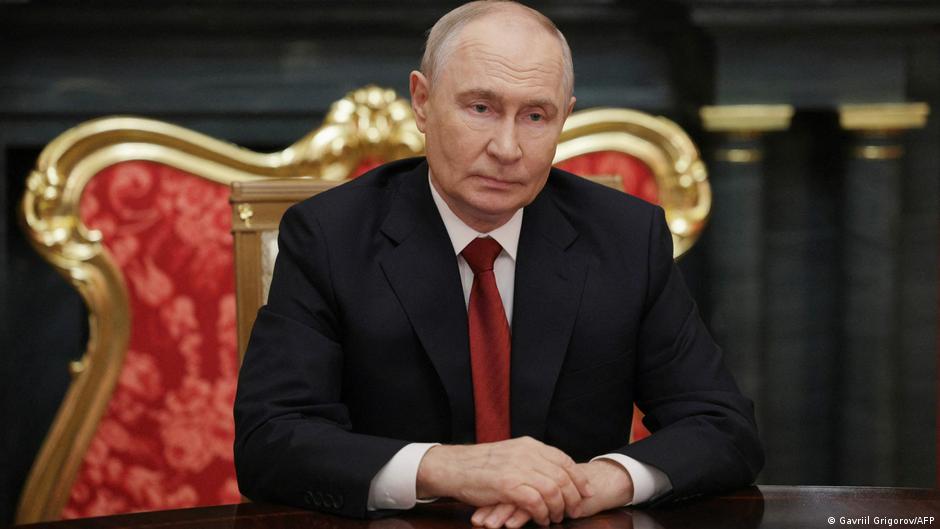
Russian President Vladimir Putin has supported a proposal to allow volunteers formally classified as completely unfit for military service to take part in tasks connected to the war against Ukraine, including the protection of rear-area facilities from drones. The idea was put forward by pro-Kremlin military correspondent Yevgeny Poddubny and was reported on Saturday, September 5, by The Moscow Times and Echo.
The initiative focuses on Russian citizens with health category “D,” a classification that means “absolutely unfit for military service.” Under the proposal, such people could be involved in regional units assigned to repel Ukrainian drone attacks away from the front line. For businesses and investors watching Russia’s digital economy, the significance lies less in the legal mechanics of military classification than in what the move signals: continuing pressure on manpower, infrastructure security and the widening domestic footprint of the war.
Russia’s rear-area drone defense has become a factor for sectors far beyond conventional defense. Energy sites, logistics hubs, industrial facilities, payment infrastructure and telecom networks can all become part of the broader security environment when authorities prioritize protection from unmanned aerial systems. Any expansion of personnel available for those tasks may affect regional spending, procurement of surveillance systems, cybersecurity tools and dual-use technologies.
A Manpower Proposal With Economic Implications
Poddubny made the proposal during a meeting of the leadership of the United Russia party. According to media reports cited in the Russian-language source, he said the request came from fighters who had received category “D” as a result of combat wounds. He argued that such people were still capable of performing tasks, for example in regional units, to counter Ukrainian drone attacks away from the “front edge.” Putin supported the proposal at the same meeting.
People with category “D” are currently removed from military registration, and under existing Russian law they cannot sign a contract with the Defense Ministry.
The current rules make the proposal notable. Category “D” is assigned in cases of serious chronic illness and severe medical conditions, including active tuberculosis, HIV infection, cancer, schizophrenia, loss of limbs, blindness or deafness. Citizens in this category are removed from the military register, and their personal files are sent to the archive. Existing Russian law does not allow them to sign a contract with the Defense Ministry.
If Moscow moves to create a legal route around that restriction, it would point to another adaptation in the state’s effort to sustain the war while avoiding the political costs of overt mass mobilization. For the financial sector, this matters because personnel policy, regional security duties and war-related procurement increasingly shape Russia’s fiscal priorities, labor allocation and technology demand.
Digital Infrastructure Becomes Part of the Rear Area
The fintech angle is indirect but important. Drone attacks and the state response to them create operational questions for digital banking, payments and crypto-adjacent activity. Banks, payment processors and data centers depend on stable power, connectivity and physical infrastructure. Regional drone-defense units may be deployed around the same industrial and energy systems that support digital services.
Cybersecurity is also part of the equation. Modern drone defense is not only a matter of guards and observation posts. It typically intersects with sensors, communications links, electronic warfare, monitoring software and command systems. As the Russian state looks for additional personnel to protect rear facilities, demand may increase for domestic technology providers involved in surveillance, secure communications, anti-drone systems and industrial cybersecurity.
That has potential consequences for tech stocks and privately held vendors exposed to defense procurement. Companies supplying communications equipment, monitoring platforms, cybersecurity products or components that can be used in counter-drone systems may face stronger state demand. At the same time, sanctions, supply-chain constraints and the risk of being classified as supporting military activity remain material concerns for counterparties and investors outside Russia.
Digital banking and payments firms operating in Russia also face a more complex risk map. If rear-area facilities become more heavily militarized or protected by ad hoc regional units, compliance, insurance and operational resilience planning may become more difficult. A drone incident affecting power or telecoms can disrupt payment acceptance, ATM networks, bank branches and online services. Even if financial companies are not direct targets, they remain dependent on the same infrastructure that wartime authorities are trying to protect.
Mobilization Denials and Recruitment Pressure
The proposal comes as Putin continues to publicly dismiss speculation about a new wave of mobilization. At the plenary session of the Eastern Economic Forum in Vladivostok on September 3, he again commented on rumors of renewed mobilization in Russia. He said there was “no such scenario that would require mobilization” and called the rumors an “information attack” by the enemy ahead of State Duma elections, aimed at influencing the result.
That was his second statement on the issue. The day before, after the Shanghai Cooperation Organization summit in Bishkek, Putin described such concerns with a crude phrase equivalent to calling them nonsense.
At the same time, the 2022 decree on partial mobilization has not formally been canceled and remains in force. Russians have reported summonses, military training and intensified recruitment for the war against Ukraine. Pro-war Z channels reported in July that forced conscription to the front could affect 1.2 million Russians and could be accompanied by informal arrangements with neighboring countries, under which men of draft age would be unable to leave for adjacent states.
Those claims have not translated into an announced new mobilization wave, but they form part of the backdrop for investors assessing Russia’s labor market and consumer economy. Any tightening of exit options for working-age men would have implications for employment, remittances, household spending and the supply of technology workers. Russia’s financial and digital sectors have already had to adjust to wartime migration, sanctions and state pressure.
In August, according to the Institute for the Study of War, total Russian troop losses exceeded 40,000 for the second consecutive month. The Financial Times, citing sources, reported that the Kremlin and Russia’s Defense Ministry had instructed Russian regions to ensure the recruitment of 409,000 contract soldiers by the end of 2026 for participation in the war. To meet that target, the authorities are increasing pressure on local officials.
For FinPulse readers, the central point is that the proposal to use medically unfit volunteers is another indicator of how the war is reshaping Russia’s institutional and economic landscape. It links military manpower policy with regional administration, infrastructure protection and technology procurement. Payments, crypto activity, digital banking and tech equities are not isolated from that environment; they operate inside it.