Latvia Says Leipzig Sabotage Suspect Lived in Russia as Probe Broadens
The cross-border investigation into the Leipzig airport incident is drawing attention to aviation security, sanctions enforcement and wider risks for Europe’s digital economy.
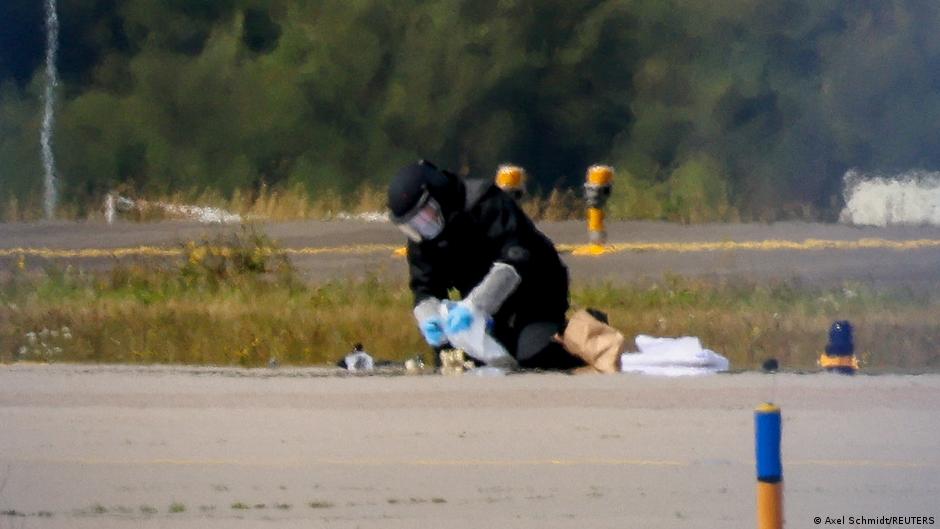
Latvia said a Latvian citizen suspected of involvement in the sabotage case at Leipzig airport had been living permanently in Russia in recent years, as Riga continues to cooperate with German investigators examining the attempted attack.
The statement, carried on Thursday, September 3, by Latvian news agency Leta and attributed to Latvia’s State Security Service, adds a new cross-border element to a case that has already prompted political and security repercussions across Europe. Latvian authorities provided little further detail on the suspect, a Russian-born holder of a Latvian passport, beyond saying he had not been living in Latvia in recent years.
Latvia’s security service confirmed to the agency that it is working with German investigators and providing the necessary support. It declined to comment further, citing the ongoing investigation. Germany’s Federal Prosecutor’s Office has not yet issued official public comment on the case.
German investigators had previously identified two suspects in the attempted sabotage case. According to reports cited from
Die Süddeutsche Zeitung, NDR and WDR, those suspected of involvement in the attempted attack on a Ukrainian transport aircraft include a Russian-born man with Latvian citizenship and a Belarusian national with Russian citizenship.
The second suspect reportedly entered the Schengen area using an Italian tourist visa. That document was issued in late April by Italy’s diplomatic mission in Minsk. After the details became public, Rome said it would review the circumstances under which the visa had been granted.
For financial and digital-economy audiences, the case is significant not because it directly concerns banking or payments infrastructure, but because it highlights the growing overlap between physical disruption, sanctions enforcement and the systems that support cross-border trade. Cargo aviation sits at the center of supply chains used by exporters, logistics groups, insurers, payment providers and trade-finance institutions. A security incident involving a major freight hub can therefore reverberate beyond transport, affecting how companies assess operational risk, counterparties and compliance exposure.
Security fallout reaches beyond the airport perimeter
The alleged attempted sabotage against a Ukrainian Antonov An-124 cargo plane took place on August 4, according to investigators. At least three drones were involved, the investigation found. One drone equipped with explosives was discovered near several Ukrainian cargo aircraft. A second drone is believed to have struck a DHL cargo aircraft just minutes after the first device was found. A third drone was discovered 10 days later, on August 14, in a field west of the airport. Near it, investigators found around 50 grams of a substance initially assessed as hexogen.
The episode has sharpened attention on the vulnerability of transport and logistics nodes that underpin European commerce. While the immediate target was aircraft on the ground, the broader concern for the digital economy is the fragility of the infrastructure that enables goods movement, settlement flows and confidence in cross-border operations. Incidents of this kind can force logistics operators, insurers and banks to revisit risk assumptions around corridors linked to sanctions pressure or geopolitical confrontation.
Italian Foreign Minister Antonio Tajani, quoted by Euractiv, said an investigation would be carried out and argued that the episode confirmed attempts by certain countries to act against the European Union by using individuals without criminal records who do not arouse suspicion.
“The investigation will be conducted. However, all this confirms that there are attempts by a number of countries to take action against the EU, including by involving people who have no criminal record and do not raise suspicion,” Tajani said, according to Euractiv.
Berlin has placed responsibility for the incident on Russia. In response, the German government decided to close Russia’s consulate general in Bonn and terminate the agreement governing the operation of the Russian House in Berlin. Germany also said it would tighten controls on the entry of Russian citizens and strengthen measures against Russia’s “shadow fleet,” which Moscow uses to circumvent European Union sanctions imposed over Russia’s war against Ukraine.
That last point carries particular relevance for FinPulse readers. Measures targeting the shadow fleet intersect directly with maritime insurance, shipping finance, sanctions screening and the payment channels used in international trade. A tougher stance by Berlin may not be limited to diplomatic signaling; it may also translate into higher scrutiny across compliance systems used by banks, fintechs and corporate treasuries handling cross-border transactions connected to freight, shipping and high-risk jurisdictions.
The Leipzig case also reinforces a theme already familiar to cybersecurity and digital-risk teams: attacks on commerce do not have to be purely digital to disrupt digitally managed business networks. Aviation operations, cargo bookings, customs processing, trade documentation and treasury functions all depend on interconnected systems. A physical incident at an airport can cascade into delays, rerouting, insurance claims and intensified due diligence across multiple sectors, including digital banking and payments firms serving merchants and logistics clients.
Moscow has rejected the accusations over organizing the sabotage attempt in Leipzig. After Germany moved to close the Russian House in Berlin, Russian authorities said they would shut the branches of the Goethe-Institut operating in Russia, located in Moscow, St. Petersburg and Novosibirsk.
For now, many key details remain unresolved, including the full operational chain behind the drone incident and whether further arrests or sanctions-related actions will follow. But the investigation is already shaping into more than an isolated airport security case. It is becoming a test of how European states respond when alleged sabotage, cross-border mobility, sanctions evasion concerns and strategic trade infrastructure converge in a single incident.