Russia to Close Goethe-Institut Branches as Berlin Tightens Sanctions
Moscow says Germany’s move against the Russian House in Berlin will end the Goethe-Institut’s remaining cultural presence in Russia.
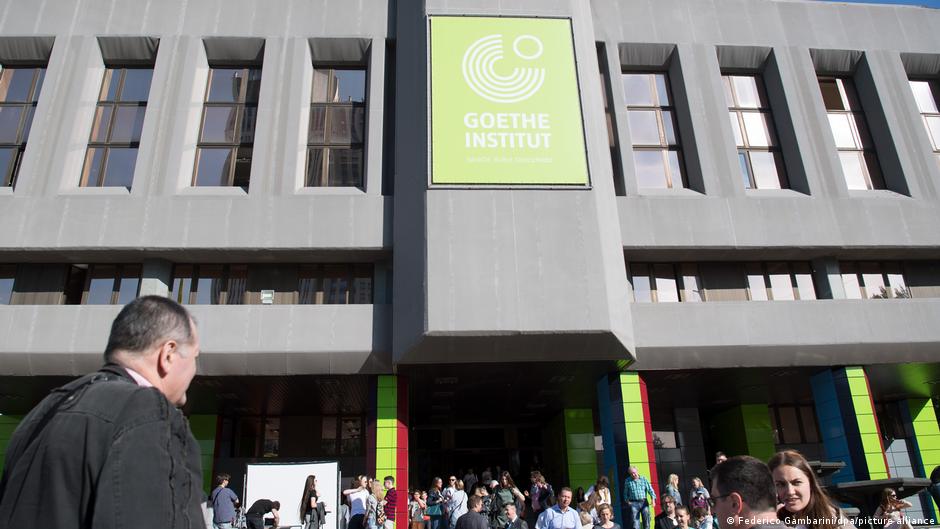
Russia will close the three German Goethe-Institut branches operating in the country, Foreign Minister Sergei Lavrov said on Thursday, after Berlin moved to terminate its agreement with Moscow over the Russian House in Berlin.
Lavrov announced the measure at the Eastern Economic Forum in Vladivostok on September 3, framing it as a direct response to the German authorities’ decision. The agreement in question also regulated the Goethe-Institut’s activity in Russia, turning a diplomatic dispute into a broader rollback of cross-border institutional ties.
For financial and technology markets, the latest step does not introduce a direct banking or payments restriction. But it adds to a pattern of tightening separation between Russia and Germany that investors, compliance teams, digital service providers and cybersecurity specialists are already tracking closely.
According to Lavrov, Germany’s action followed a decision by the German government to cancel the arrangement governing the Russian House in Berlin after an August drone incident at Leipzig airport. German officials said they had attributed responsibility to Moscow and responded by hardening sanctions policy.
“Of course, they will be closed, after our cultural center was thrown out from there. Otherwise we would not respect ourselves,” Lavrov said, referring to Goethe-Institut offices in Russia.
Lavrov said Germany had “consciously” taken a step that “unequivocally means the termination of their cultural presence in the Russian Federation,” which he said had remained in place despite what he called the “Ukrainian vicissitudes” in Russia’s relations with the West.
In his remarks, Lavrov said Germany had Goethe-Institut branches “in Moscow, in St. Petersburg, and in Yekaterinburg.” However, according to the institute’s own information cited in the source material, the third branch is not in Yekaterinburg but in Novosibirsk.
DW said it had asked the Goethe-Institut’s leadership for comment.
Sanctions Escalation Broadens Compliance Focus
The statement came a day after German authorities announced tougher measures against Russia, citing Moscow’s responsibility for the drone incident at Leipzig airport in August. German Interior Minister Alexander Dobrindt said the decision followed an examination of drone settings and certain components that had also been used in other hybrid incidents.
As part of the response, the German government ordered the closure by September 18 of Russia’s last remaining consulate general in the country, located in Bonn. German Foreign Minister Johann Wadephul also said Berlin would terminate the agreement covering the operation of the Russian House in Berlin. The same agreement governed the Goethe-Institut’s work in Russia.
Berlin will also tighten controls on the entry of Russian citizens into Germany and strengthen measures against Russia’s so-called shadow fleet, according to the source material.
That broader package matters more to the digital economy than the cultural dispute alone. Heightened border controls, additional sanctions enforcement and closer scrutiny of logistics and shipping networks typically expand the burden on financial institutions, payment intermediaries and compliance technology providers. Even when measures are not aimed directly at digital banking or fintech infrastructure, they can raise risk-screening costs and increase the need for sanctions monitoring across cross-border transactions.
For European financial firms, the latest announcements reinforce the importance of tracking hybrid security incidents not only as geopolitical events but also as market-relevant signals. Allegations tied to drones, transport infrastructure and covert logistics frequently trigger second-order responses: more due diligence, stricter customer checks, tighter onboarding standards and expanded surveillance of counterparties exposed to sanctioned networks.
Cybersecurity teams are also likely to read the Leipzig episode and the subsequent diplomatic fallout through an operational lens. German officials’ reference to technical settings and shared components used in other hybrid incidents suggests that authorities are treating physical and digital threat indicators as interconnected. That is a familiar pattern for banks, exchanges, payment companies and other technology-heavy firms, which increasingly assess sanctions risk, cyber risk and geopolitical exposure together rather than in isolation.
Listed technology and financial stocks with exposure to Eastern Europe may not be affected by the closure of cultural branches itself. But the direction of policy is significant. Every additional layer of sanctions enforcement or mobility restrictions can alter compliance budgets, vendor relationships and transaction-monitoring priorities. In that sense, Thursday’s announcement is another signal that Europe’s Russia risk perimeter continues to widen beyond trade and energy into diplomacy, logistics, border controls and institutional presence.
The immediate facts remain diplomatic. Russia says Germany’s move against the Russian House in Berlin has triggered a reciprocal shutdown of Goethe-Institut branches in Moscow, St. Petersburg and, according to institute data, Novosibirsk. Germany, for its part, has paired the termination of that agreement with a fresh sanctions escalation tied to the Leipzig drone incident, the closure of Russia’s last consulate general in Bonn by September 18, tighter entry controls for Russian citizens and stronger action against the shadow fleet.
For the fintech and digital economy sectors, the development is best understood as another compliance and risk-management marker in a steadily hardening operating environment between Russia and Europe.