ICAO Urges Stronger Civil Aviation Safeguards After Ukraine Warning
The UN aviation body called for faster threat-sharing and stronger risk controls as Kyiv warned that rising military activity has made Russian airspace unsafe.
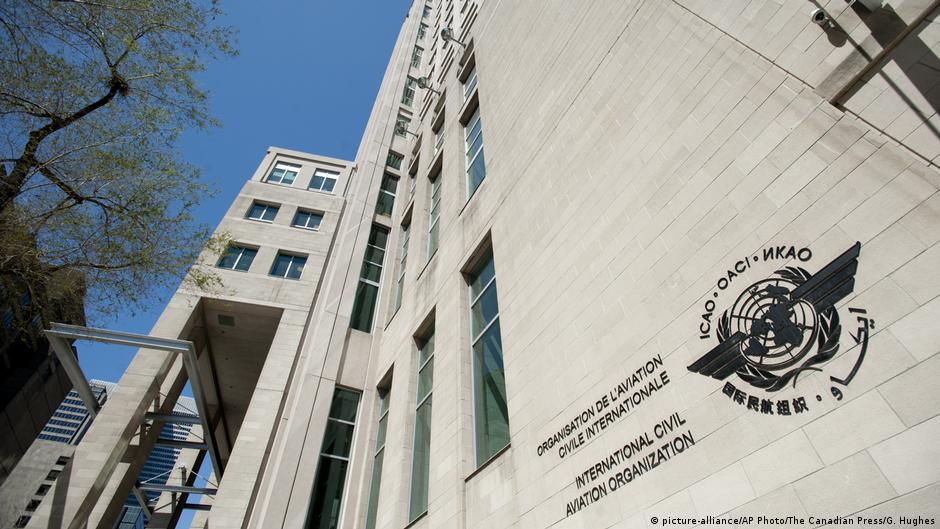
The International Civil Aviation Organization, the United Nations body that sets global standards for civil aviation, has called on governments to strengthen protections for civilian aircraft flying near conflict zones after Ukraine formally warned that Russian airspace has become unsafe because of intensified military activity.
The statement, published by ICAO on Wednesday, September 2, did not name Russia or Ukraine directly. But it urged all member states to take firmer responsibility for shielding civil aircraft from risks linked to conflict areas. ICAO has 193 member countries, covering nearly every state in the world, giving the appeal broad weight for airlines, airports, insurers and the wider transport economy.
For financial markets and the digital economy, the warning matters beyond aviation alone. Escalating risk in a major country’s airspace can feed into payment flows tied to travel, affect airline and airport technology providers, raise cybersecurity and communications concerns around navigation systems, and reshape the operating assumptions of digital platforms that support booking, settlement, routing and cross-border mobility.
ICAO said its appeal reflected a growing worldwide threat from the use of weapons against civilian aircraft, as well as an increased risk that such aircraft could be deliberately targeted or caught in crossfire. Among the technologies identified as dangerous were drones, long-range weapons systems, air defense systems and devices used to create radio-frequency interference for navigation systems.
“Member states must promptly exchange information on threats when specific activity creates risks for civil aircraft, strengthen risk-assessment and timely decision-making mechanisms, and improve coordination between military and civilian authorities to prevent the mistaken identification of civil aircraft as military targets,” the ICAO statement said.
That language has a direct operational and technological dimension. Faster threat-sharing depends on reliable communications networks, trusted data channels and coordinated decision systems between state agencies and commercial operators. In practice, that can increase attention on the resilience of aviation software, digital risk-monitoring tools and systems used for airspace notices, route planning and incident response.
Warning Raises Stakes for Transport and Risk Systems
Hours before ICAO published its statement, Ukrainian Foreign Minister Andrii Sybiha said Kyiv had officially notified the organization that Russia’s airspace is unsafe because of increased military activity. “We strongly urge everyone to avoid it,” he said.
According to Sybiha, Russia is “deliberately ignoring existing threats caused by its aggression against Ukraine,” which he said had already led to several incidents over recent years. Against what he described as a sharp escalation in Russian terror against Ukraine, Sybiha said Russian airspace was becoming increasingly unsafe. He said the Ukrainian notice to ICAO was intended to prevent unintended incidents.
The warning followed remarks on September 1 by Ukrainian President Volodymyr Zelenskyy, who said airspace over Russia would gradually be closed because of Ukrainian drones that Russian authorities “do not properly report.” Zelenskyy said that “the Russian sky is becoming completely unsafe.” He added that Ukraine did not want innocent people to die and was therefore warning partners.
Russian President Vladimir Putin rejected Zelenskyy’s comments, calling them “an application for state terrorism.” Speaking on the night of September 2 after the Shanghai Cooperation Organization summit in Bishkek, Putin said that if such tragedies were to occur, Russia would respond and that no one should doubt it.
Later on September 2, Russia’s Federal Air Transport Agency, Rosaviatsiya, said together with other authorities it was implementing additional measures for the safe use of Russian airspace and for increasing the protection of transport infrastructure on the ground. The agency said Russian air transport and its ground infrastructure continued to operate normally, receiving and dispatching flights, including those of foreign airlines.
For fintech, digital banking and market participants, such developments can ripple outward quickly. Aviation is tightly connected to card payments, travel wallets, remittance corridors, corporate treasury operations and fraud-monitoring systems that react to sudden route changes or disruptions. When airspace risk rises, travel platforms and payment processors can face a higher volume of cancellations, rebookings and dispute activity. That, in turn, may affect exposure management for banks and payment firms serving airlines, travel merchants and international passengers.
The reference to radio-frequency interference is also significant from a cyber and technology perspective. While ICAO’s statement focused on safety, interference with navigation systems highlights how physical conflict and electronic disruption are increasingly intertwined. For investors following cybersecurity, communications infrastructure and defense-adjacent technologies, the statement underscores how transport safety is becoming more dependent on digital resilience.
At the same time, the broader market significance may extend to listed technology suppliers involved in aviation software, monitoring systems, secure communications and infrastructure protection. Any tightening of international safety expectations can increase pressure for new spending on compliance, data exchange and operational risk tools, even if ICAO’s statement itself does not impose a direct sanction or binding market restriction.
ICAO’s intervention stops short of naming a specific state or ordering airspace closures. But the organization’s emphasis on rapid information-sharing, stronger risk assessment and closer coordination between civilian and military authorities suggests that the governance of airspace risk is moving higher on the global agenda. For an increasingly digital transport system, where aircraft safety, communications integrity and cross-border commerce are deeply connected, that message reaches far beyond the aviation sector itself.