White House Says U.S. Envoys Discussed Ukraine Peace Plans With Putin
The diplomatic push could influence markets watching sanctions, payments routes, cyber risk and regional exposure across the digital economy.
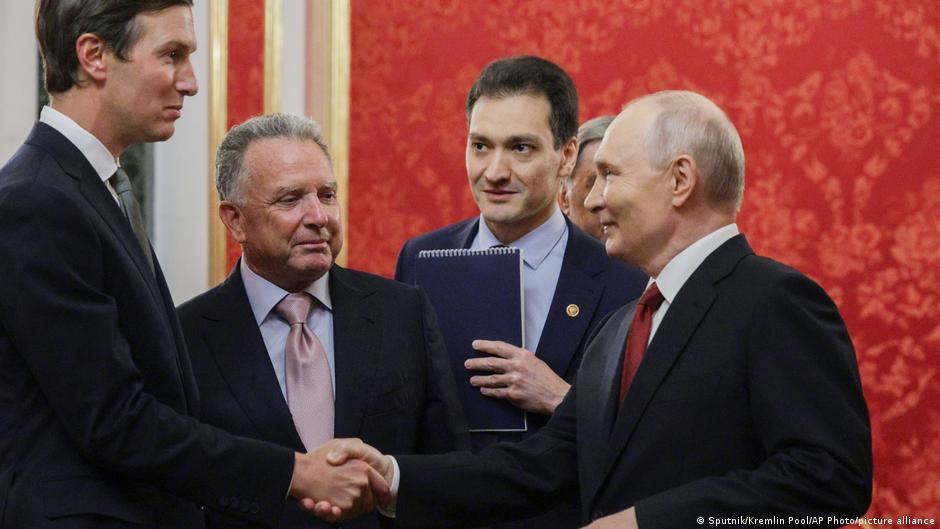
The White House said U.S. representatives discussed “specific plans” with Russian President Vladimir Putin for further steps aimed at ending the war in Ukraine, with those plans expected to be made public “in the coming weeks.” The discussions involved Steven Witkoff, the U.S. president’s special envoy, and Jared Kushner, Donald Trump’s son-in-law, during a visit to Moscow that was followed by preparations for talks in Kyiv with Ukrainian President Volodymyr Zelensky.
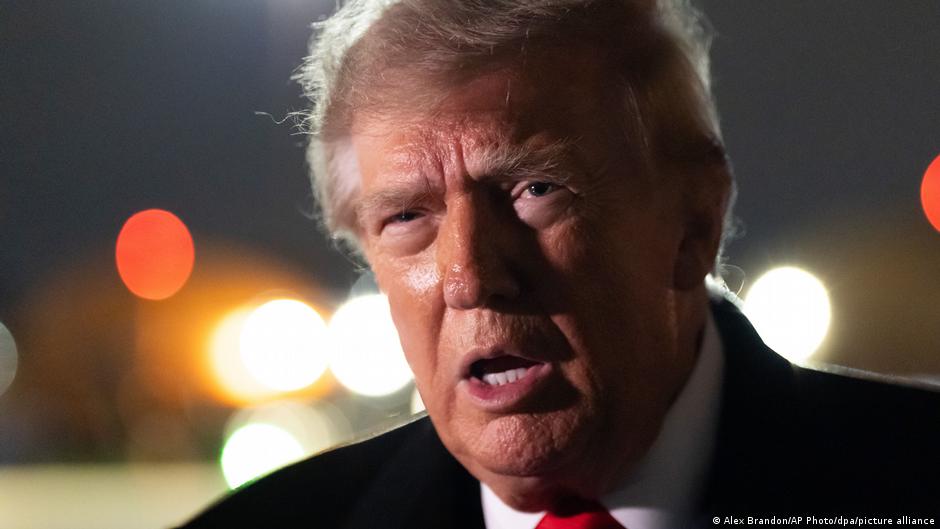
A White House representative told AFP overnight into Sunday, September 6, that Witkoff and Kushner had addressed concrete next steps in their conversation with Putin. The same representative said the U.S. envoys were looking forward to “equally productive meetings” in Ukraine. Trump also announced a new diplomatic initiative to end the war and said Witkoff and Kushner had brought with them a plan “to end the war,” according to AFP. He did not clarify whether the proposal envisaged the transfer of Ukrainian territory to Russia, saying only: “We have an idea for peace.”
For financial markets and the digital economy, any credible movement toward negotiations is likely to be assessed through the channels that have shaped risk since the full-scale war began: sanctions, payments restrictions, energy-linked inflation, defense and cybersecurity spending, and the valuation of technology stocks exposed to Europe. The source article did not report market moves or policy details, but the diplomatic sequence described by Washington, Moscow and Kyiv comes at a moment when fintech firms, digital banks and crypto platforms remain sensitive to compliance risk tied to Russia-related flows.
Payments and sanctions remain central to the economic reading
The war has had direct implications for cross-border payments, correspondent banking, card networks and anti-money-laundering controls. A peace process, if it develops into concrete policy, would be watched by banks, payment processors and compliance technology providers for any indication of changes to sanctions enforcement or financial restrictions. At this stage, however, the reported meetings produced no announced change in sanctions, banking access or payment rules.
After the Moscow visit, Kushner and Witkoff were set to travel to Kyiv for their first talks with Zelensky. According to Flightradar24 data cited in the source, a Boeing C-32A aircraft carrying the U.S. envoys landed at 01:30 local time at the airport in Rzeszow, Poland. Their Boeing departed Moscow’s Vnukovo airport and headed west while bypassing Belarus, then crossed the airspace of Latvia, Lithuania and Poland. From there, the envoys were expected to continue to the Ukrainian capital by train.
The route itself underscores the extent to which the war has reorganized regional connectivity. Airspace restrictions, security risks and sanctions have affected aviation, logistics and financial settlement infrastructure across Eastern Europe. For fintech and digital banking groups operating in the region, the conflict has also increased the importance of real-time fraud monitoring, identity verification and sanctions screening for clients, remittances and business transactions linked to affected jurisdictions.
“We have an idea for peace,” Trump said, according to AFP, while giving no details on whether the plan involved Ukrainian territory.
Moscow describes talks as frank and useful
Russian officials gave their own account of the Moscow meeting. Yuri Ushakov, an aide to the Russian president, told Russian journalists that Putin had held “extremely frank” talks and that the American delegation presented “several ideas” on how the war in Ukraine might be ended. Ushakov said the U.S. representatives had prepared carefully for the trip and had not only expressed interest in a rapid halt to the fighting but also presented possible paths toward a solution.
“In general, it can be said that the talks were timely and very useful for both sides,” Ushakov was quoted by Interfax as saying. He added that Putin had confirmed his readiness to continue joint work with the Americans in search of political and diplomatic solutions.
According to RBC, the Russian side also gave the Americans its assessment of the course of military operations in Ukraine, highlighting successes by the Russian army and expressing “confidence in achieving the stated goals.” The report said Trump’s special envoys promised to use that information during negotiations in Kyiv.
Those statements matter for investors because the durability of any diplomatic opening will depend not only on U.S. mediation but also on whether Moscow and Kyiv view the underlying security issues as negotiable. In financial terms, uncertainty around the war has continued to feed risk premiums in European assets, cybersecurity budgets, defense technology spending and energy-linked pricing. Technology companies with regional exposure, digital banks serving cross-border customers, and crypto businesses facing strict transaction monitoring all have a stake in whether talks lower or prolong geopolitical stress.
Kyiv prepares for U.S. talks
Zelensky held a phone call the previous day with the U.S. presidential envoys after they arrived in Russia. He also announced readiness to stop strikes on Moscow for the next three days. In a social media post, Zelensky said the plan for diplomatic measures in Kyiv involving the American team had been approved and that Ukraine was awaiting Steve Witkoff and Jared Kushner for a substantive conversation.
The Ukrainian president’s statement adds a time-bound element to the diplomatic calendar. The next stage will be the Kyiv meetings, where the U.S. envoys are expected to present or discuss the ideas raised in Moscow. No detailed terms have been published, and the White House has indicated that the plans should be disclosed in the coming weeks.
For the fintech sector, the practical questions remain unresolved. A path toward de-escalation could eventually alter the risk environment for cross-border payments, digital banking compliance, cyber insurance, crypto transaction surveillance and technology investment in Eastern Europe. But until any plan is published and accepted by the parties, companies are likely to continue operating under existing assumptions: elevated sanctions scrutiny, persistent cyber risk and cautious exposure to Russia- and Ukraine-linked financial flows.
The reported diplomacy therefore represents a potentially significant political development, but not yet a change in the operating environment for the digital economy. The immediate signal for markets is that Washington, Moscow and Kyiv are all describing further engagement, while the substance of the peace initiative remains undisclosed.