EU Scraps High-Level Defence Panel After German and Italian Objections
Kaja Kallas cancelled the launch of a planned defence expert group, delaying an initiative tied to Europe’s security and innovation agenda.
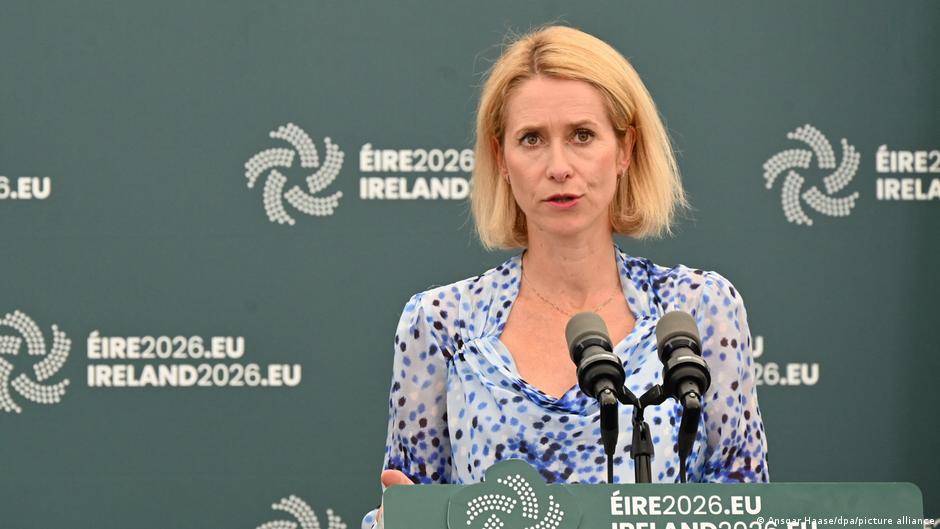
EU foreign policy chief Kaja Kallas cancelled at the last minute the planned presentation of a high-level expert group on defence, after resistance from several member-state governments, according to dpa. The group had been due to be unveiled on Monday, September 7, as part of an effort to strengthen European defence policy and accelerate work on closing gaps in military capability.
The decision matters beyond traditional security policy. For Europe’s digital economy, defence planning increasingly intersects with cybersecurity, secure communications, industrial software, satellite systems, payments resilience and the financing of dual-use technologies. A delay in creating a senior-level forum for defence coordination may therefore be read not only as a diplomatic setback, but also as another sign of the difficulty the EU faces in aligning political authority, technology priorities and investment capacity.
According to an EU official in Brussels cited by dpa late on September 6, “some member states felt that this was not the right step at the moment.” After consultations with defence ministers from EU countries, the decision was made not to proceed with this particular initiative, the official said.
“The diagnosis remains the same: Europe must move faster in defence,” the EU source said, according to dpa.
Germany and Italy Opposed the Initiative
Dpa reported that the governments of Germany and Italy were among those that had earlier opposed the creation of the expert group. The planned body was to operate under Kallas’s leadership and prepare proposals on how Europe could eliminate gaps in military capacity more quickly and effectively. It was also expected to produce a report with concrete recommendations.
The group’s planned composition underscored the political significance of the initiative. It was expected to include senior political and military representatives from several EU countries, as well as the United Kingdom and Ukraine. Those members were supposed to be presented at a launch event on the morning of September 7.
One possible reason cited for Germany’s rejection was Berlin’s critical attitude toward Kallas personally as head of the EU’s foreign policy service, dpa reported. In defence policy, the German government tends to rely on NATO planning processes. Berlin is also currently in favour of merging a significant part of the European External Action Service, which Kallas oversees, with the European Commission.
That institutional dispute has practical implications for technology markets. Defence procurement, cybersecurity readiness and digital infrastructure resilience all depend on clear governance. When responsibility is divided among EU institutions, national governments and NATO processes, the path from political need to procurement decision can become slower. For companies operating in secure cloud services, encrypted communications, identity systems, fintech risk infrastructure or dual-use software, the timing and clarity of European defence priorities can shape investment decisions.
Ukraine’s Role Was Central to the Plan
Kallas had announced on September 1, after an informal meeting of EU defence ministers in Wicklow, Ireland, that Ukraine would be involved in finding solutions to strengthen Europe’s defence capabilities. Kyiv was expected to join the “new high-level group” alongside senior politicians and military officials from EU countries and the United Kingdom.
On that day, a DW correspondent asked Kallas who exactly would represent Ukraine in the new group, noting that former Ukrainian defence minister Mykhailo Fedorov had been engaged by Italy as a defence adviser. Kallas did not name Ukraine’s representative or representatives. Instead, she said the full composition of the group would be presented on September 7.
Kallas also noted that most EU countries are simultaneously members of NATO, while gaps remain in the alliance’s defence capabilities that European countries need to fill. She said Europe had so far acted too slowly despite a rising level of threats. Explaining Ukraine’s inclusion, Kallas said Kyiv had significant experience and called Ukraine a “world leader in battlefield innovation.”
For the fintech and digital economy audience, that reference to battlefield innovation is particularly relevant. Ukraine’s wartime experience has made digital systems central to resilience, from communications and data flows to rapid technology deployment. While the cancelled group was formally about defence capability, its agenda would likely have touched the broader technology stack on which modern security depends, including cyber defence and digital operational capacity.
The cancellation does not mean the EU is abandoning the broader issue. The European foreign policy service intends to examine new opportunities for cooperation with EU countries on defence policy. The same EU source stressed that Europe should not look back in several years and conclude that it was so focused on where it should be in 2035 that it missed the chance to do what was necessary in 2027.
That warning captures the strategic concern now facing European policymakers and markets. Long-term planning matters, but the digital economy is already exposed to immediate security risks: cyberattacks, infrastructure disruption, payments continuity challenges and uncertainty around technology supply chains. The cancelled launch shows that even when officials agree on the need to move faster, the EU still faces political friction over how to organise that acceleration.
For investors tracking European technology and defence-linked stocks, the episode signals that policy direction remains important but uneven. Defence modernisation can support demand for cybersecurity, secure infrastructure and advanced software. Yet the pace of that demand depends on whether EU governments can agree on decision-making channels. The resistance from Germany and Italy suggests that national preferences, NATO coordination and institutional debates in Brussels will continue to shape the commercial outlook for Europe’s security technology sector.