Right-Wing AfD Party Maintains Popularity Despite Calls for Ban, Impacting Germany’s Political and Economic Landscape
A recent poll shows 45% of Germans oppose banning the far-right AfD, which leads the CDU/CSU by 8%, reflecting ongoing political tensions affecting economic and financial sectors.
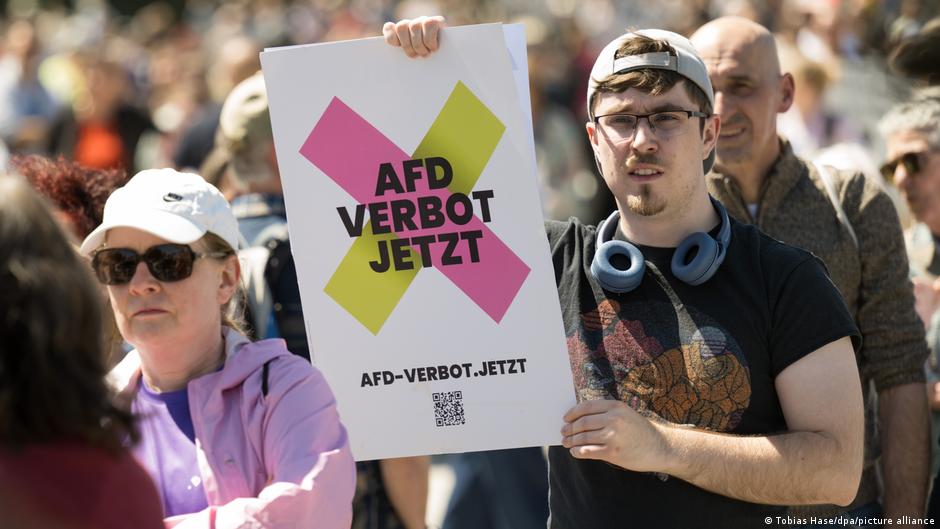
Recent sociological data from Insa reveals a divided German public regarding the potential ban of the far-right party Alternative for Germany (AfD). While only 40% support prohibiting the party, 45% oppose such a measure, and 15% remain undecided. The findings, commissioned by Bild am Sonntag and published in early July, highlight the complexity of Germany's political climate, which has significant implications for the country’s fintech and digital economy sectors.
Political Influence and Economic Implications
The AfD remains the most popular party in Germany, ahead of the conservative CDU/CSU bloc by eight percentage points according to the weekly Sunday trend poll by Insa. The CDU/CSU's support has slightly declined to 21%, whereas AfD maintains a stable 29% backing. This political momentum is notable amidst ongoing scrutiny by the Federal Office for the Protection of the Constitution (BfV), which has monitored the AfD for alleged right-wing extremism since February 2021.
"We are the new people's party in Germany," asserted Alice Weidel, co-chair of the AfD, during the party congress in Erfurt, emphasizing their ambition for political leadership.
The party’s increasing political prominence influences market confidence and regulatory environments, particularly in sectors sensitive to political stability such as fintech, digital banking, and cybersecurity. Investors and stakeholders in the digital economy closely monitor political shifts that may affect regulatory frameworks around payments, cryptocurrency adoption, and tech sector investments.
In addition to electoral support, 42% of Germans back a policy of political isolation towards the AfD, known as the "Brandmauer" (firewall), rejecting cooperation at any government level. However, 39% oppose this stance, which suggests ongoing debates about the party’s role in shaping Germany’s future governance and policies.
Broader Political Context and Digital Economy Outlook
Other major parties have seen mixed results in recent polls: the Social Democratic Party (SPD) and the Greens both hold about 13% support, while the Left Party commands 10%. Meanwhile, the federal government and Chancellor Friedrich Merz face low approval ratings, with only 13% of Germans endorsing their performance, marking a historic low.
This political volatility comes at a critical time for Germany’s digital economy. Fintech companies and digital banks depend heavily on government policies regarding data protection, cybersecurity standards, and financial regulations. Political uncertainty, especially surrounding parties like the AfD that hold controversial views on national and EU policies, could slow down legislative progress or introduce unpredictable regulatory changes.
Moreover, the growing popularity of the AfD may influence Germany’s stance on cryptocurrency regulation—an area where clarity and stability are vital for innovation and investment. The fintech sector, including payment platforms and crypto exchanges, watches these developments closely as any shift in political power could affect licensing, compliance requirements, and cross-border digital transactions.
With the AfD positioning itself as a dominant political force, stakeholders in Germany’s fintech and technology sectors should prepare for a potentially changing regulatory environment. The party’s rhetoric and policy proposals might reshape the country’s approach to digital finance, cybersecurity, and technological innovation.