U.S., Denmark and Greenland Outline Arctic Security Deal With Tech Stakes
The reported arrangement would expand the U.S. military footprint in Greenland while limiting rival bases and sensitive investment.
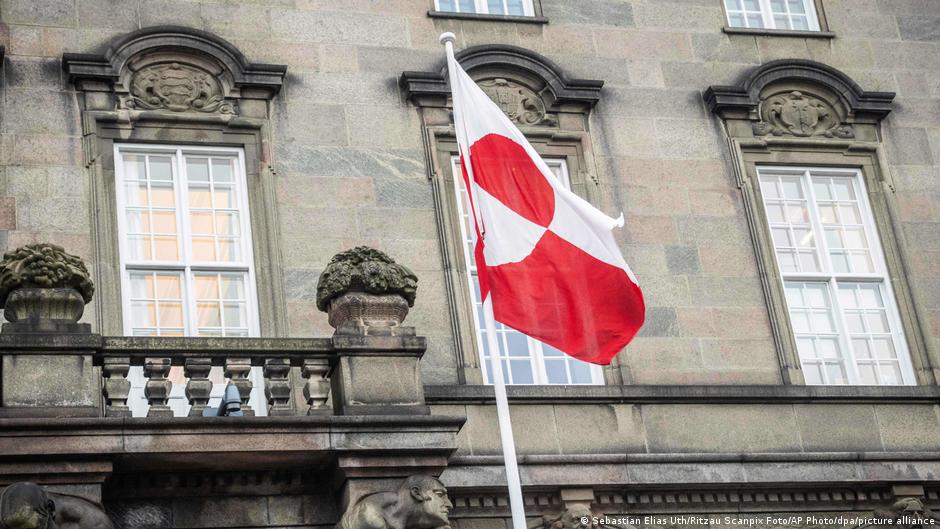
U.S. President Donald Trump said Washington had reached understandings with Denmark and Greenland to expand the American military presence on the island, a move that could reshape Arctic security and carry implications for strategic technology supply chains, critical minerals and the wider digital economy.
Trump announced what he described as an agreement on “Greenland security” in a post on Truth Social on the evening of Friday, September 18. According to the U.S. president, the arrangement would allow the United States to maintain “permanent control over security and all other needs in Greenland.” He said Washington had obtained an open-ended right to do “everything necessary” in Greenland to ensure and protect the security of both the island and the United States.
The governments in Copenhagen and Nuuk confirmed that understandings had been reached with Washington, but their own language suggested the final legal documents may not yet have been signed. The Danish and Greenlandic statement was presented as a press release on an “expected agreement” with the United States, a formulation that leaves room for further negotiations or formal approval steps.
For investors tracking defense technology, satellite infrastructure, cybersecurity and critical raw materials, the announcement adds a new geopolitical layer to Greenland’s strategic position. The island sits near North America, belongs to the Kingdom of Denmark and occupies a key role in the Arctic and North Atlantic, where military monitoring, communications systems and secure infrastructure are becoming increasingly central to national security planning.
Restrictions on rival bases and sensitive investment
Trump said that, under the arrangement, “opponents of the United States” would be unable to build military bases in Greenland or make “sensitive investments” in the Danish autonomous territory without U.S. approval. That language is likely to attract attention in technology and financial circles because sensitive investment controls often intersect with telecommunications, data infrastructure, energy assets, ports, rare earth processing and advanced manufacturing.
The president also said the deal would cost the United States nothing. He added that the U.S. would immediately begin expanding its military presence in several parts of Greenland. Trump praised himself for reaching an arrangement that, in his account, his predecessors had been unable to secure for 100 years, and said the results would be highly valued by the American people.
Danish Prime Minister Mette Frederiksen welcomed the understandings, saying they would benefit NATO by strengthening “our common security in the Arctic and in the North Atlantic region.” At the same time, Copenhagen and Nuuk emphasized that the deal recognizes Denmark’s “sovereignty and territorial integrity” as well as “the right of the people of Greenland to self-determination.”
Greenland’s prime minister said the arrangement “ensures and strengthens the security of Greenland, the Kingdom of Denmark, the United States and the Western alliance.”
Greenlandic Prime Minister Jens-Frederik Nielsen said the agreement also recognizes Greenland’s interests and the autonomous region’s place in international cooperation. That phrasing is important because Greenland has long balanced its local political aspirations, its relationship with Denmark and the growing interest of major powers in Arctic infrastructure and resources.
Digital economy exposure in the Arctic
The FinPulse relevance is not limited to military positioning. Arctic security has become intertwined with the digital economy through subsea cables, satellite connectivity, secure payment rails, data centers, shipping routes, mineral supply chains and cyber defense. Any expanded U.S. footprint in Greenland could influence procurement priorities for defense contractors, communications firms and cybersecurity providers, particularly those involved in resilient networks and Arctic-capable systems.
The reference to “sensitive investments” may also matter for banks, private equity firms, mining investors and technology companies assessing Greenland-linked opportunities. If U.S. approval becomes a practical condition for certain categories of investment, deal screening and compliance obligations could become more complex. Companies in payments, crypto infrastructure and digital banking that rely on secure cloud services, trusted network routes or sanctions-sensitive counterparties may also have to watch how Arctic security policy develops.
U.S. Secretary of State Marco Rubio described the Greenland deal to Fox News Digital as a “huge victory” for the United States and Americans. He said the arrangement would “forever guarantee U.S. security interests in the Arctic without any cost to American taxpayers.” Rubio added that Denmark and Greenland understood the limits of their own defense capabilities.
“Denmark and Greenland understand that they do not have the necessary financial resources to defend Greenland in the event of an attack or threat,” Rubio said, according to Fox News. “The United States has the necessary resources for this.”
The deal, if finalized, could mark the end of Trump’s years-long push to gain greater control over Greenland. During his first term, he spoke of wanting to buy the island. After returning to the White House, he intensified pressure on Denmark and its European allies, including threats of heavy customs duties. Trump has framed his Greenland ambitions as a matter of U.S. security, while officials close to him have repeatedly noted that the island is rich in rare earth resources.
Those resources are a key reason the announcement will be watched by technology and markets audiences. Rare earths are used across advanced electronics, clean-energy systems, defense platforms and other high-value industrial applications. Greater U.S. influence over Greenland’s security environment may therefore be read by investors as part of a broader contest over supply chains that underpin semiconductors, batteries, secure communications and next-generation financial infrastructure.
Still, the immediate status of the arrangement remains somewhat ambiguous. Trump presented the deal as achieved, while the Danish and Greenlandic statement referred to an expected agreement. Under Trump, negotiations between Washington and other countries have repeatedly collapsed at the last moment, followed by accusations that the White House tried to change deal terms in the “last minute.” Until documents are signed and implementation details are disclosed, companies and markets will be left parsing political statements for signals on defense spending, investment screening and Arctic technology strategy.