Abu Dhabi Peace Talks Put Digital Economy Risks in Focus
US-mediated Russia-Ukraine negotiations on November 10-11 will address security, de-escalation, humanitarian initiatives and steps toward peace.
A new round of US-mediated negotiations between Russia and Ukraine will take place in Abu Dhabi on November 10 and 11, bringing geopolitical risks with major implications for payments, digital banking, cybersecurity, cryptocurrency markets and technology stocks back into focus.
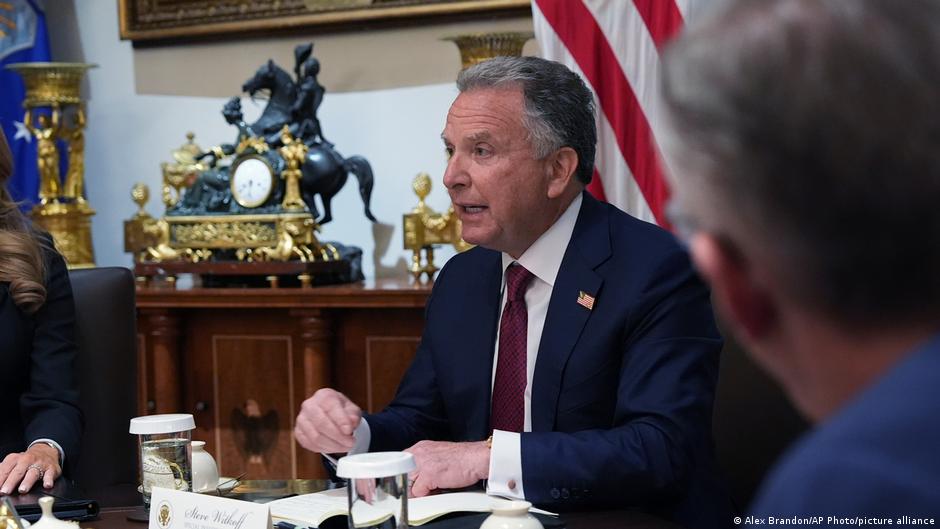
Steve Witkoff, US President Donald Trump’s special envoy, announced the meetings on Tuesday, November 3. He said the talks in the capital of the United Arab Emirates would be conducted by working groups as part of Trump’s efforts to end Russia’s war against Ukraine.
“The discussions will focus on postwar security, de-escalation, humanitarian initiatives and next steps toward peace,” Witkoff wrote on X.
Although the announced agenda does not explicitly identify financial technology as a separate negotiating track, each of its principal themes intersects with the digital economy. Security arrangements and de-escalation can affect the operating environment for banks, payment providers and technology companies, while humanitarian initiatives depend in part on reliable systems for transferring and distributing funds.
Payments and cybersecurity remain exposed to geopolitical risk
For financial institutions and payment companies, the Abu Dhabi meetings will be watched for indications of whether the parties can advance toward a comprehensive settlement. Cross-border finance is particularly sensitive to political uncertainty because banks and fintech platforms must manage compliance, operational resilience and cybersecurity alongside ordinary commercial risks.
The negotiations’ focus on postwar security also gives the discussions a technological dimension. Modern financial infrastructure relies on digital identity, secure communications, cloud services and continuously available payment networks. Any future framework for long-term security would therefore form part of the wider environment in which digital banks, payment processors and other technology-dependent businesses operate.
Cybersecurity is similarly relevant to the proposed postwar architecture, even though Witkoff’s statement did not provide details about cyber policy. Financial platforms are critical components of the digital economy, making operational security an important consideration whenever governments discuss reconstruction, humanitarian support and broader economic stability.
Cryptocurrency markets may also follow the diplomatic process because digital assets trade continuously and often respond to changes in geopolitical sentiment. The source statement did not announce any cryptocurrency measures, regulatory changes or payment agreements, however. The immediate significance for the sector lies in the negotiations’ potential to alter perceptions of political and economic risk rather than in any confirmed policy shift.
European meetings will address reconstruction support
Witkoff said American negotiators would also meet representatives of France, Germany, the United Kingdom, the European Union and NATO in Brussels this week. Those discussions will cover security guarantees for Ukraine, Europe’s postwar security architecture and options for providing economic support for Ukraine’s reconstruction.
That reconstruction agenda is especially relevant to the fintech and technology sectors. Large-scale economic support requires mechanisms to move, monitor and administer money, potentially placing digital payments, banking infrastructure and data security within the broader implementation environment. The statement did not specify funding amounts, financial instruments or participating companies.
Technology investors may consequently focus on diplomatic signals rather than firm commercial commitments. Companies exposed to European digital infrastructure, financial services and cybersecurity can be influenced by expectations surrounding reconstruction and regional stability, but the announced talks have not yet produced contracts, budgets or market-specific measures.
“We hope to consolidate the progress achieved in Kyiv, Oslo and St. Petersburg on the path toward a comprehensive and lasting peace agreement that will ensure long-term security for future generations,” Witkoff said.
The envoy’s reference to previous diplomatic progress follows a series of meetings in October. Witkoff met Ukrainian President Volodymyr Zelenskyy in Oslo and subsequently traveled to St. Petersburg, where he held talks with Russian President Vladimir Putin.
The previous round of US-mediated negotiations between Russia and Ukraine took place in February 2026, shortly before the beginning of the US and Israeli war against Iran. The interval underscores how the forthcoming discussions are unfolding within a wider geopolitical environment that can influence capital markets, financial networks and technology-sector risk assessments.
For the digital economy, the central question is whether the Abu Dhabi and Brussels meetings can turn diplomatic engagement into a more predictable security and reconstruction framework. Until concrete agreements emerge, payment companies, crypto businesses, digital banks, cybersecurity providers and technology investors will have to assess the talks primarily as a signal about the direction of geopolitical risk.