Anti-Government Protests in Serbia Escalate Amid Political Turmoil and Security Measures
Student-led demonstrations in Belgrade trigger clashes with police, raising concerns about stability and digital economy impacts.
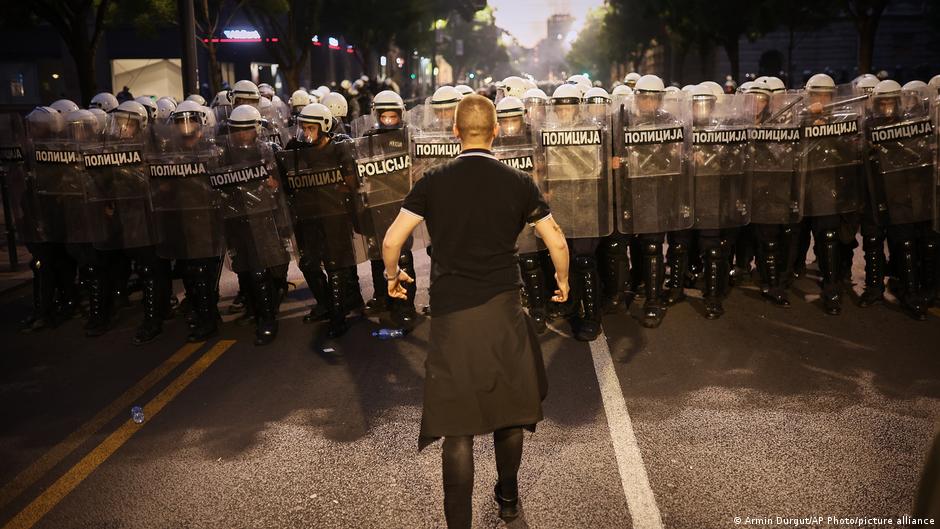
Anti-government protests in Serbia intensified on May 23, 2026, with violent clashes erupting at a student rally in central Belgrade. The unrest highlights ongoing political instability that could have broad implications for the country's fintech landscape and digital economy.
Escalation of Protests and Security Response
The protests, initially organized by university students, took place near Pionirski Park and the Slavia central square, attracting tens of thousands of participants from across Serbia. Police deployed tear gas and stun grenades to disperse the crowd near the law faculty building adjacent to the parliament, as demonstrators reportedly attacked officers with firecrackers, stones, and homemade explosives.
“All those who attacked police officers responsible for security after the public assembly will be identified and held accountable according to the law,” stated the Belgrade Prosecutor’s Office, condemning the violence as a criminal offense.
Authorities arrested 23 individuals during the clashes, confirmed by Interior Minister Ivica Dačić. Prior to the events in Belgrade, convoys of vehicles from other Serbian cities converged on the capital, prompting the national railway company to cancel all trains to and from Belgrade in an effort to curb mass arrivals.
Background and Political Context
The current wave of anti-government protests began in November 2024 following a deadly incident where a concrete canopy collapsed at a renovated railway station in Novi Sad, killing 16 people. Protesters blame corruption, negligence, and cronyism within Serbia's leadership for the tragedy. Their demands include the resignation of President Aleksandar Vučić and the call for early parliamentary elections.
In response to mounting pressure, Prime Minister and former Novi Sad mayor Miloš Vučević resigned in January 2025. His successor, medical professor Đuro Mačut, was appointed with President Vučić’s endorsement. However, Vučić emphasized that democratic countries cannot alter election schedules in response to protests, signaling a firm stance against disruption.
Subsequent protest surges throughout 2025 have continued to challenge law enforcement, leading to numerous arrests and injuries on both sides. In December 2025, President Vučić confirmed that snap parliamentary elections will be held in 2026, a move closely watched by political analysts and investors.
Implications for Serbia’s Digital Economy and Fintech Sector
The political unrest and frequent disruptions present considerable risks for Serbia's burgeoning digital economy. Stability is crucial for advancing fintech services, including payments infrastructure, digital banking, and crypto-related ventures. Unpredictable social conditions may hinder investor confidence and delay regulatory reforms essential for fintech growth.
Moreover, the government's efforts to control movement via transport cancellations and heightened security measures underscore the challenges in maintaining open digital and physical networks. Cybersecurity concerns may also rise during periods of unrest, as politically motivated groups could target government or financial institutions' digital assets.
As Serbia prepares for elections and navigates its political crisis, the fintech sector's resilience will be pivotal. The interplay between political stability and technological innovation remains a critical factor for the country’s economic trajectory.