Friedrich Merz's Team Denies Plans for Early Chancellor Replacement Amid Political Unrest
Sources close to Friedrich Merz dismiss rumors of his premature replacement as Chancellor, calling them unfounded amid coalition challenges.
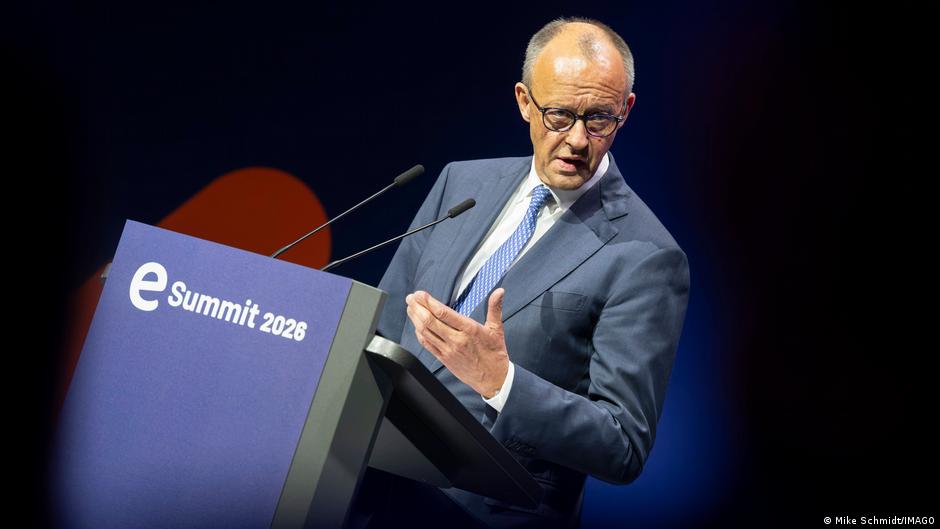
Amid circulating reports about the potential early replacement of German Chancellor Friedrich Merz, sources close to the politician have firmly denied any such plans. These denials come in response to recent media claims suggesting internal discussions within the Christian Democratic Union (CDU) regarding Merz's premature departure from office.
Political Stability and Constitutional Complexity
The rumors, initially published by weekly magazine Stern and newspaper Bild, named prominent CDU figures as possible successors, including Hendrik Wüst, the Minister-President of North Rhine-Westphalia; Markus Söder, the Minister-President of Bavaria; and Jens Spahn, the leader of the CDU/CSU parliamentary faction.
However, insiders from Merz's circle have labeled the idea of an early chancellor replacement as "absurd speculation," emphasizing that such notions reflect a "dangerous tendency towards incitement" and a "startling ignorance of constitutional and political realities." They highlight that the process to replace a sitting chancellor is constitutionally complex and politically challenging.
"Such rumors play into the hands of the far-right party Alternative for Germany (AfD) and erode the political center's authority amid internal and global crises," a source close to Merz stated.
According to constitutional rules, an early replacement would require either Merz to voluntarily initiate a motion leading to new elections within the Bundestag's current term or to step down under pressure from influential party members. In the latter case, the CDU/CSU and the Social Democratic Party of Germany (SPD) would need to jointly elect a new chancellor, a process fraught with political challenges, not least securing SPD agreement.
Impact on Fintech and Digital Economy Sector
The political uncertainty surrounding Chancellor Merz occurs at a pivotal moment for Germany's fintech and broader digital economy sectors. As the government navigates complex coalition dynamics and fluctuating public approval, the strategic direction for digital banking, payments infrastructure, and cybersecurity initiatives could witness delays or shifts.
Merz's government, now facing a significant drop in approval ratings—with a May Deutschlandtrend poll indicating 86% public dissatisfaction and Merz's individual approval rating at a historic low of 16%—may find it increasingly challenging to maintain momentum on digital transformation policies critical to Germany's financial technology landscape.
Financial technology companies and investors closely monitoring Germany’s political environment should be aware of how potential leadership debates might impact regulatory frameworks, investment climates, and innovation trajectories within digital payments, crypto regulation, and cybersecurity sectors.
As Germany plays a vital role in shaping the European Union's digital economy agenda, political stability will be key in maintaining investor confidence and ensuring consistent progress in fintech development.
In conclusion, while rumors of Chancellor Merz’s early replacement continue to circulate, his inner circle’s robust denials underscore the constitutional and political hurdles involved. The fintech and digital economy sectors remain attentive to the evolving political landscape that will influence Germany’s digital policy strategy in the near term.