German Transport Minister Patrick Schnieder Resigns Amid Leadership Shakeup
Germany’s Chancellor Friedrich Merz to nominate Steffen Bilger as new Transport Minister following Schnieder’s unexpected resignation.
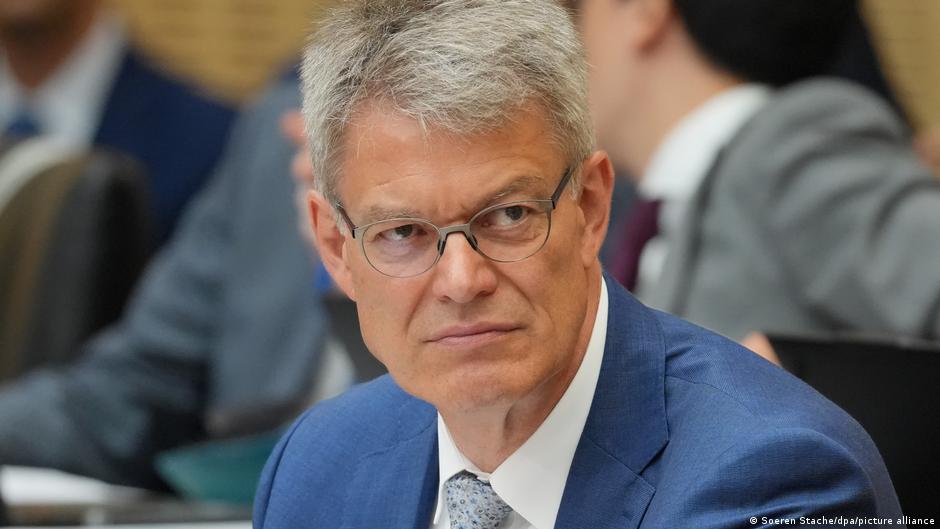
Germany’s Transport Minister Patrick Schnieder announced his resignation on July 26, citing a "disgraceful situation" that impaired necessary work at the ministry. Schnieder declared he would request Chancellor Friedrich Merz to propose his dismissal to the president in order to expedite a resolution to the ongoing turmoil.
"I take into account the events of recent days and simultaneously want to put an end to the unworthy situation that makes essential business impossible," Schnieder told the German Press Agency (dpa).
Political Reconfiguration and Implications for Transport Policy
The resignation comes amid internal party tensions within the Christian Democratic Union (CDU), where Chancellor Merz’s handling of Schnieder has reportedly been met with dissatisfaction. Merz plans to nominate Steffen Bilger, the parliamentary group secretary of CDU/CSU, as the new Transport Minister.
Stefan Kornelius, a government spokesperson, confirmed that Bilger is the preferred candidate to succeed Schnieder. This swift nomination aims to stabilize the ministry ahead of crucial decisions affecting Germany’s transport infrastructure.
Schnieder underscored the urgency of upcoming issues, particularly relating to Deutsche Bahn, the country’s major railway company. He emphasized that these matters "cannot be delayed," making it essential to quickly determine his successor in the interest of national priorities.
"The Ministry of Transport faces important and far-reaching decisions, especially concerning Deutsche Bahn, which cannot be postponed," Schnieder stated.
The resignation follows a turbulent period in German federal politics marked by a series of high-profile departures within the CDU, including the exit of party leader Jens Spahn. Schnieder revealed to Bundestag members on July 24 that Merz intended to dismiss him but did not elaborate on the reasons.
Complicating the transition, Fritz Güntzler, initially expected to accept the Transport Minister position, unexpectedly declined the appointment, adding to the uncertainty surrounding the ministry.
Within the CDU ranks, many remain puzzled by Merz’s abrupt approach toward Schnieder. Analysts suggest that the leadership changes reflect broader realignments in Germany’s political landscape, which may have downstream effects on policy areas including transportation infrastructure investment, regulatory oversight, and digital modernization initiatives.
Fintech and Digital Economy Considerations
The German Transport Ministry plays a critical role in shaping infrastructure that impacts logistics, digital connectivity, and mobility innovations—areas closely linked to fintech and the digital economy. The leadership shift raises questions about the continuity of digital transformation projects in transport, including integration of smart technologies in railway management and transport payment systems.
Given the ministry’s involvement in overseeing Deutsche Bahn, which is exploring blockchain applications and digital ticketing solutions, a stable and forward-looking leadership is vital for advancing cybersecurity and technological modernization in Germany’s transport sector.
Steffen Bilger’s appointment is expected to bring renewed focus on aligning transport policies with digital economy goals. His track record in parliamentary group leadership suggests potential acceleration of reforms that intertwine infrastructure development with fintech innovations.