Kallas Urges EU Envoys to Extend Russia Sanctions as Deadline Nears
The EU foreign policy chief said sanctions remain central to limiting Moscow’s financing as member states debate cases involving Usmanov and Fridman.
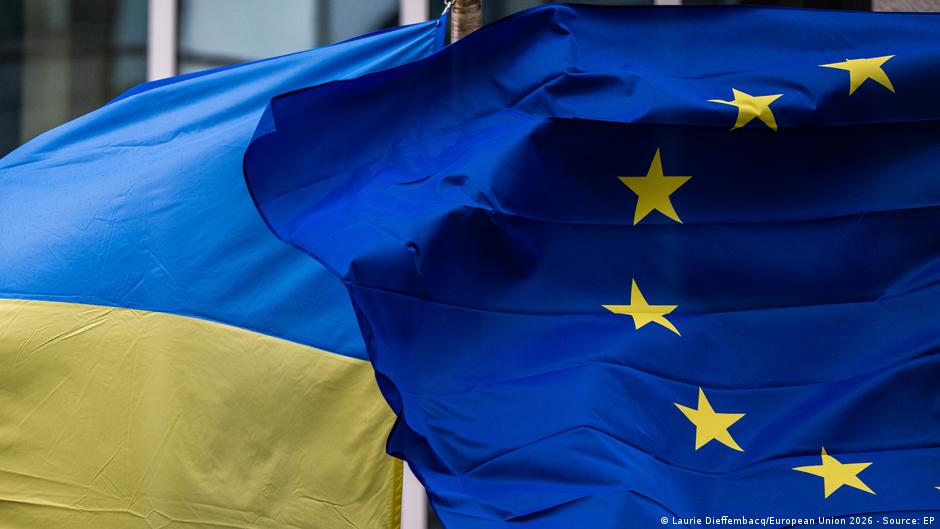
EU foreign policy chief Kaja Kallas has urged permanent representatives of European Union member states to extend sanctions against Russia over the war in Ukraine, as diplomats approach a deadline shaped by disagreements over whether to remove two prominent Russian billionaires from the bloc’s restrictive measures.
Speaking to journalists in New York on Monday, September 21, Kallas said the sanctions regime remained a core part of the EU’s response to Russia’s full-scale war and its effort to restrict Moscow’s financial capacity. The remarks came ahead of a new meeting of EU ambassadors scheduled for the morning of September 22, according to a DW correspondent in Brussels citing an EU diplomat.
“Sanctions are a key element of our response to the war unleashed by Russia,” Kallas said, describing them as a tool intended to deprive Moscow of financing.
For financial markets and the digital economy, the debate matters beyond traditional diplomacy. EU sanctions against Russia have affected banking channels, payment infrastructure, capital flows, compliance operations, crypto monitoring, and the ability of sanctioned individuals and entities to interact with European financial systems. Any extension, delay, or targeted delisting can influence how banks, fintech companies, exchanges, and payments firms assess legal exposure and operational risk.
Sanctions Deadline Creates Compliance Pressure
According to Kallas, representatives of EU member states are seeking to complete negotiations on extending the measures soon and to ensure they enter into force quickly. She said the EU’s position remains unchanged and that Brussels is already working on a new sanctions package.
The current issue centers on sanctions imposed over Russia’s violation of Ukraine’s territorial integrity. On September 14, EU permanent representatives failed to agree on another six-month extension of the measures. Instead, they decided to prolong the existing regime temporarily while consultations continued, with the interim period running until midnight on September 22.
The uncertainty has a practical edge for the financial sector. Sanctions lists are not abstract policy documents for banks and digital platforms; they feed directly into transaction screening, know-your-customer systems, correspondent banking checks, asset-freeze controls, wallet monitoring, and onboarding decisions. A short deadline can force institutions to prepare for multiple scenarios, including full renewal, selective removals, or continued negotiations.
The September 22 meeting is expected to address the possible removal of sanctions from Russian billionaires Alisher Usmanov and Mikhail Fridman, while maintaining restrictive measures against thousands of other individuals and organizations. The distinction is significant for compliance teams because sanctions decisions involving high-profile business figures can affect corporate networks, beneficial ownership assessments, and the due diligence burden facing financial institutions.
Disputes Over Usmanov and Fridman
Sources speaking to DW on condition of anonymity said the disagreement was linked to Slovakia’s push to remove Usmanov and Fridman from the sanctions list. France, meanwhile, blocked the extension of the sanctions regime while seeking the removal of Usmanov. Luxembourg also supported lifting sanctions on Fridman, Reuters reported on September 21, citing diplomatic sources.
The reported positions highlight the political complexity behind sanctions policy. While sanctions are adopted at the state level, their implementation lands heavily on the private sector, including banks, fintech infrastructure providers, crypto platforms, payment processors, wealth managers, and legal and accounting firms. Divergence among member states can complicate planning for firms that operate across the EU and rely on stable lists to maintain automated screening and reporting systems.
In digital finance, the impact may be especially visible. Since the start of the war, regulators and companies have placed greater emphasis on preventing sanctioned parties from using cryptoassets, digital wallets, online payment rails, and cross-border platforms to move funds. Any change in designations involving wealthy individuals can trigger renewed checks across exchanges, custodians, neobanks, and regtech providers that maintain sanctions databases.
Ukraine has criticized the possibility of lifting measures against both Russian billionaires. Ukrainian Foreign Minister Andrii Sybiha said Usmanov and Fridman had been included in sanctions lists because of their belonging to the “Russian aggressive regime, which is waging a war of conquest against Ukraine.” He added that nothing had changed since then.
For investors following European policy, the immediate market implications are likely to be indirect but still relevant. The sanctions debate can shape sentiment around European banks with Russian exposure, compliance technology providers, cybersecurity and financial-crime software vendors, and companies involved in transaction monitoring. It may also influence how global firms price legal and reputational risk when dealing with complex ownership structures linked to Russia.
The EU’s broader direction remains one of continued pressure on Moscow, according to Kallas’s comments. Brussels is already working on a new sanctions package, suggesting that the current renewal dispute is not a sign of a wider retreat from sanctions policy. Instead, the issue appears to be whether individual cases involving Usmanov and Fridman can be resolved without weakening the wider framework that covers thousands of listed persons and organizations.
For fintech and digital banking companies, the practical takeaway is that sanctions architecture remains a moving target. Even when the political objective is stable, the names, scope, timing, and implementation details can shift quickly. That keeps sanctions screening, blockchain analytics, cyber-risk controls, and digital identity verification at the center of Europe’s financial response to the war.