Macron and Trump Push Ukraine Infrastructure Truce as Digital Risks Mount
France and the United States are seeking a moratorium on strikes against Ukraine’s energy and civilian infrastructure while backing stronger air defenses.
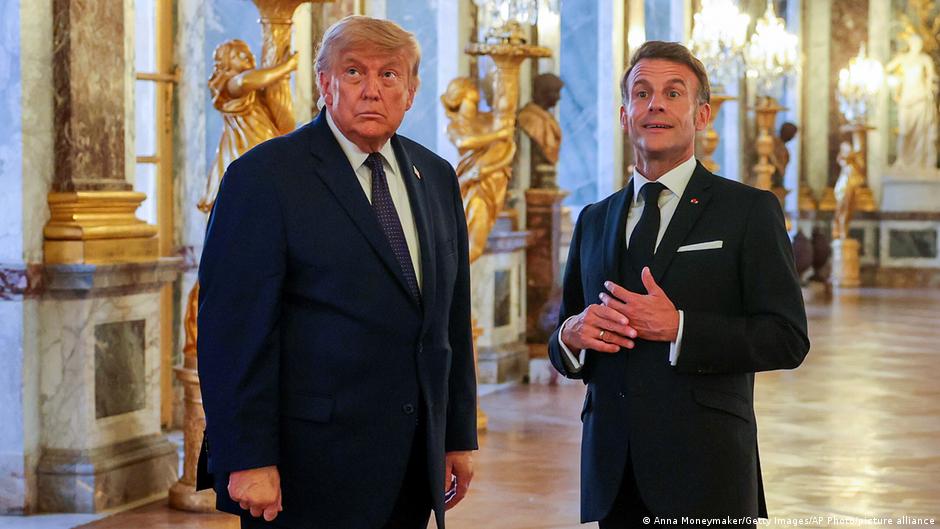
French President Emmanuel Macron said he and U.S. President Donald Trump discussed joint efforts to secure a moratorium on attacks against Ukraine’s energy and civilian infrastructure, a proposal that carries direct implications for the country’s digital economy, payment systems and broader technology resilience.
Macron wrote on X on Monday, September 21, that the two leaders had met in New York and discussed initiatives aimed at halting strikes on energy facilities during Russia’s war against Ukraine. The French president framed the proposal as part of a wider push to protect civilians and move toward serious negotiations on the terms of peace between Russia and Ukraine.
“We will also combine our efforts to achieve a moratorium on strikes against Ukraine’s energy infrastructure and civilian infrastructure,” Macron said.
He added that civilians must be protected and that serious talks on the conditions for peace between Russia and Ukraine should begin as soon as possible. While the remarks focused on military and humanitarian priorities, the issue is also central to Ukraine’s financial and digital infrastructure, which depends on stable electricity, communications networks and civilian systems that can withstand attack.
Infrastructure Protection Becomes a Digital Economy Issue
For Ukraine, the line between civilian infrastructure and digital infrastructure has narrowed during the war. Energy facilities support banking networks, card payments, mobile connectivity, cloud services, government platforms and cybersecurity operations. Any moratorium on attacks against such assets would therefore be relevant not only to physical security but also to the continuity of digital banking and electronic payments.
Macron’s statement came as Ukraine continues to face Russian aerial attacks, and he told journalists after meeting Trump that they agreed on the need to help Kyiv strengthen its defense capabilities. According to Macron, that includes the supply of additional interceptor missiles to help protect Ukraine from Russian air attacks.
The focus on air defense is significant for the financial technology sector because payment systems and digital public services rely on uninterrupted operations. Banks, fintech providers and crypto platforms operating in or around Ukraine face elevated operational risk when energy and communications infrastructure is targeted. Stronger air defense, if delivered, would be one way to reduce the frequency and impact of disruptions to the systems that underpin commerce and financial access.
The French president’s comments also place infrastructure security in the same diplomatic frame as peace negotiations. Macron said civilians should be protected and that serious talks on peace terms should begin as soon as possible. The initiative described by the French leader does not replace military support for Ukraine; rather, it sits alongside efforts to bolster Ukraine’s defenses against Russian aerial attacks.
New York Diplomacy Draws Ukraine, U.S. and Europe Together
According to a DW correspondent, a bilateral meeting between Macron and Ukrainian President Volodymyr Zelensky also began in New York on the evening of September 21. That meeting followed Zelensky’s engagement with U.S. lawmakers, where he thanked them for passing the late Senator Lindsey Graham’s law on “hellish sanctions” against Russia.
“I want the sanctions to start working,” Zelensky said, underscoring Kyiv’s focus on economic pressure as part of the broader response to Russia’s war. For markets, sanctions policy remains a key variable affecting energy flows, trade exposure, financial compliance, banking risk and the outlook for companies with regional or geopolitical sensitivity.
The reference to sanctions is particularly relevant for financial institutions and technology companies that must navigate compliance risks. Banks, payment processors, crypto exchanges and digital asset firms are often required to monitor sanctions exposure closely, especially when measures against Russia are tightened or expanded. Zelensky’s public emphasis on implementation suggests that Ukraine is looking not only for symbolic support but also for practical enforcement.
The diplomatic calendar in New York is dense. From September 22 to 26, the 81st session of the United Nations General Assembly is taking place in the city, with nearly 130 world leaders expected to gather. Zelensky is also expected to meet Trump on September 22, a meeting likely to be watched closely by governments, defense planners and markets assessing the future of U.S. support for Ukraine.
For investors in technology and financial services, the immediate market signal is not a single corporate development but a geopolitical one: Ukraine’s infrastructure security remains tied to international diplomacy, air defense supply, sanctions enforcement and the possibility of negotiations. Each of those factors can influence the risk environment for digital banking, payment continuity, cybersecurity preparedness and tech-sector exposure to the region.
Macron’s proposal for a moratorium on strikes against energy and civilian infrastructure therefore sits at the intersection of war policy and economic resilience. In a modern conflict, protecting power grids and civilian systems also means protecting digital transactions, financial records, mobile access and cyber defense capabilities. The French and U.S. discussions in New York indicate that Ukraine’s infrastructure protection is being treated as both a security priority and a condition for any credible path toward peace talks.