Meloni Presses EU to Clarify Ukraine Talks Role as Markets Watch
Italy’s prime minister says fragmented EU diplomacy could weaken peace efforts and prolong uncertainty across Europe’s digital economy.
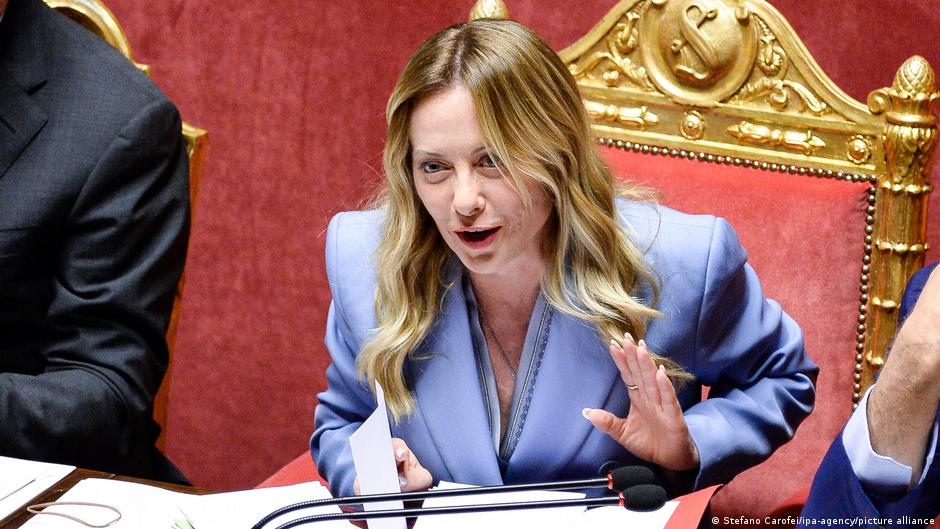
Italian Prime Minister Giorgia Meloni has called on the European Union to decide who will represent the bloc in negotiations aimed at ending the war in Ukraine, criticizing what she described as uncoordinated conduct by EU national leaders.
The demand comes as governments, financial institutions and technology companies monitor the diplomatic process for signs of reduced geopolitical risk. Although Meloni’s letter did not announce economic or financial measures, the shape and credibility of future peace negotiations could influence the operating environment for European payments companies, digital banks, cryptocurrency platforms, cybersecurity providers and publicly traded technology groups.
In a letter to European Council President António Costa, quoted by the dpa news agency on Thursday, November 5, Meloni said the bloc must settle both the identity and authority of its representative.
“I continue to insist that it be decided once and for all exactly who will sit at the negotiating table on behalf of the European Union and with what mandate,” Meloni wrote.
She argued that the EU’s “uncoordinated conduct” would not help in dealings with allies or in efforts to persuade those who must be convinced to end what she called a “senseless aggression.” AFP also quoted Meloni as saying that the image of a Europe acting in a disorderly manner served only the interests of those seeking to continue the war.
Diplomatic timetable creates a focus for financial markets
Meloni proposed that EU leaders discuss the representation issue at an informal European Council meeting in Dublin on November 13. That discussion, she said, could allow the European Council to make a formal decision on who represents the EU in Ukraine peace negotiations at its Brussels summit on December 17-18.
The timetable places two defined political events on the calendar for businesses exposed to European geopolitical risk. For fintech companies, prolonged uncertainty can complicate compliance planning, sanctions screening and cross-border transaction controls. Digital banks and payment processors operating across several jurisdictions must translate political decisions into customer checks and operational policies, making a coherent EU position particularly relevant to implementation.
The conflict has also reinforced the importance of cybersecurity across banking and critical digital infrastructure. Any movement toward de-escalation would be assessed alongside continuing cyber risks, while a disorderly diplomatic process could sustain demand for defensive technology and heightened monitoring. Technology stocks with exposure to government contracts, financial infrastructure or Eastern European markets may therefore remain sensitive to the direction of negotiations, even though Meloni’s intervention itself contains no specific policy change for the sector.
Cryptocurrency businesses face a related set of issues. Digital-asset platforms serving European customers operate within a regulatory environment where sanctions compliance, wallet screening and the prevention of illicit transfers are central concerns. A clearly mandated EU negotiator would not automatically alter those obligations, but greater political coordination could make future decisions easier for regulated platforms to interpret consistently across the bloc.
Meloni challenges separate initiatives by EU leaders
The Italian prime minister has previously criticized initiatives by individual European leaders that, in her view, dilute the EU’s common position on Russia’s war in Ukraine. Rome specifically criticized a telephone conversation involving Finnish President Alexander Stubb, Norwegian Prime Minister Jonas Gahr Støre and Russian President Vladimir Putin.
Meloni’s latest intervention centers on institutional authority: whether separate national contacts can coexist with a unified European mandate and who has the legitimacy to speak for the bloc at a negotiating table. That question matters beyond diplomacy because fragmented political signaling can make it harder for companies and investors to judge the likely path of sanctions, trade restrictions and cross-border financial rules.
For Europe’s digital economy, the issue is less about immediate market-moving measures than about policy visibility. Payments networks depend on predictable rules for settlement and customer access. Digital lenders need clarity about country and counterparty risk. Cybersecurity providers must plan for threats that may persist regardless of diplomatic progress, while investors in technology shares must distinguish between a political opening and an enforceable settlement.
US-mediated talks set for Abu Dhabi
A new round of negotiations between Russia and Ukraine, mediated by the United States, is scheduled for November 10-11 in Abu Dhabi. US presidential special envoy Steve Witkoff said the meeting would address “postwar security, de-escalation, humanitarian initiatives and next steps toward peace.”
The Abu Dhabi talks will take place before the informal EU meeting proposed by Meloni, underscoring her concern that Europe should establish a clear voice and mandate. The subsequent Brussels summit in December could provide the formal institutional decision she is seeking.
No outcome from the coming negotiations is assured. Still, the sequence of meetings offers governments and financial markets several points at which to evaluate whether diplomacy is becoming more coordinated. For fintech and technology companies, a credible process could eventually improve visibility around cross-border operations and risk controls. Until formal decisions are made, however, sanctions compliance, cybersecurity resilience and cautious assessment of geopolitical exposure are likely to remain central considerations.