NATO Intelligence Reveals Russian Development of Underwater Nuclear-Capable Missiles
Secret Russian project 'Skif' aims to deploy ballistic missiles on the sea floor, challenging existing strategic deterrence models.
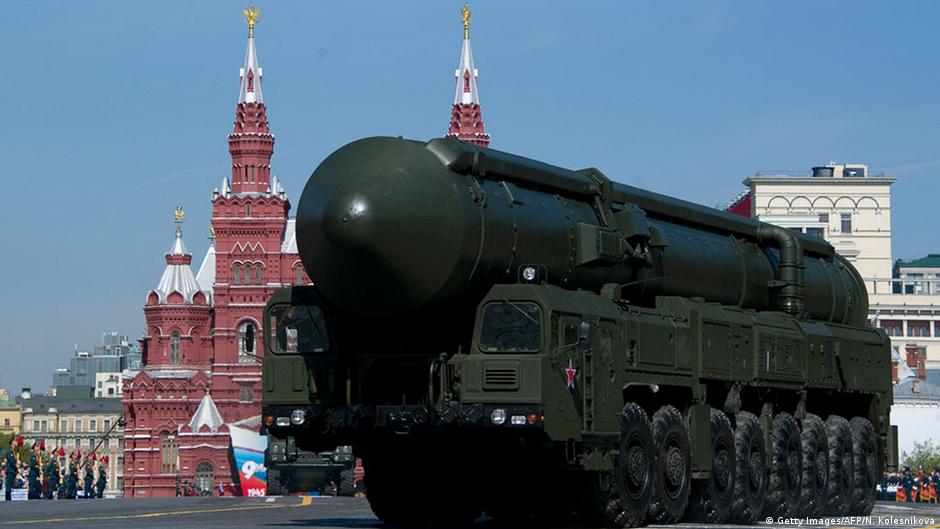
NATO intelligence has identified activities by the Russian Northern Fleet that suggest attempts to deploy ballistic missiles capable of carrying nuclear warheads on the seabed. This revelation was disclosed by the German ARD channel, referencing investigations by WDR and NDR broadcasters.
The investigative report, part of ARD's Tagesschau program aired on May 21, details how certain maneuvers by Russia’s Northern Fleet imply efforts to place these advanced missile systems underwater. The project, codenamed "Skif," has been under scrutiny by journalists who examined satellite imagery, Russian scientific databases, historical archives, and interviewed military experts over several months.
Skif Project: A New Frontier in Strategic Weapons Deployment
According to NATO intelligence cited in the investigation, Russia may have been developing a method to station ballistic missiles on the ocean floor for years, employing technology previously unseen. These underwater missile launchers would be practically undetectable and difficult to neutralize, significantly complicating strategic defense frameworks.
The "Skif" missile is reportedly a modified version of the "Sineva" missile, currently deployed on Russian submarines. These missiles are designed for seabed launch with a range of several thousand kilometers. Initial tests of the system, as claimed, were conducted several years ago.
Western intelligence suggests that the missiles capable of carrying nuclear warheads could be housed in specially constructed shafts or containers hundreds of meters deep on the seabed. Such systems are expected to remain submerged for extended periods and be capable of remote launch when necessary.
Sources also indicate that the installation of these missile shafts could involve the use of the vessel "Zvezdochka" and the submarine "Sarov," both based in Severodvinsk on the White Sea coast. Requests for comment from NATO and the Russian Ministry of Defense have gone unanswered, and the Russian Embassy in Berlin stated it had no information on the matter.
"Deploying missiles on the ocean floor could allow Russia to reduce reliance on costly submarines while maintaining nuclear deterrence with lower expenses," said Helge Adrians, an expert from the Berlin-based Science and Politics Foundation (SWP). He also noted the significant technical challenges such as ocean currents, sediment accumulation, power supply, and data transmission.
Internationally, the 1971 treaty banning the placement of nuclear weapons on the seabed applies only to international waters, not to a country’s territorial waters, complicating enforcement. In 2017, former Russian Aerospace Forces Commander Viktor Bondarev confirmed that "Skif" missiles hidden underwater are part of Russia’s military arsenal.
This new development highlights the evolving nature of strategic deterrence and underscores the increasing importance of technological innovations in underwater military capabilities. It also raises concerns about the security implications for global maritime domains and the potential need for enhanced detection and cybersecurity solutions in naval defense systems.