‘Returning the Names’ Memorial Events Reach 101 Cities Worldwide
The hybrid remembrance campaign combines local gatherings with remote readings and livestreams as independent initiatives face pressure in Russia.
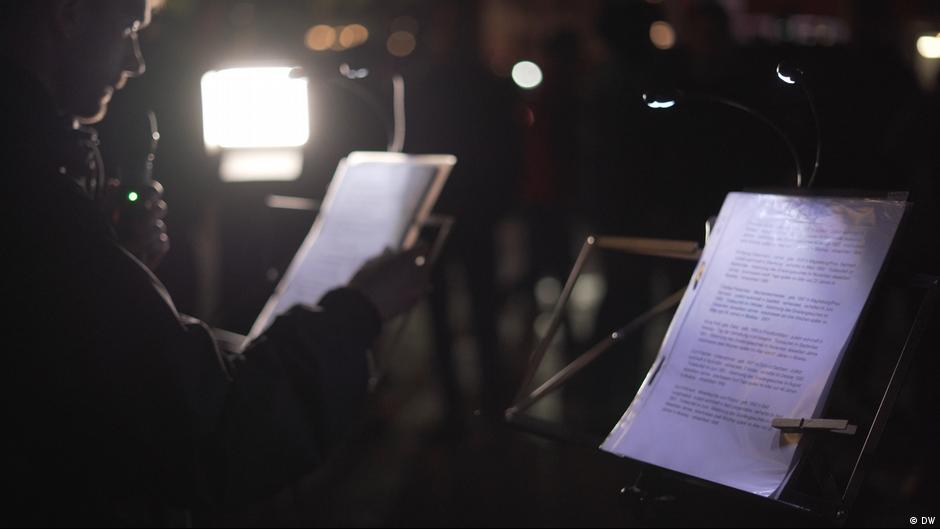
The annual “Returning the Names” campaign commemorating victims of Stalin-era repression was held across several countries on Thursday, October 29, ahead of the Day of Remembrance of the Victims of Political Repression. The event’s website listed 101 cities where commemorations took place this year, either on October 29 or earlier.
The campaign’s international reach was particularly visible in Germany, where events were held in 15 cities. The list included Berlin, Munich, Hamburg, Cologne, Bonn, Düsseldorf, Bremen and Bielefeld, among other locations.
In Paris, the event was organized by the Memorial France association and held beside a monument to Parisians who died in the First World War, on Boulevard de Ménilmontant, according to RFI.
A Hybrid Campaign Sustained Through Digital Channels
“Returning the Names” has developed into a hybrid remembrance project, combining in-person readings with remote participation and online broadcasts. Each year, participants read aloud the names of people executed or otherwise subjected to repression by the Soviet state.
The digital component has become increasingly important as the campaign’s ability to hold coordinated public events inside Russia has narrowed. Organizers maintain a website documenting participating cities and provide online coverage that connects geographically dispersed events. In practical terms, livestreaming and remote readings allow the campaign to operate across borders without depending entirely on access to a single physical venue.
This model illustrates a broader feature of the digital economy: relatively accessible online infrastructure can support decentralized civic activity even when traditional organizations face legal or administrative restrictions. The campaign is not a fintech initiative, but it depends on the same underlying digital environment used by online banking, payment platforms and technology companies—reliable connectivity, accessible web services and confidence that communications can remain available.
That reliance also creates familiar cybersecurity and operational risks. Websites and livestreams can expand access, but digital projects must also protect participant information, maintain service availability and manage records across jurisdictions. The source material did not report any cyberattack or payment disruption connected with this year’s events.
Private Commemorations Return in Russia
Russian authorities have not approved “Returning the Names” events since 2020, citing measures to combat the coronavirus. Pressure on independent historical-memory initiatives intensified after the liquidation of the International Memorial Society in 2021, RFI said. Nevertheless, commemorations continued abroad, while people inside Russia continued to find ways to honor those who died.
“The campaign did not disappear: it continued in other countries, while people in Russia still find ways to honor the memory of those who died,” RFI said.
According to the investigative online publication The Insider, Russia this year saw independent commemorations for victims of repression for the first time since Memorial was banned. Events were reported in the Irkutsk region, Kirov and Veliky Novgorod.
Similar gatherings were planned for October 30 in St. Petersburg, Kopeysk in the Chelyabinsk region and Tolyatti in the Samara region, according to the publication.
In Moscow, diplomats from Sweden, the Czech Republic, the Netherlands, Poland and other countries visited the Solovetsky Stone on Lubyanka Square. RusNews reported that no representative of the United States Embassy attended this year.
From a Moscow Reading to a Global Network
The International Memorial Society first organized “Returning the Names” in 2007. On October 29 of that year, people gathered at the Solovetsky Stone in Moscow and read the names of individuals executed and repressed by the Soviet state.
The annual reading now takes place both in person and remotely, with organizers also providing an online broadcast of events. The campaign website said “Returning the Names” was held in 150 cities in 2025, compared with the 101 cities listed for this year’s commemorations.
The change in the number of participating cities does not by itself establish the campaign’s broader trajectory, but the continued combination of physical meetings and online participation shows how digital distribution can preserve an international network after its founding organization has been dissolved in its home country.
For technology and digital-economy observers, the campaign highlights the public role of internet infrastructure beyond commerce. The same tools that support digital banking, online payments and technology markets also enable remote participation, archival visibility and cross-border coordination. Their importance makes questions of cybersecurity, platform resilience and access relevant not only to financial institutions and tech stocks, but also to civic groups seeking continuity under pressure.