Russian Strikes Hit Ukrainian Cities, Disrupting Key Urban Infrastructure
Attacks across Ukraine killed civilians and damaged transport, retail, warehouse and production sites critical to the urban economy.
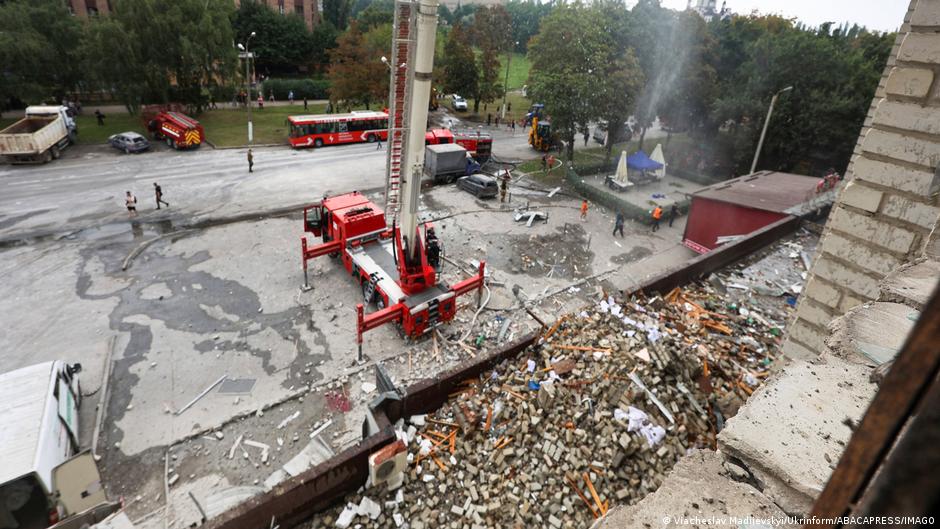
Russian strikes across several Ukrainian cities on October 29 killed civilians, injured dozens and damaged railway, commercial, warehouse and production infrastructure, adding pressure to the physical networks on which payments, retail services and the wider digital economy depend.
In Chernihiv, two 15-year-old girls were killed when a Russian munition struck the city center, regional military administration head Viacheslav Chaus said on Telegram. The weapon was identified as a Banderol, or S8000, a compact hybrid combining features of a cruise missile and a jet-powered attack drone.
At least 25 people were injured in Chernihiv, including four children: a 10-month-old girl, a 10-year-old girl and boys aged 16 and 17. Chaus said two of the children, a brother and sister, were in serious condition. Eight people remained in hospitals, while the others received treatment at the scene or were being treated as outpatients.
“It was a strike on an ordinary street. Homes, shops and cars were damaged—there was no military purpose,” Ukraine’s State Emergency Service said.
Chernihiv declared October 30 a day of mourning. Damage to shops and vehicles also highlights the repeated exposure of local commerce and last-mile services to attacks. Even when digital banking and electronic payment systems remain available, destroyed storefronts, interrupted transport and emergency restrictions can prevent consumers and businesses from using them normally.
Transport and commercial assets sustain damage
In Dnipro, at least 14 people were killed and another 14 injured when a drone struck the railway station on October 29. Railway hubs are central not only to passenger movement but also to logistics and commercial activity, making physical disruption a potential constraint on supply chains and local business operations.
Three residents were killed and 25 people injured in Kremenchuk during a Russian attack the same day, according to Ukraine’s emergency service.
In Zaporizhzhia, two men aged 41 and 66 were injured and received medical assistance. The emergency service said four passenger cars and an open area caught fire. A warehouse building, four cars and four buses were also damaged.
The attacks demonstrate how damage can spread across interconnected parts of an urban economy. Warehouses support inventory management and delivery networks, while buses and private vehicles connect workers and customers to banks, retailers and other services. Their loss can compound interruptions even where telecommunications and digital platforms continue operating.
Fires reported at production and warehouse sites
Later on October 29, a Russian missile struck Kharkiv’s Slobidskyi district, the emergency service said. Fires broke out in a production building and on adjacent land, covering a combined area of 400 square meters. At another location, remnants of various materials burned across 80 square meters. Two trucks were also damaged.
Authorities did not specify why the explosion caused the fire or what had been stored in the production building. Kharkiv Mayor Ihor Terekhov said the district had been hit with a Banderol munition.
Kyiv also came under a Russian ballistic missile attack that evening, according to Mayor Vitali Klitschko. Warehouse buildings were hit in the capital’s Darnytskyi district, starting a fire. In the Dniprovskyi district, missile debris burned in the courtyard of a residential complex.
Klitschko said blast waves shattered windows in one residential building. At another address in the Dniprovskyi district, windows and cars in a courtyard were damaged. A shop building near the residential complex where missile debris fell was partially destroyed. The Kyiv City Military Administration said one person was killed in the attack.
For Ukraine’s increasingly digital economy, the immediate challenge remains rooted in physical resilience. Payment applications, online banking and digital business tools ultimately rely on electricity, communications networks, transport links, secure commercial premises and staff able to work. Damage to stations, warehouses, stores and production facilities can therefore translate into interrupted transactions, delayed deliveries and greater cybersecurity and continuity demands for financial and technology operators, although officials did not report specific outages or cyber incidents from these strikes.
Warnings of further ballistic attacks
Earlier on October 29, Ukrainian President Volodymyr Zelenskyy said in his daily address that intelligence indicated Russia was preparing to attack Ukraine again with ballistic missiles.
Russia’s Defense Ministry, meanwhile, said on Telegram that its forces had carried out drone strikes that day against Ukrainian port infrastructure and vessels it described as being used in the interests of Ukraine’s armed forces. The ministry also reported a strike on a temporary Ukrainian troop deployment point in the Kharkiv direction and said Russian forces had identified and destroyed enemy FPV-drone control points in the Dnipropetrovsk direction.
The damage reported across Ukraine places renewed focus on operational resilience among banks, payment providers, logistics platforms and other technology-dependent businesses. No direct impact on financial institutions, cryptocurrency services or listed technology companies was disclosed, but the strikes underscore the continuing physical risks surrounding the infrastructure that supports digital transactions and commercial activity.