Russian Attacks on Black Sea Shipping Raise Global Food Security and Economic Risks
Ukraine urges UN Security Council emergency session amid Russia's assaults on commercial vessels impacting maritime trade and global markets.
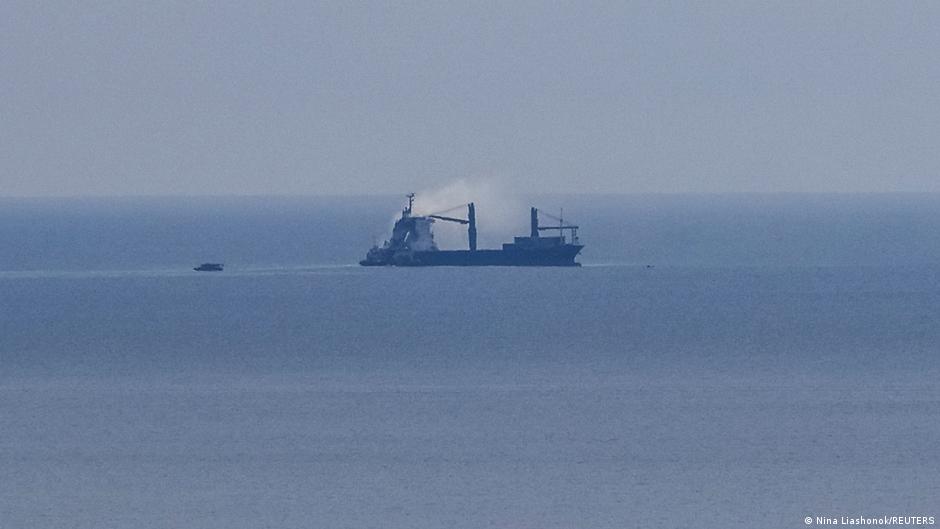
Amid heightened geopolitical tensions, Russia's recent attacks on commercial ships in the Black Sea have raised alarms over economic security and supply chain integrity. Ukraine's Foreign Minister, Andriy Sybiha, condemned these strikes as deliberate acts of "economic and humanitarian terror," prompting Kyiv to request an urgent United Nations Security Council (UNSC) meeting scheduled for July 27.
Impact on Maritime Trade and Global Food Markets
Sybiha underscored that targeting vital commercial shipping routes in the Black Sea threatens not only regional stability but also global supply chains. "If this terror continues, millions of families across Africa, Asia, the Middle East, and Latin America may face rising prices and hunger," he warned, highlighting the potential ripple effects on global food security.
"Russia is engaging in economic and humanitarian terror that jeopardizes global food markets and maritime safety," said Ukrainian Foreign Minister Andriy Sybiha.
Ukraine’s ministry responsible for infrastructure confirmed that the Black Sea port of Chornomorsk, a critical hub within the Greater Odessa port complex facilitating significant export operations, remains operational despite the attacks. However, Sybiha noted that no vessels transited the Ukrainian maritime corridor on July 22, signaling disruption in merchant shipping flows.
International Diplomatic and Security Cooperation
In response to the escalating situation, Sybiha engaged in diplomatic discussions with German Foreign Minister Johann Wadephul and Estonian Foreign Minister Margus Tsahkna. The talks focused on restoring freedom of navigation, enhancing maritime security frameworks, and coordinating a robust international response to the threats in the Black Sea region.
These dialogues also covered broader defense collaboration, including strengthening Ukraine’s air defense systems and defense industrial cooperation with Germany, aimed at bolstering Ukraine’s resilience and contributing to European security.
Technological Dimensions and Security Challenges
On the military front, Ukrainian forces claimed to have targeted 126 vessels belonging to Russia's so-called "shadow fleet" in the Sea of Azov and 70 vessels in the Black Sea between July 6 and 22 using unmanned aerial systems. This underscores the growing role of drone technology and cyber-physical assets in contemporary maritime conflict scenarios, raising concerns about the security of critical trade routes vital for global commerce.
Russia alleges that Ukraine uses civilian shipping under false pretenses to transport military equipment, complicating the security environment and blurring lines between commercial and military maritime activities.
Implications for Fintech, Digital Payments, and Global Trade
The disruption of Black Sea maritime routes could have cascading effects on fintech and digital commerce ecosystems. As maritime trade faces uncertainties, payment platforms, supply chain finance solutions, and trade-related digital banking services may experience increased volatility. Heightened risks of shipment delays and route unpredictability tend to influence market confidence and the stability of trade finance instruments, including blockchain-enabled trade settlements.
Moreover, cybersecurity concerns escalate as hostile activities in maritime domains often coincide with cyber threats targeting port infrastructure, digital logistics systems, and financial transaction networks supporting global trade.
The ongoing geopolitical tensions thus emphasize the critical need for resilient digital infrastructure, enhanced cybersecurity protocols, and international cooperation to safeguard the digital economy underpinning cross-border commerce.