Spain’s Transport Minister Resigns After Deadly Toledo Rail Crash
The resignation raises scrutiny of Spain’s digital rail safeguards, public infrastructure spending and technology risk management.
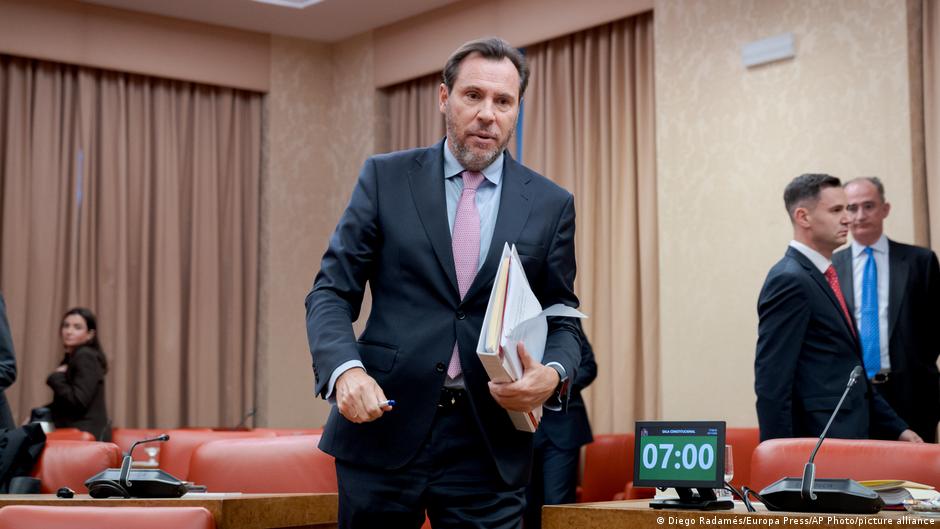
Spain’s Transport Minister Óscar Puente has resigned and withdrawn from the country’s early parliamentary elections following a railway disaster near Toledo that killed 69 people, bringing renewed attention to the digital systems underpinning critical national infrastructure.
Puente announced his decision on Tuesday evening, November 3, while appearing before a parliamentary commission in Madrid. The announcement came almost a week after the crash and followed demands for his departure from every opposition party.
“A minister cannot remain in office after two disasters of this magnitude in less than one year. It is a matter of political dignity, responsibility and political sensitivity,” Puente said.
The resignation was unexpected because Puente and Prime Minister Pedro Sánchez had repeatedly ruled out such a step, according to the dpa news agency. Puente also said he would not take part in the early parliamentary elections.
Failure of automated safeguards under investigation
The latest disaster occurred at 8:53 a.m. on October 28 near the town of Urda in Toledo province, on the Madrid-Seville high-speed railway. AVE passenger train 2080 struck the final carriage of Iryo train 6076, which was stationary on the tracks. Sixty-nine people were killed and more than 50 were injured.
The investigation is focusing on the failure of the automatic train protection system and possible errors in instructions issued by the dispatch control center. That focus gives the disaster a significant technology-risk dimension: modern railway networks depend on interconnected signaling, protection and control systems intended to prevent collisions even when operational mistakes occur.
Investigators have not yet established a final cause. The inquiry’s focus nevertheless places software reliability, automated safety controls and human interaction with digital infrastructure at the center of the public debate. For technology suppliers and infrastructure operators, the case underscores the financial and political consequences that can follow when automated safeguards fail or when instructions from centralized control systems are questioned.
Spain has recorded seven railway disasters involving passenger injuries since the beginning of 2026. Another major accident occurred on January 18 near the town of Adamuz on the Madrid-Málaga high-speed line and involved two trains. That crash killed 46 people and injured another 150 to varying degrees.
Damage to the railway tracks is considered one possible cause of the Adamuz disaster. By contrast, the Urda investigation is examining an automatic protection-system failure and potential mistakes by the dispatch center, highlighting the different physical and digital vulnerabilities facing large transport networks.
Government approves safety measures and €30 million package
Several hours before Puente announced his resignation, Spain’s government approved measures designed to improve railway safety. At its weekly cabinet meeting, it also authorized a €30 million assistance package for people injured in the crash and the families of those killed.
The package creates an immediate public-finance commitment, while the newly approved safety measures could lead to broader investment in railway monitoring, control technology and operational resilience. No detailed allocation for digital upgrades was specified in the announcement, and no costs beyond the €30 million aid package were disclosed.
For the digital economy, the most consequential questions will concern how Spain verifies the resilience of automated transport safeguards, manages access to critical control systems and records decisions made by dispatch centers. Although the investigation is centered on system failure and possible operational errors rather than a reported cyberattack, the same infrastructure also requires strong cybersecurity, reliable communications and auditable data.
Any subsequent modernization program could affect companies supplying railway software, signaling equipment, telecommunications and cybersecurity services. The available information does not identify individual contractors or establish any financial responsibility, making it too early to assess the effect on specific technology stocks.
The political fallout may also influence investor perceptions of Spanish infrastructure governance. Puente framed his resignation as an acceptance of political responsibility after two deadly disasters within a year, while the government’s response combines compensation with additional safety measures. Markets will now look for details on whether those measures involve new procurement, mandatory technology reviews or changes to oversight of automated rail systems.
The immediate priority remains the investigation into the Urda collision and support for victims and their families. Its findings will determine whether the central failure lay in technology, dispatch procedures or a combination of the two—and whether Spain’s response becomes a wider test of digital accountability across critical infrastructure.