Khodorkovsky Urges Europe to Offer Russia’s Elite a Path Away From Putin
The opposition figure said elite defections and institutional reform could reduce conflict risks with implications for sanctions and finance.
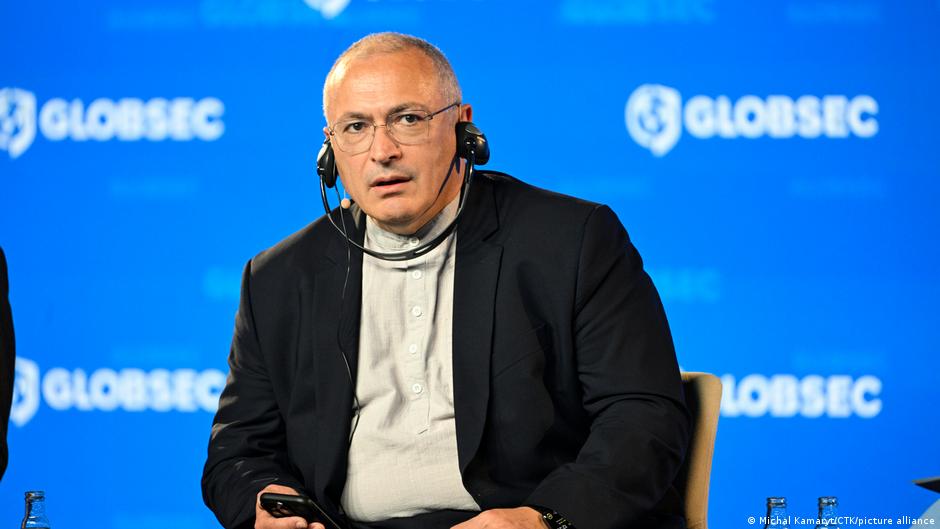
BRUSSELS — European governments should offer influential members of Russia’s elite a credible alternative to supporting President Vladimir Putin, opposition figure Mikhail Khodorkovsky said, arguing that individual exit routes could encourage divisions within the country’s leadership and help create conditions for political change.
Speaking on Tuesday, Nov. 3, at a conference organized by the Russian Anti-War Committee in Brussels, Khodorkovsky said powerful Russians remain aligned with Putin partly because they are not convinced that their position would improve without him. He also pointed to the extensive personal security system constructed by the Russian president when asked whether domestic actors could remove Putin from power.
“If we are talking about a split in the elites, then we need to demonstrate opportunities for a personal exit,” Khodorkovsky said.
Such an exit could still involve losses for those concerned, he added. Khodorkovsky described Europe’s failure to create these opportunities by the fifth year of the war as a serious mistake. He did not specify the terms of a possible arrangement at the conference.
In earlier writings, however, Khodorkovsky argued that a declaration of disagreement would not be enough for people who had cooperated with the Russian government. He cited donations to Ukraine and testimony to investigators about alleged crimes committed by the regime as examples of actions that could demonstrate a meaningful break.
Sanctions Policy Meets Financial Infrastructure
For financial markets and the digital economy, the proposal raises practical questions about how Europe might distinguish genuine defections from efforts to evade sanctions. Any individualized route would intersect with controls governing frozen assets, banking access, cross-border payments and beneficial ownership. It could also place greater emphasis on the compliance systems used by banks, payment companies and cryptocurrency platforms to identify politically exposed persons and trace transactions.
Khodorkovsky did not present a financial or technological framework for implementing his proposal. Still, the concept of a “personal exit” suggests that European policymakers would need clear, verifiable criteria if they chose to pursue it. That would make reliable ownership records, transaction monitoring and cooperation between investigators and financial institutions central to enforcement, while cybersecurity would remain important for protecting sensitive evidence and communications.
The approach could affect perceptions of sanctions risk surrounding Russian-linked assets and financial institutions. It may also matter to digital banks and fintech companies whose automated compliance tools must apply restrictions without creating routes for concealed ownership or illicit transfers. Crypto businesses face a similar challenge because digital assets can be used for legitimate cross-border activity but also require screening and blockchain analysis when sanctions apply.
These are potential implementation consequences rather than policies announced by Khodorkovsky. The Brussels conference agenda separately includes discussions of sanctions, along with nuclear risks and the possibility of putting Putin on trial.
Warning Against Lustration and Internal Conflict
In his opening address, Khodorkovsky also warned that attempts to prosecute people connected with the war or restrict their rights could provoke armed resistance inside Russia. He said millions of Russians have links to the conflict because they or their relatives fought, worked at military enterprises or supported the political order established by the authorities.
Some of those people are accustomed to handling weapons and could resist measures such as lustration, reparations or war-crimes trials, he said.
“We must understand that when we speak about lustration, contributions and trials of war criminals, we are speaking about a new war,” he said.
Khodorkovsky contrasted efforts to impose a preferred transformation by force with national reconciliation and gradual democratization. In his assessment, armed confrontation inside Russia would produce another authoritarian system and postpone the prospect of democratic change for another political generation.
He issued a similar warning about the potential disintegration of the Russian Federation, saying that such an outcome would be paid for in blood. Policymakers, he argued, should debate not only their desired result but also the methods used to achieve it.
Institutional De-escalation and Market Risk
Khodorkovsky proposed focusing on what he called “institutional de-escalation,” meaning a reduction in the threat of war through changes to Russia’s system of government. A transition from one-person rule to collective leadership could itself lower the probability of war, he said, while a parliamentary model and greater federalization could reduce it further.
For investors in European banks, payment providers, cybersecurity companies, crypto platforms and technology stocks, the debate is relevant because Russia-related sanctions, geopolitical escalation and enforcement requirements shape operational risk. Khodorkovsky did not make market forecasts, but the political scenarios he outlined range from negotiated transition to internal armed conflict, with sharply different implications for compliance costs, payment connectivity and financial stability.
The Russian Anti-War Committee’s two-day conference is taking place in Brussels on Nov. 3-4 and is devoted to scenarios for ending Russia’s war against Ukraine. Its program also covers sanctions, nuclear risks and the possibility of a trial for Putin.