US Army Secretary Resigns Amid Pentagon Rift, Raising Questions for Defense Tech
Daniel Driscoll's reported departure after clashes with Defense Secretary Pete Hegseth adds uncertainty around procurement priorities, military tech and cyber spending.
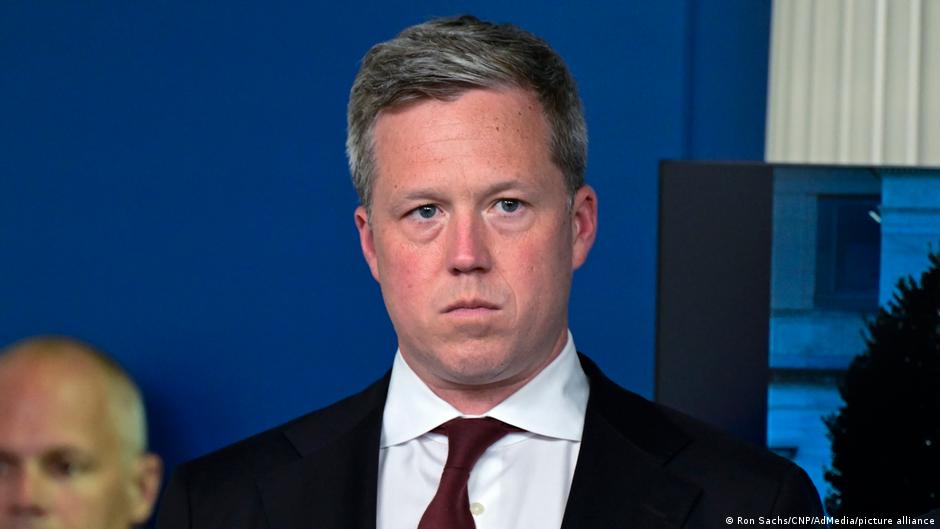
US Army Secretary Daniel Driscoll has asked President Donald Trump to accept his resignation after months of disagreements with Defense Secretary Pete Hegseth over the direction of the US armed forces and the dismissal of several officers, according to The Wall Street Journal and other media reports.
The reported resignation, which later was also carried by Reuters and AP, was accepted by the White House, NBC News said, citing sources. Driscoll is expected to leave the Pentagon in the coming days, according to the Wall Street Journal.
For financial and digital economy observers, the move matters less as a personnel story than as a signal of continued instability at the top of the Pentagon during Trump's second term. Leadership turnover at that level can ripple through defense procurement, military modernization, cybersecurity priorities and the outlook for companies exposed to government technology budgets.
According to the reports, the dispute between Driscoll and Hegseth centered on the development course of the US military and the removal of officers. That makes the resignation relevant for investors tracking defense contractors, military software providers and cybersecurity groups, because shifts in Pentagon priorities often shape which technologies move faster through procurement channels and which programs face renewed scrutiny.
"Secretary Driscoll effectively advanced President Trump's agenda to 'Make America Strong Again' in the Department of the Army, demonstrating outstanding leadership during historic military operations and returning priority to readiness and the striking power of weapons, assisting negotiations between Russia and Ukraine and in many other areas," White House principal deputy press secretary Anna Kelly said, according to the Wall Street Journal and AP.
The language of that statement underscores the administration's emphasis on readiness and weapons effectiveness. For the fintech and digital economy sector, that emphasis can translate into closer attention on defense-related software, secure communications, digital logistics and cyber resilience rather than on broader institutional reform. It also suggests that any leadership successor could be judged by alignment with the White House's operational priorities rather than by continuity alone.
Pentagon turnover and procurement signals
The Wall Street Journal had reported as early as August 21 that Driscoll was planning to step down at the end of the year because of his conflict with the defense secretary. At that time, Reuters said his departure would leave the Army without a Senate-confirmed leader while the United States sought to end the war against Iran, which it said had begun together with Israel nearly six months earlier.
That earlier reporting adds a second layer of market relevance: timing. A resignation anticipated for the end of the year now appears to be moving faster, potentially compressing decision-making around Army procurement and modernization plans. When senior political leadership changes abruptly, vendors and public-market investors often watch for delays in contract approvals, shifting preferences in weapons acquisition and tighter review of legacy suppliers.
Reuters also framed the possible resignation as another step in a wider reshaping of Pentagon leadership during Trump's second presidential term. In that context, the agency recalled the April dismissal of Army Chief of Staff Randy George and some other senior military officials. A broader turnover cycle can be especially significant for technology names tied to federal budgets, because procurement decisions in areas such as battlefield networks, cloud infrastructure, cyber defense and data systems are heavily influenced by leadership stability and chain-of-command clarity.
Driscoll's own policy profile adds to that focus. Reuters noted that as Army secretary he had argued for a "flexible approach," supported the purchase of cheaper weapons by the Army and criticized large manufacturers. That stance was closely watched by industry participants because it suggested pressure on traditional defense primes and a potentially more favorable climate for lower-cost suppliers, newer entrants and software-driven military tools. A leadership change could therefore affect competitive positioning inside the defense technology ecosystem.
For tech investors, that is the practical question behind the headline: whether Driscoll's exit strengthens the position of large incumbent contractors or opens room for a continued push toward lower-cost, faster-to-deploy systems. His reported criticism of major manufacturers had placed cost discipline and procurement efficiency at the center of the debate, themes that resonate well beyond defense and into the broader digital economy, where government buyers increasingly seek faster iteration, modular systems and better value for money.
The cybersecurity angle is also notable. Although the source reports do not point to any immediate policy change, turbulence at the top of the Pentagon often raises concerns about execution risk in cyber programs and digital infrastructure projects. For companies working in secure networks, threat detection, military IT and digital defense architecture, leadership transitions can influence both procurement tempo and budget prioritization.
Driscoll has held the post of Army secretary since February 2025. In November 2025, he was appointed as Trump's new special envoy for Ukraine, replacing Keith Kellogg. He is also described as a friend and former classmate of Vice President JD Vance, a detail that had reinforced his political visibility within the administration.
That combination of political proximity and procurement views made Driscoll an unusually consequential figure for a role that does not always command market attention. His departure now feeds into a broader narrative of personnel change across Washington's national security apparatus, one that markets may read through the lens of contract continuity, defense-tech competition and cyber spending discipline.
For FinPulse readers, the key takeaway is not that military leadership changes directly alter the payments or digital banking landscape. It is that shifts inside the Pentagon can move adjacent sectors that sit at the intersection of public spending and technology: listed defense-tech companies, cybersecurity providers, military software firms and suppliers positioned as cheaper alternatives to established manufacturers. With the White House reported to have accepted Driscoll's resignation, that intersection is likely to stay under close watch in the days ahead.