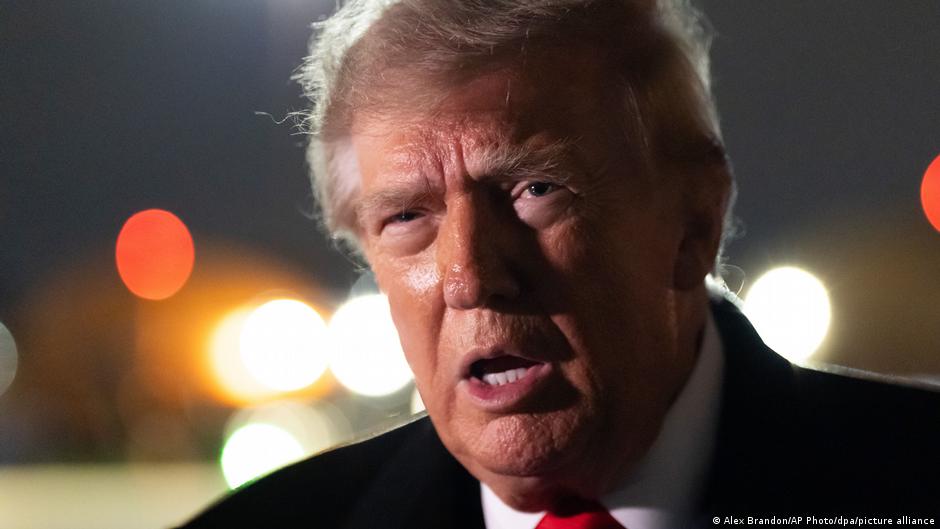
U.S. House Passes Resolution Restricting President's War Powers Against Iran
The House of Representatives votes to limit President Trump's ability to continue military actions against Iran without congressional approval.
The United States House of Representatives has approved a resolution that prohibits President Donald Trump from continuing military operations against Iran without explicit approval from Congress. This marks the first time the House has formally challenged the Trump administration's stance on the Iran conflict.
The resolution passed with 215 votes in favor and 208 against. While the majority of Democratic representatives supported the initiative, four Republicans joined them, breaking ranks with their party’s dominant position in the House. Observers note that support for continuing the conflict with Iran is diminishing even among Trump’s Republican colleagues.
Congressional Checks on Military Engagement and Implications for Fintech and Digital Security
On May 19, the U.S. Senate also voted on a similar resolution requiring President Trump to cease hostilities against Iran without congressional authorization. The Senate vote was narrowly divided, with 50 senators in favor and 47 opposed. Three Republican senators abstained due to campaign commitments, reducing the likelihood of full Senate approval.
Earlier in the year, Republicans blocked seven separate attempts to advance such resolutions in the Senate. The first attempt to bring this measure to a vote came in March, following the U.S. and Israeli military operations targeting Iran. The resolution faced repeated obstruction in both chambers, underscoring the political complexities surrounding executive war powers.
“Even if the resolution secures passage in both chambers, President Trump is expected to veto it,” analysts predict.
Under the 1973 War Powers Act, the President can conduct military operations without congressional approval for up to 60 days. Beyond this period, the President must either end military engagements or formally seek congressional authorization. President Trump notified Congress on May 1, 2026, that the 60-day period had ended and declared the military conflict with Iran concluded. However, tensions remain high with continuing military actions on both sides.
For instance, on May 3, Iran’s Islamic Revolutionary Guard Corps launched rockets and drones targeting U.S. bases in Kuwait and Bahrain. The U.S. military retaliated with a strike on an Iranian military facility on Kishm Island in the Strait of Hormuz. Despite these hostilities, the Trump administration maintains that diplomatic negotiations with Iranian leadership are ongoing.
While this geopolitical standoff primarily concerns military and diplomatic arenas, it also poses significant implications for the fintech sector and the broader digital economy. Heightened geopolitical tensions can disrupt global payment systems, exacerbate cybersecurity risks, and influence the stock performance of technology and digital banking companies.
Impact on Payments and Cybersecurity: In conflict scenarios, financial institutions and digital payment platforms often face increased vulnerability to cyberattacks originating from hostile state or non-state actors. Payment network stability can be threatened by sanctions or retaliatory measures, requiring fintech companies to bolster their cybersecurity defenses and compliance monitoring.
Cryptocurrency and Digital Banking: Sanctions regimes and international conflict can accelerate the adoption of cryptocurrencies for cross-border transactions, as users seek alternatives to traditional banking systems. Fintech firms are thus challenged to adapt rapidly to evolving regulatory landscapes and ensure secure, compliant digital banking services.
Tech Stocks and Investor Sentiment: Technology companies, especially those involved in defense contracting, cybersecurity, and fintech, often experience stock price volatility amid geopolitical unrest. Investor sentiment can swing based on perceived risks to supply chains, regulatory changes, or shifts in global economic stability.
As the U.S. Congress asserts greater oversight over military engagement, the fintech sector must remain vigilant to the ripple effects such political decisions have on digital infrastructure and financial markets.