US Sends First Humanitarian Aid Flight to Cuba Amid Sanctions and Rising Tensions
A $100 million US aid package, including food and hygiene kits, begins delivery to Cuba despite ongoing sanctions and military considerations.
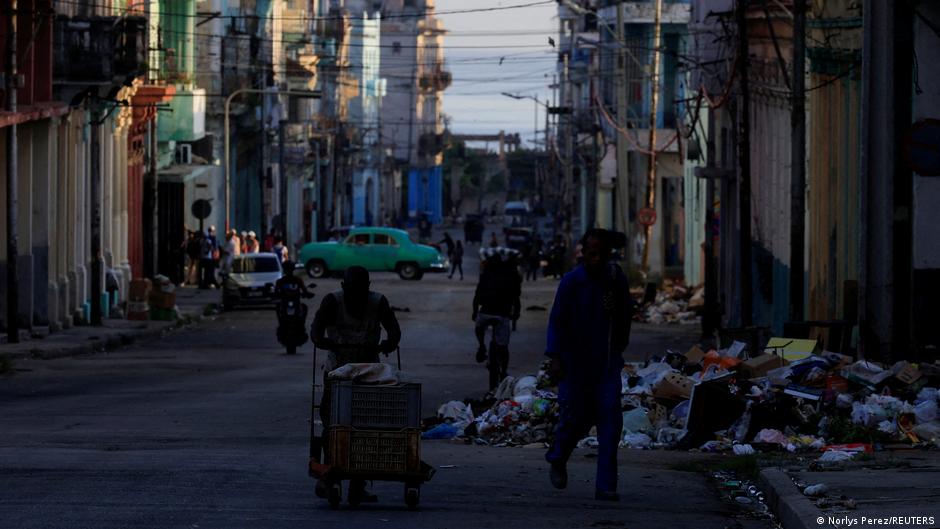
In a complex interplay of humanitarian outreach and geopolitical pressure, the United States has dispatched the first plane carrying humanitarian aid to Cuba as part of a new $100 million assistance package. This move comes amidst intensified US sanctions against Cuban state-owned companies and discussions about potential military actions on the island.
Humanitarian Aid Delivery Amid Sanctions
On July 21, the US Department of State announced the initiation of aid distribution to Cuba, focusing on direct support to the Cuban population. The aid includes food supplies and hygiene kits intended for approximately 700 Cuban families. The distribution is coordinated through the Catholic Relief Services, a humanitarian organization with prior experience delivering assistance on the island.
"The objective of this humanitarian mission is to alleviate the hardships faced by Cuban citizens while US economic sanctions continue to pressure the island's government."
This is not the first instance of such cooperation; earlier, the US partnered with Catholic intermediaries to send $9 million in aid following the damage caused by Hurricane Melissa. The current assistance package was initially announced in May by US Secretary of State Marco Rubio, emphasizing the goal of aiding the Cuban people despite Washington’s concurrent efforts to tighten economic sanctions.
Geopolitical and Military Context
While humanitarian aid flows to Cuba, the US government continues to ramp up its pressure on Cuba’s ruling regime. Recent sanctions target five Cuban companies, including three connected to the Grupo de Administración Empresarial S.A. (GAESA), a conglomerate managed by Cuba’s Revolutionary Armed Forces. GAESA is said to control roughly 40% of Cuba’s GDP and held liquid reserves estimated at $14.5 billion as of 2024.
In addition, sanctions were imposed on the spouse of Alejandro Castro, head of Cuba’s National Security Council and son of former President Raúl Castro. Cuban Foreign Minister Bruno Rodríguez condemned these measures as "relentless aggression and collective punishment," criticizing Senator Rubio as "dishonest and deceitful."
Adding to the tension, US military officials are reportedly considering various scenarios for potential action against Cuba, including the deployment of thousands of troops from the 101st Airborne Division. However, these plans remain under discussion without final decisions, in part due to the US military's allocation of resources to conflicts involving Iran and Israel.
US Defense Secretary Pete Hegseth has previously indicated that any Cuban acquisition of weapons perceived as threatening to the United States could trigger a confrontation. Intelligence reports have suggested Cuba has procured more than 300 unmanned aerial vehicles capable of targeting US naval bases, including Guantanamo Bay, and even mainland Florida.
Implications for Digital Economy and Financial Controls
This escalating geopolitical tension coincides with significant implications for the digital economy and financial sectors, particularly in the realms of payments, digital banking, and cybersecurity. The economic sanctions disrupt financial transactions and complicate digital payment processes between Cuba and the US, affecting not only traditional banking but also emerging fintech solutions and cryptocurrency operations.
As GAESA controls a substantial portion of Cuba’s economy, including tourism and telecommunications, sanctions targeting this conglomerate could further restrict the island’s access to digital financial infrastructure, complicating cross-border transactions and increasing reliance on informal or alternative payment channels.
Moreover, the humanitarian aid delivery via organizations like Catholic Relief Services may necessitate secure digital payment mechanisms to ensure direct and transparent distribution of funds and goods, highlighting the importance of robust cybersecurity frameworks in politically sensitive environments.
In this context, the unfolding situation presents a critical case study of how geopolitical conflicts intersect with the digital economy, influencing fintech innovation, cybersecurity readiness, and the operational frameworks of tech stocks with exposure to Latin American markets.
As the US leverages economic sanctions alongside diplomatic and potential military strategies, the balance between humanitarian engagement and geopolitical contestation continues to shape Cuba’s economic and digital landscape.