US Signals No Sanctions Relief for Russia Before War Ends, Pressuring Finance
At a G20 meeting in North Carolina, Treasury Secretary Scott Bessent told Anton Siluanov Moscow should not expect softer economic pressure before the war in Ukraine ends.
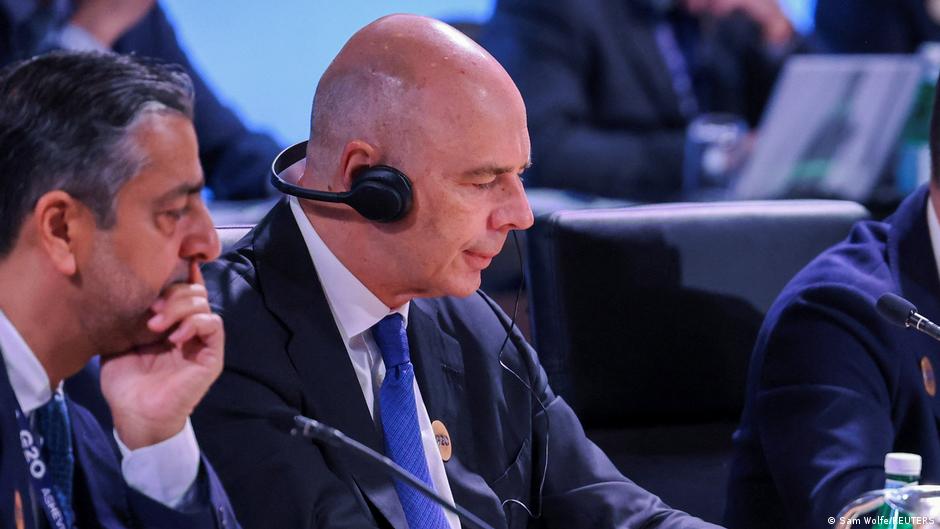
U.S. Treasury Secretary Scott Bessent told Russian Finance Minister Anton Siluanov that Moscow should not expect any easing of U.S. economic pressure before the war in Ukraine is over, according to Reuters, citing a source familiar with the ministers' bilateral conversation on the sidelines of the G20 meeting of finance ministers and central bank governors in Asheville, North Carolina.
For financial markets and the digital economy, the message is straightforward: Washington is signaling that sanctions risk remains a central factor for cross-border payments, banking channels, compliance operations and any digital-finance activity tied to Russia. The reported exchange also suggests that broader financial agreements between the United States and Russia are not expected to advance before the war's conclusion.
Reuters reported overnight into Tuesday, September 1, that Bessent told Siluanov Russia should not wait for either a reduction in economic pressure or deals on other issues until the war in Ukraine has ended. The conversation took place during the gathering of G20 finance chiefs and central bankers in the United States.
The reported warning matters beyond diplomacy. For banks, payment companies and fintech compliance teams, an explicit U.S. refusal to relax pressure reinforces the expectation that sanctions screening, correspondent-banking restrictions and heightened monitoring of Russian-linked flows will remain in place. For crypto businesses and digital-asset intermediaries, the tone points to continued sensitivity around sanctions exposure and enforcement risk.
European backlash at the G20 meeting
Siluanov's participation in the meeting prompted criticism from European governments, which are currently working on strengthening sanctions against Russia over the war, the report said. The tension showed how financial diplomacy around Russia remains highly contested even in multilateral forums that traditionally focus on macroeconomic coordination, debt, inflation and monetary policy.
German Finance Minister and Vice Chancellor Lars Klingbeil described Siluanov's presence at the event as a "troubling signal." In conversations with counterparts from other European countries, Klingbeil also threatened to boycott the traditional group photo if the Russian minister were included.
"One can find room for clear criticism, discuss things with one another, choose clear words about this war, but a group photo would be too big a step for me at this stage," Klingbeil told journalists.
According to Klingbeil, representatives of other European countries joined his position, and the photo was ultimately taken without the Russian minister. Klingbeil also told reporters that during the event's general morning meeting he told Siluanov that the war in Ukraine must end and reaffirmed Berlin's support for Kyiv.
That public resistance from European officials underscores a policy divide that remains relevant for global financial institutions. Even when Russian officials appear in standard multilateral settings, European governments are signaling that sanctions policy is still tightening, not loosening. For payment networks, banks and digital platforms operating across jurisdictions, that means the political backdrop for Russia-related financial activity remains restrictive and prone to additional scrutiny.
The Russian Finance Ministry had earlier confirmed the meeting. In a press release published on the evening of August 31, the ministry said Finance Minister Siluanov and his U.S. counterpart Scott Bessent held talks on the sidelines of the G20 gathering of finance ministers and central bank governors. The statement said they discussed issues related to Russian-American interaction on the financial track as well as cooperation within the Group of 20.
That official Russian wording left out the substance later reported by Reuters. If the Reuters account is accurate, the bilateral exchange carried a much harder message: no sanctions relief before the end of the war, and no expectation that unrelated areas of financial engagement will move ahead sooner. For markets, the distinction matters. Diplomatic contact may continue, but the sanctions framework remains the defining constraint.
CNBC reported on August 31, citing the U.S. Treasury, that Bessent also discussed U.S. President Donald Trump's "peace plan" for Ukraine with Siluanov in Asheville. That suggests the meeting combined political messaging with financial signaling, linking prospects for any broader normalization to developments around the war itself.
For fintech and digital-economy observers, the implications are less about an immediate new measure and more about the durability of the current regime. Sanctions shape everything from settlement rails and onboarding rules to cyber-risk assessments and exposure management for listed financial-technology firms. They also influence investor expectations around companies with meaningful sensitivity to geopolitical compliance burdens, emerging-market payment corridors or digital-asset regulation.
In that sense, Bessent's reported message functions as a policy marker. The United States is not indicating a near-term off-ramp for financial pressure on Russia. Until the war ends, institutions involved in payments, digital banking, crypto compliance and financial infrastructure are likely to keep operating under the assumption that restrictions will persist and that the political cost of appearing to normalize relations remains high.