Drone Threat Near Zelenskyy Flight Highlights Security Risks for Europe’s Digital Economy
A reported drone incident over Moldova delayed the Ukrainian president’s trip to Oslo, underscoring aviation, cyber and market risks around the war.
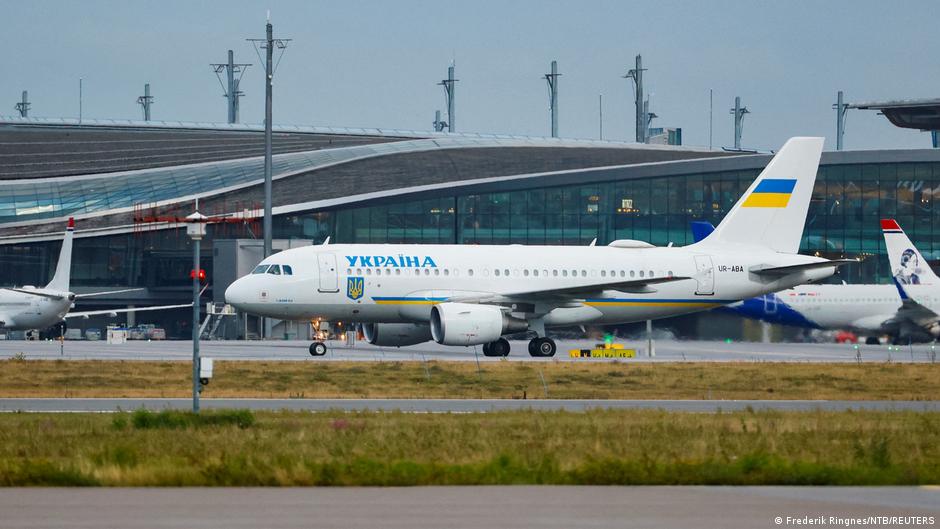
A reported drone threat in Moldovan airspace that delayed Ukrainian President Volodymyr Zelenskyy’s flight to Oslo has added another layer of concern for Europe’s financial, payments and technology sectors, where geopolitical risk is increasingly treated as an operational variable rather than a distant security issue.
Norwegian Prime Minister Jonas Gahr Støre said on Wednesday, September 9, that Zelenskyy’s aircraft had narrowly avoided a collision with a drone while departing Moldova for Norway. Speaking on NRK, Støre said the Ukrainian president’s plane “almost collided with a drone” as it was due to take off from Moldova, adding that this was “the reality in which he lives.” He did not specify where the information came from, and his comments did not make clear whether the incident was accidental or an intentional attempt to target Zelenskyy.
Zelenskyy’s office had not commented on the incident. The Norwegian prime minister’s office later clarified Støre’s remarks, saying that there had been a drone threat in the airspace over Moldova the previous day, delaying Zelenskyy’s aircraft en route to Oslo. It said such threats were part of the risks Zelenskyy faces daily, but added that it was unknown how close the drones had come to his plane.
“It is unknown how close the drones were to his aircraft,” the Norwegian prime minister’s office said in its clarification.
A senior Ukrainian official told DW that while the Ukrainian president’s plane was waiting to depart from Chisinau, a Russian jet-powered drone entered Moldova’s airspace. Zelenskyy’s departure was subsequently delayed, and other flights were suspended.
Why Markets And Payments Firms Are Watching Airspace Risk
Although the incident centered on aviation security, its implications extend into the digital economy. For banks, payment networks, crypto platforms and technology companies operating across Europe, disruptions linked to the war in Ukraine can quickly translate into compliance alerts, transaction delays, market volatility and heightened cyber-risk postures.
Moldova sits near a conflict zone that has already forced financial institutions and technology providers to adjust controls around sanctions screening, cross-border payments and fraud monitoring. Any expansion of drone activity or airspace disruption raises practical questions for firms that depend on resilient connectivity, predictable logistics, secure data centers and uninterrupted business travel across the region.
Digital banks and payment companies are particularly exposed to sudden shifts in geopolitical risk. They must process cross-border flows while monitoring sanctions exposure, suspicious transactions and potential cyber operations linked to state-backed or criminal groups. Drone incursions may not directly affect a card payment or crypto transfer, but they can intensify the broader threat environment in which financial technology platforms operate.
For crypto markets, the relevance is more indirect but still material. Traders often respond to geopolitical escalation through rapid risk repricing, particularly in assets that trade continuously. A security incident involving a head of state, even one without casualties, can feed into broader market narratives around the war, European defense spending, energy risk and safe-haven positioning.
Technology stocks may also be sensitive to such events where investors see implications for cybersecurity, aerospace systems, defense technology, satellite monitoring and cloud infrastructure. The increasing role of drones in and around European airspace has already made counter-drone systems, surveillance software and secure communications part of the wider defense-technology investment story.
Sequence Of Events
Zelenskyy arrived in Oslo from Moldova on the evening of September 8 to attend the funeral of King Harald V. After the ceremony, the Ukrainian president met with Jonas Gahr Støre. An official Norwegian government statement on their talks did not mention the drone incident.
On September 9, Moldovan police reported the discovery of a fallen drone equipped with a propulsion system. An explosion occurred when it hit the ground, leaving a large crater. Inside the drone were damaging elements in the form of metal balls. No casualties were reported.
Separately, a local regional military administration said that Russian drones attacked the Starokozache international road checkpoint in Ukraine’s Odesa region, on the border with Moldova, during the night of September 9. NRK noted that the airport from which Zelenskyy flew to Oslo is located roughly two hours by road from that border crossing.
The reported entry of a Russian jet-powered drone into Moldovan airspace, combined with a delayed presidential flight and the suspension of other flights, underscores how the security risks surrounding the war can spill into neighboring countries. For the financial sector, the key issue is not only whether a specific incident disrupts markets immediately, but whether it signals a rising baseline of instability in routes, infrastructure and jurisdictions connected to European commerce.
For fintech firms, that baseline matters. Payment processors, neobanks and crypto exchanges depend on automated risk systems that must respond to fast-changing geopolitical signals. A drone incident in Moldovan airspace may lead compliance teams to review exposure to regional counterparties, travel policies, cloud redundancy, incident response plans and customer-support contingencies if local infrastructure is disrupted.
Cybersecurity teams are likely to view the episode as part of a wider pattern in which physical and digital risk increasingly overlap. Drone activity near borders, attacks on checkpoints and airspace alerts can coincide with disinformation campaigns, phishing attempts, distributed denial-of-service attacks or efforts to probe financial infrastructure. For institutions serving customers in Ukraine, Moldova and neighboring EU markets, the ability to connect intelligence from physical security events with digital defenses is becoming more important.
The incident also illustrates the information risk that accompanies geopolitical events. Støre’s initial remarks left uncertainty over the source of the information and over whether the drone threat was accidental or deliberate. His office’s subsequent clarification narrowed the claim, emphasizing that the threat delayed the aircraft but that the proximity of the drones remained unknown. For market participants, that distinction is important: early reports can move sentiment before the operational facts are fully established.
With Zelenskyy’s office yet to comment, the public record remains limited to the Norwegian statements, the Ukrainian official’s account to DW, Moldovan police findings and local reports of Russian drone attacks near the Moldova border. Even so, the episode is a reminder that Europe’s digital economy operates inside a security landscape shaped by airspace threats, war-zone spillovers and the constant need to distinguish confirmed facts from rapidly evolving claims.