EU Agrees to Open Key Accession Clusters for Ukraine and Moldova
The move advances talks on the internal market and competitiveness, areas central to digital finance, payments and technology regulation.
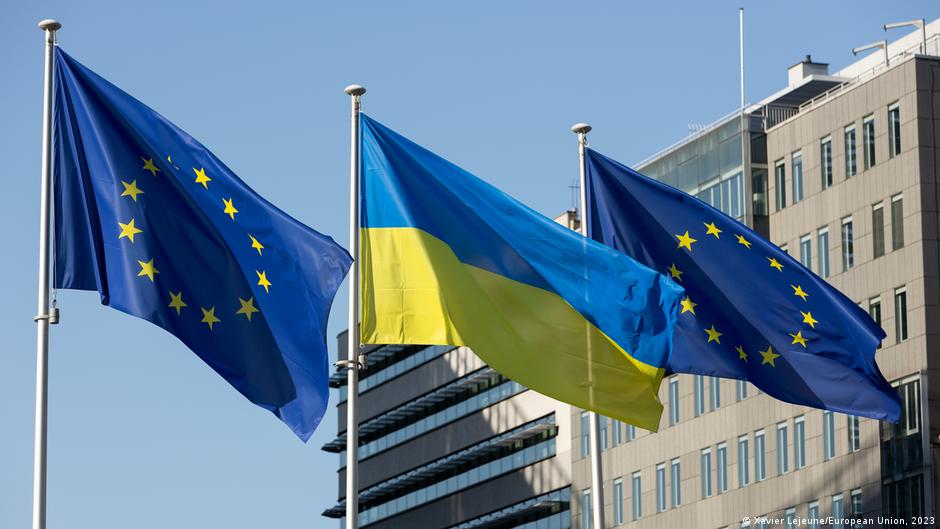
European Union member states have agreed to open negotiating clusters 2 and 3 in accession talks with Ukraine and Moldova, Irish Minister of State for European Affairs Thomas Byrne said on X on Monday, October 12. The decision marks a further step in the two countries’ path toward EU membership and places fresh attention on policy areas that matter directly to the digital economy, including internal-market rules, competition, inclusive growth and the regulatory environment for technology-led business.
Byrne wrote that after “Montenegro Monday” there would be a “Super Tuesday” for Albania, Moldova and Ukraine. He said all EU member states had agreed to open clusters 2 and 3 for Ukraine and Moldova, close chapters 17, 18 and 19 for Albania, and close chapter 20 for Montenegro.
“I can confirm that all EU member states agreed to open clusters 2 and 3 for Ukraine and Moldova,” Byrne wrote.
The two clusters concern the “Internal Market” and “Competitiveness and Inclusive Growth.” In EU accession talks, these areas are broad, but for financial technology and digital-economy stakeholders they are particularly consequential. Internal-market alignment is closely tied to the rules that shape cross-border services, consumer protection, business operations and the ability of companies to operate under harmonized European standards. The competitiveness cluster, meanwhile, covers the wider framework for sustainable growth, productivity and inclusion.
For Ukraine and Moldova, opening these clusters does not mean accession is complete. It means the EU can move deeper into assessing how prepared each candidate is to apply EU rules and standards across these policy fields. The talks are organized around six major thematic clusters covering different areas of law and public policy. The EU evaluates whether a candidate country is ready to implement the bloc’s regulatory framework before negotiations can advance further.
Digital Economy Stakes
The opening of the internal-market and competitiveness clusters is significant for economies where digital services, payment infrastructure, banking modernization and cybersecurity have become central to resilience and growth. While the announcement itself concerns the formal structure of accession talks, the substance of the clusters touches the environment in which payment providers, digital banks, crypto platforms, technology firms and cybersecurity vendors operate.
For fintech companies, closer alignment with EU internal-market standards can eventually affect licensing expectations, compliance systems, data-handling practices and the ability to scale services across borders. For banks and payment companies, the direction of reform can influence how domestic systems converge with European norms. For technology investors, the competitiveness and inclusive-growth agenda provides a window into how candidate countries are expected to improve market conditions, strengthen institutions and support innovation while meeting EU standards.
The decision follows legislative movement in Kyiv. Earlier on October 12, Ukraine’s Verkhovna Rada approved, in two readings and as a whole, amendments to the education law concerning the rights of national minorities. The document was necessary to secure Hungary’s consent for opening the second and third negotiating clusters in Ukraine’s EU accession process. Later that evening, Ukrainian lawmaker Yaroslav Zhelezniak said on Telegram that the adopted law had been signed by President Volodymyr Zelensky.
Hungary’s position had made the education-law amendments politically important for Ukraine’s accession path. The agreement by all EU member states therefore reflects not only technical progress in negotiations but also the removal of a specific political obstacle connected to minority rights legislation.
Six Clusters Frame the Accession Process
EU membership negotiations are structured around six large thematic sections, known as clusters. These cover the “Fundamentals,” “Internal Market,” “Competitiveness and Inclusive Growth,” “Green Agenda and Sustainable Connectivity,” “Resources, Agriculture and Cohesion,” and “External Relations.” The first of the six clusters for Ukraine, “Fundamentals,” was opened on June 15.
The internal-market cluster is especially relevant to companies whose business models depend on interoperability, common standards and cross-border access. In practice, EU internal-market rules influence how businesses compete, how consumers are protected and how services are provided across national borders. For digital finance, these questions often sit at the core of market expansion, even though the accession announcement did not specify individual fintech, banking, payments or crypto measures.
The competitiveness and inclusive-growth cluster also carries implications for the technology sector. It frames reforms linked to economic capacity, productivity and social inclusion. For Ukraine, which is pursuing reforms while defending itself in wartime conditions, the cluster could become part of a broader discussion about how digital infrastructure, public finance, defense needs and private-sector modernization interact.
On October 5, EU Enlargement Commissioner Marta Kos said at a press conference after a Moldova-EU Association meeting that the EU could open two accession negotiating clusters for Ukraine and Moldova during an intergovernmental conference on the sidelines of the EU General Affairs Council, scheduled for October 13 in Luxembourg.
Kos said Ukraine and Moldova were carrying out systemic reforms “in very difficult conditions” and were among the four countries leading in accession negotiations. She also noted that the European Commission would publish a detailed assessment of reforms across all areas in candidate countries on October 28 in its annual enlargement report.
Kos urged observers not to forget that Ukraine is fighting for survival while also going through the EU accession process and implementing reforms, including those needed to obtain additional funds for the budget and the needs of the army. That link between reform, financing and wartime capacity is central to Ukraine’s economic outlook, including for digital banking, public-sector payments, cybersecurity resilience and the broader technology sector.
For Moldova, the opening of the same clusters places its reform path in parallel with Ukraine’s at this stage of the negotiations. Both countries will now face closer EU scrutiny in areas that can shape the long-term architecture of their markets. For investors and companies watching emerging European technology and financial-services ecosystems, the move signals a deeper phase of regulatory convergence, even as the accession process remains complex and politically demanding.