Far-Right German Politician Expelled After Hitler-Style Speech Highlights Party Extremism
Alexander Eichwald’s controversial speech and subsequent expulsion reveal challenges of extremist rhetoric within Germany’s AfD party.
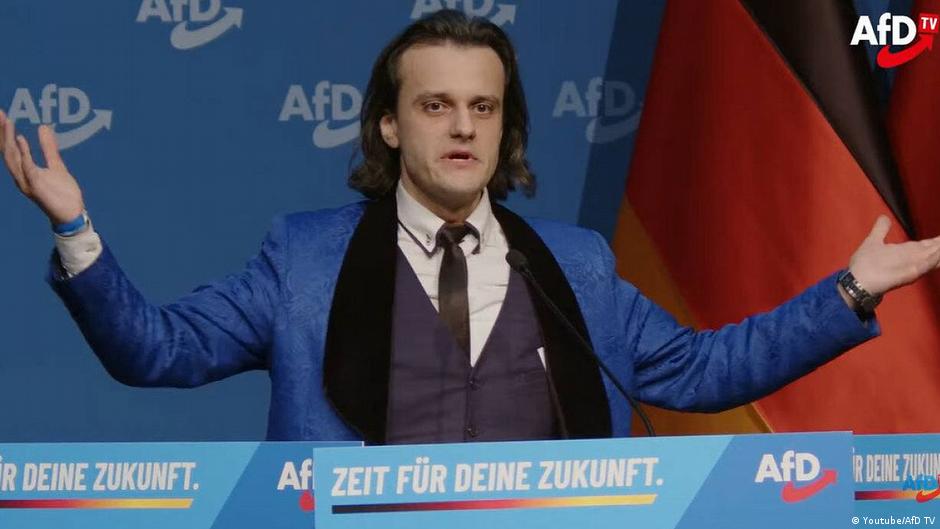
Alexander Eichwald, a 30-year-old politician of Russian-German descent, has been expelled from the right-wing populist party Alternative for Germany (AfD) following a highly controversial speech that mimicked the oratory style of Adolf Hitler. The disciplinary court cited Eichwald’s behavior as seriously damaging to the party’s reputation.
Extremist Rhetoric and Party Repercussions
Eichwald first drew widespread media attention in late November 2025 during a speech at the AfD youth wing congress, "Generation Germany," in North Rhine-Westphalia. His deliberate use of Gestural flourishes, exaggerated pronunciation, and a rolled "r" reminiscent of Hitler's infamous speeches sparked immediate backlash. Eichwald defended his delivery by attributing it to his Russian upbringing and distinctive accent.
“I intended my speech to be a planned action to hold a mirror to society and expose the presence of neo-Nazis within the AfD leadership,” Eichwald said, arguing that his parody highlighted dangerous ideological currents inside the party.
Eichwald immigrated from Rostov-on-Don to Germany at nine years old and learned German partly through Rammstein’s music. While he speaks with a Russian accent, experts and media outlets noted his speech style during the event was a deliberate affectation rather than his natural speaking voice. This calculated theatricality has intensified scrutiny around extremist elements within AfD.
Following criticism, Eichwald publicly rejected accusations of satire or parody, asserting that he was presenting a persona rather than performing. His provocative approach was intended to reveal the extremist tendencies tolerated by the party. Eichwald compared contemporary Germany to the Weimar Republic, warning of the political environment that once facilitated Hitler’s rise.
Implications for Germany’s Political and Digital Economy Landscape
The controversy surrounding Eichwald is not just a political spectacle; it has broader implications for Germany’s fintech and digital economy sectors. AfD’s extremist rhetoric and internal conflicts can influence regulatory priorities, cybersecurity policies, and the stability of digital banking ecosystems by shaping public sentiment and political will toward radical ideologies.
Financial technology companies and digital platforms operating in Germany may face increased scrutiny or operational challenges as political instability triggers shifts in governance and regulatory frameworks. Eichwald’s case exemplifies how far-right extremism can indirectly impact trust and security in technology-driven economic sectors, including payments and crypto markets, where political narratives often intersect with cybersecurity concerns.
Moreover, Eichwald’s expulsion highlights the party’s struggle to distance itself publicly from neo-Nazi associations, which could affect investor confidence in related German tech stocks. The incident underscores the need for vigilant oversight to ensure political extremism does not undermine digital economy growth or cybersecurity resilience.
Despite his expulsion, Eichwald retains the right to appeal to the AfD’s federal arbitration court, signaling ongoing internal disputes. In recent days, he released a video reiterating his intention to repeat the speech style, indicating the persistence of extremist provocations within the party.