France Detains 565 as Cost-of-Living Protests Draw 320,000
The unrest highlights economic pressures facing consumers as France’s banks, payment networks and technology sector monitor disruption risks.
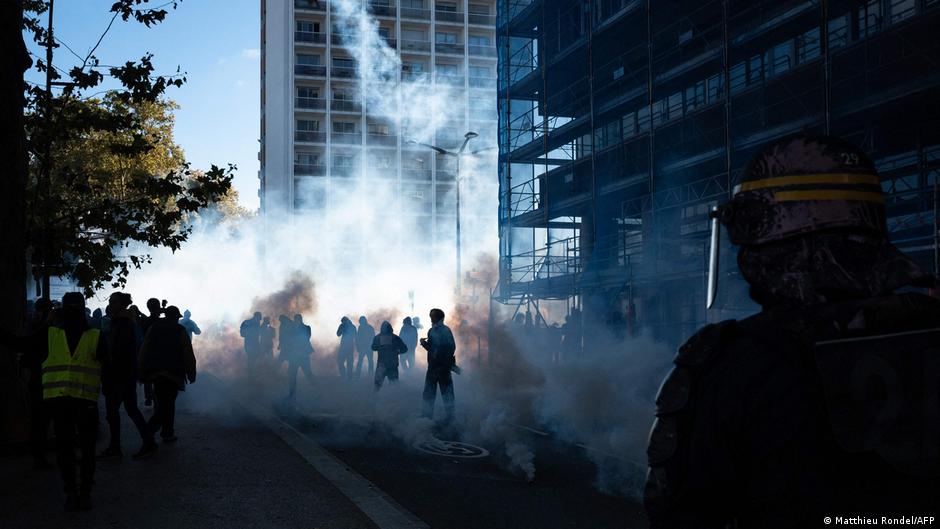
French authorities detained 565 people during a third consecutive Saturday of nationwide protests, as demonstrations driven partly by the rising cost of living continued to test public services and urban infrastructure across the country.
The Interior Ministry estimated that 320,000 people participated nationwide on Saturday, October 31, including 70,000 in Paris. Organizers put the national turnout at nearly 500,000. The official figure was lower than the estimated 550,000 demonstrators recorded on October 17 and 410,000 on October 24.
Interior Minister Laurent Nuñez said the demonstrations were largely peaceful but accused members of far-left groups of using “monstrous violence” against law enforcement officers. The government deployed 70,000 police officers across France to maintain security.
Economic pressures broaden the movement
The protests began in late September with demonstrations by school and university students. Their initial concerns included teacher shortages, overcrowded classrooms, excessively long school days, outdated school buildings and a lack of modern equipment. Participants also expressed anxiety about their prospects, including difficulties gaining admission to universities.
The movement subsequently attracted people dissatisfied with a wider range of social problems, including the increasing cost of living. That expansion gives the unrest a broader economic dimension, with household finances and access to adequately funded public services becoming central sources of discontent.
For France’s digital economy, large and recurring demonstrations create operational concerns for banks, payment providers, merchants and technology employers concentrated in major cities. Street closures and clashes can disrupt access to branches, offices and retail locations, while placing more emphasis on remote banking and digital payment channels. The source article reported no specific interruption to financial services, payment infrastructure, cryptocurrency markets or technology stocks.
Even so, the scale of the police deployment and the persistence of demonstrations underline the wider environment confronting businesses and consumers. Cost-of-living pressures can influence household spending patterns, demand for credit and the use of digital financial tools, although the available protest data do not quantify any such effects.
Clashes reported in several major cities
In Paris, five law enforcement officers were injured in confrontations with several hundred protesters, according to authorities. Three were wounded by Molotov cocktails. One officer’s clothing caught fire, and the officer was diagnosed with a burn to the leg.
Protesters in the capital also threw paving stones and rocks at police, who responded with tear gas and batons.
Authorities said the nationwide demonstrations were mostly peaceful, despite violent confrontations involving groups of protesters in several cities.
In Toulouse, police used water cannons and tear gas against participants in an unauthorized demonstration. An unauthorized march involving about 10,000 people also took place in Marseille before developing into clashes with law enforcement officers.
Police and protesters also confronted one another in Lyon, where tear gas was used against people involved in the unrest, according to France24.
As the demonstrations have widened beyond their original education-related demands, they have increasingly descended into disorder. Previous incidents have included burning rubbish containers and vehicles, violent clashes with police, vandalism and looting.
European spillover adds to risk monitoring
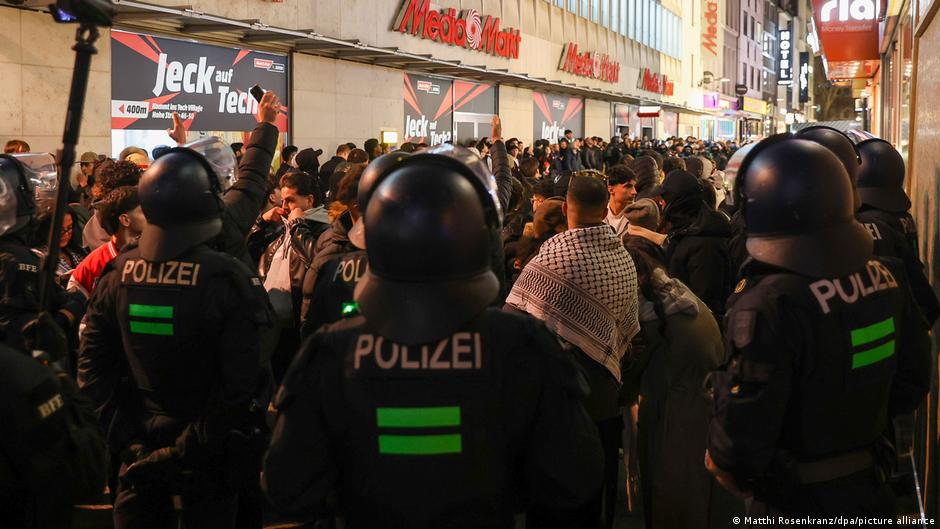
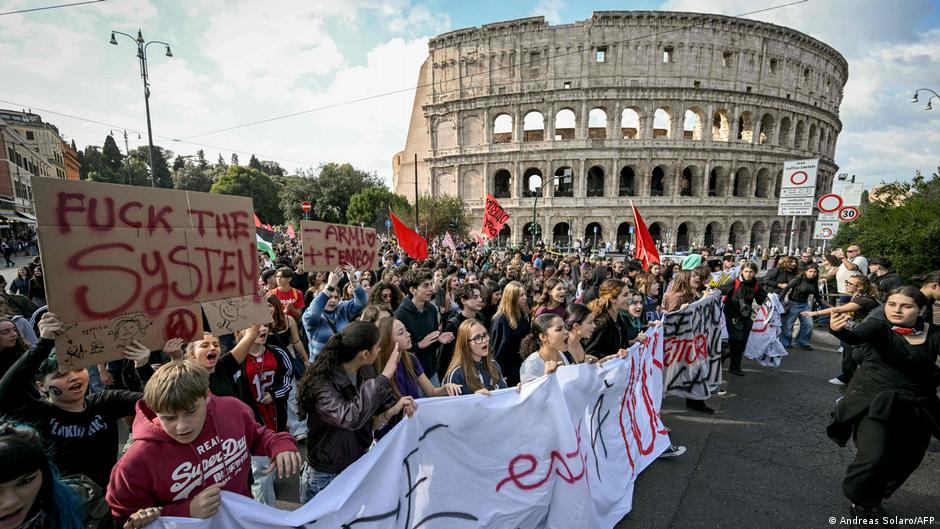
The French demonstrations have inspired young people to protest in other European countries, including Italy, Germany and Belgium. Demonstrations in major German cities on October 31 ended in disorder.
The cross-border spread adds a regional consideration for companies operating payment systems, digital banks, online marketplaces and other technology services across Europe. Physical unrest does not automatically translate into failures of digital infrastructure, but simultaneous demonstrations in multiple markets can increase the importance of business-continuity planning, cybersecurity monitoring and reliable remote access.
No cyberattacks or attacks on banking and payment systems were reported in the source material. There was also no evidence presented of protest-related activity in cryptocurrency markets. Any direct impact on listed French or European technology companies therefore remained unquantified.
Turnout in France has nevertheless declined over the three consecutive Saturdays, based on government estimates. Participation fell from 550,000 on October 17 to 410,000 on October 24 and 320,000 on October 31. Organizers’ substantially higher estimate for the latest demonstrations shows that the scale of the movement remains disputed.
For financial and technology businesses, the immediate issue is continued urban disruption rather than a documented shock to markets or digital networks. The longer-term significance will depend on whether concerns over living costs and public services continue to draw broad support, and whether future demonstrations remain largely peaceful or produce further clashes in France’s principal commercial centers.