Italy Cost-of-Living Protests Put Digital Economy Pressures in Focus
A nationwide strike and demonstrations across Italy highlighted household financial strain as Europe increases military spending.
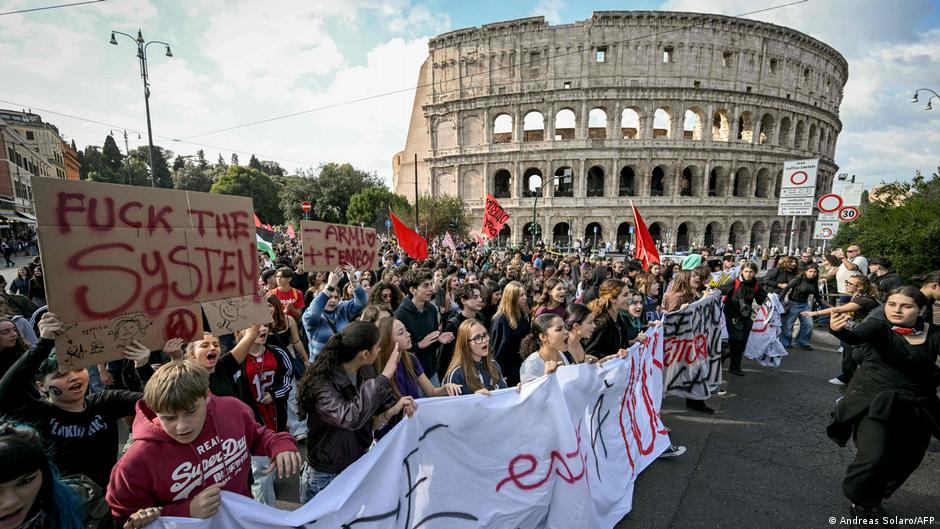
Mass protests over the rising cost of living and increased military expenditure swept across Italy on Friday, October 30, accompanied by a 24-hour general strike that disrupted normal activity nationwide. The demonstrations brought renewed attention to the pressure that higher housing, fuel and everyday expenses are placing on household finances—a trend with direct implications for consumer payments, digital banking and the broader European economy.
Protests took place in more than 60 Italian cities, according to national news agency ANSA. The Unione Sindacale di Base, or USB, which organized the demonstrations and initiated the general strike, estimated that between 1 million and 1.5 million people participated. Italy’s Interior Ministry reported a substantially lower figure of 255,000.
Demonstrators voiced particular concern about increasingly expensive apartment rents and higher fuel prices. One slogan summarized their opposition to shifting public spending priorities: “We need more housing, not more bombs.”
Household pressure reaches the digital economy
Although the protests centered on living costs and military spending, the underlying financial pressure extends into Italy’s increasingly digital consumer economy. When rent, transport and energy absorb a larger share of household budgets, consumers have less money available for discretionary purchases, online services and investment products. That can affect transaction volumes for payment companies, spending patterns observed by digital banks and demand across e-commerce platforms.
Financial technology providers may also face greater scrutiny over fees, credit terms and access to essential banking services as customers become more price-sensitive. At the same time, digital banking tools that help users monitor expenses, schedule bills or control subscriptions can become more relevant during a cost-of-living squeeze. The protests therefore serve as a political signal about the financial conditions shaping consumer behavior, even though organizers did not frame their demands specifically around fintech regulation.
For investors, sustained unrest connected to household affordability can add another layer of uncertainty around European consumer-facing technology stocks. Payment processors, digital lenders and online retailers are particularly exposed to shifts in spending and borrowing. No market impact was quantified in reports on Friday’s demonstrations, but the scale of the mobilization underscores the social risks surrounding fiscal choices and weak household purchasing power.
Clashes contained to Rome and Turin
ANSA reported that the demonstrations were largely peaceful across Italy, with the principal exceptions occurring in Rome and Turin. In those cities, some protesters began setting rubbish bins on fire and throwing objects at police as evening approached. Law enforcement officers responded with tear gas and water cannons.
“The measures adopted were balanced and effective: this made it possible to protect one of citizens’ fundamental rights—the right to demonstrate peacefully—despite attempts by some individuals to provoke disorder and violence,” Interior Minister Matteo Piantedosi wrote on X.
The disorder also illustrates the role of digital platforms in modern protest movements. Social networks can rapidly distribute official statements, organizing messages and eyewitness material, while periods of unrest can increase the circulation of misleading content and expose users to impersonation, fraud or malicious links. For banks and payment providers, heightened public tension can reinforce the need for robust cybersecurity monitoring and clear communication with customers, although no specific cyber incidents or payment disruptions were reported in connection with the Italian protests.
A wider European wave
Italy’s October 30 demonstrations form part of a broader wave of protests that has reached other European countries in recent weeks. France has experienced actions in several cities that escalated into vandalism and clashes with police. Demonstrations have also taken place in Belgium.
Similar protests are scheduled for October 31 in more than 30 German cities following a call by the Gen-Z regelt movement, whose name translates as “Generation Z decides.” Tens of thousands of participants, predominantly young people, are expected to express dissatisfaction with the rising cost of living and the potential return of military conscription. They will also call for greater spending on education.
Experts expect the German demonstrations to proceed largely without disorder. Their youth-led character may be especially relevant to digital finance companies because younger consumers are prominent users of mobile banking, app-based payments and crypto platforms. However, the announced demands concern affordability, conscription and education rather than cryptocurrency or financial technology policy.
Across Europe, the demonstrations reveal a widening dispute over how governments allocate limited public resources while households confront higher expenses. For the digital economy, the central question is whether prolonged financial strain will weaken consumer activity, increase demand for short-term credit and intensify political pressure on financial service providers. Italy’s nationwide strike has now made that tension visible on a scale that both policymakers and technology-focused investors are likely to watch closely.