German Authorities Grant Asylum to Russian Anti-War Activist After Prolonged Legal Struggle
Ilya Shkolny, a Russian anti-war activist, was finally granted asylum in Germany after multiple rejections and legal battles, highlighting challenges for political refugees amid geopolitical tensions.
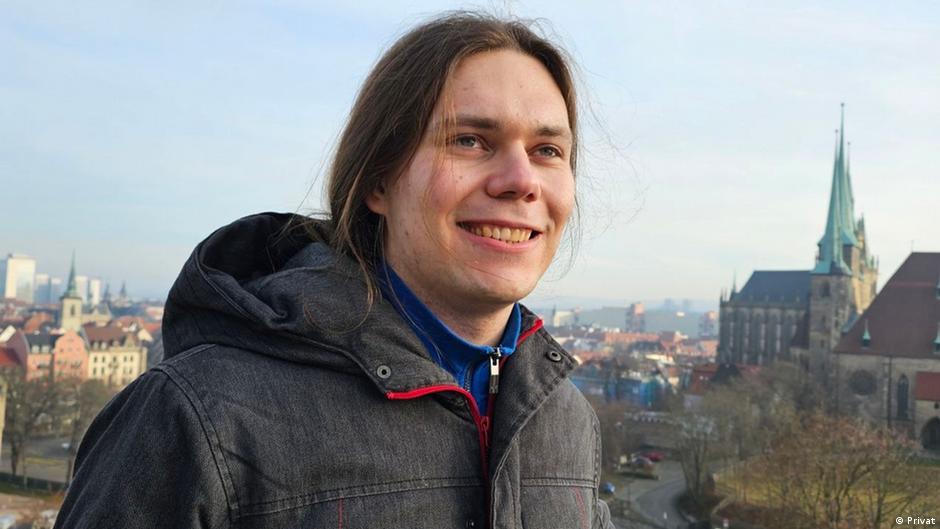
German authorities have reversed their stance and granted asylum to Ilya Shkolny, a Russian anti-war activist who narrowly avoided deportation back to Russia in early 2026. Shkolny's case sheds light on the complex legal and humanitarian challenges faced by political refugees, especially those with ties to digital activism and politically sensitive movements.
Struggle for Protection Amid Political Repression
Shkolny’s fight for asylum spanned three years, during which he encountered repeated denials from the Federal Office for Migration and Refugees (BAMF). His situation became critical in March 2026, when he was detained in a deportation center in Hof, Bavaria, and faced imminent expulsion scheduled for April 1, 2026.
Activists and human rights groups, notably the inTransit project, intervened to prevent his deportation. Their efforts included mobilizing public support, securing legal assistance, and collaborating with political figures who petitioned the German Ministry of the Interior.
“The threats posed by the Russian military draft and political persecution linked to his activism were initially underestimated by the authorities,” said a coordinator from inTransit.
Shkolny’s political involvement includes volunteering for Alexei Navalny’s headquarters in 2017-2018, participating in the "Smart Voting" campaign in 2021, serving as an election observer with the "Golos" movement in multiple Russian elections, and holding a leadership role in Moscow’s Libertarian Party.
In June 2022, he entered Germany on a 90-day visa designated for binational couples to visit his German partner, Ansuela Baldemair. The couple planned to marry, but Shkolny’s return to Russia was fraught due to the full-scale invasion of Ukraine and his political stance, prompting him to seek asylum instead.
Despite his credible fears of persecution and conscription, BAMF initially dismissed his claims, citing the draft threat as insufficient for protection and assessing his political risks as negligible. Subsequent appeals highlighting worsening repressive legislation, electronic summons for military service, and increased penalties in Russia were also rejected for lack of new evidence.
After exhausting administrative appeals, Shkolny sought judicial intervention, which was denied in late 2025. Parallel attempts to obtain residency through marriage were also refused, partially due to doubts about the marriage's authenticity, as the couple lived separately, and BAMF’s stance that he could legally return to Russia to secure a visa.
Throughout this ordeal, Shkolny received broad community support. University students and faculty from the University of Bayreuth, where he studied, organized petitions that garnered thousands of signatures. Several Bundestag deputies also advocated on his behalf, emphasizing the case's human rights and political significance.
Implications for Digital Economy and Political Refugees
Shkolny’s profile as a politically active individual engaged in digital campaigning and election monitoring highlights the intersection between digital activism and state repression, an increasingly relevant issue in the fintech and digital economy sectors. Political refugees like Shkolny often rely on digital platforms for advocacy, financial support, and legal coordination, underscoring the need for secure digital infrastructures and privacy protections.
Moreover, Shkolny’s case underscores the complexities surrounding visa regimes, residency rights, and the challenges of proving political persecution in digital-era contexts where state surveillance and repression can be highly sophisticated.
As geopolitical conflicts continue to influence migration and asylum patterns, the fintech and cybersecurity sectors must remain vigilant in supporting vulnerable populations who depend on digital tools to navigate legal and social hurdles.