New York Mayor Mamdani Unveils $29 Million Plan to Combat Antisemitism
The city’s strategy expands hate-crime funding, synagogue security and education programs amid heightened scrutiny of Mamdani’s Israel stance.
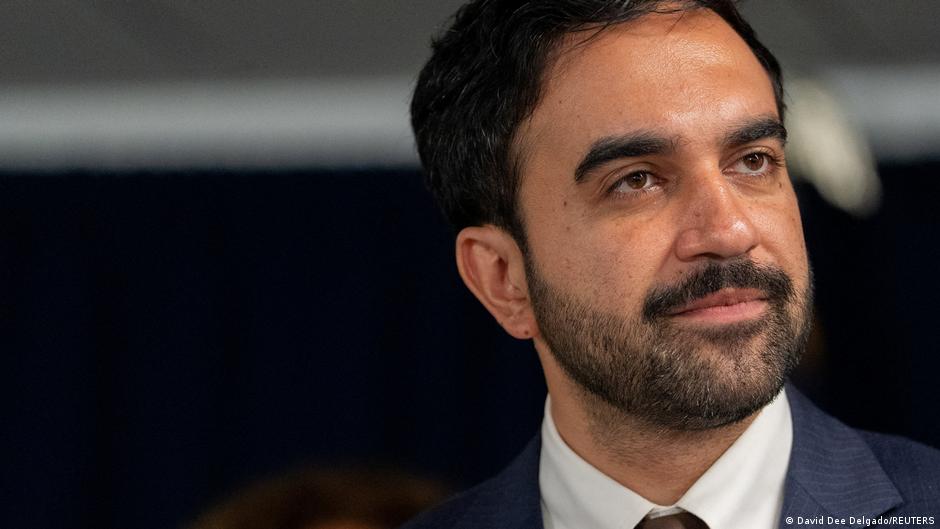
New York Mayor Zohran Mamdani on Tuesday, September 29, presented a broad municipal strategy to counter antisemitism and hate crimes targeting Jewish residents, a plan that would sharply increase city funding for prevention, security and education efforts.
The proposal raises the annual budget for combating hate crimes from $3 million to $29 million. City authorities also plan to allocate additional money for synagogue security and to restore a task force focused on the safety of Jewish houses of worship.
For FinPulse readers, the plan is notable not only as a public-safety initiative but also as another example of how major cities are expanding their security and resilience spending in areas that increasingly intersect with digital infrastructure. Hate-crime prevention now often involves physical protection, community outreach, online monitoring, digital reporting systems and coordination across law enforcement, nonprofits and civic institutions.
Security Spending Meets the Digital City
Mamdani’s strategy includes citywide public-information campaigns against antisemitism and an expansion of educational programs about the Holocaust. Millions of dollars are expected to go to Jewish cultural centers and nonprofit organizations, including a Holocaust memorial being developed in Queens and a Center for New Jewish Culture in Brooklyn.
While the source plan focuses on community safety and cultural institutions rather than financial technology directly, its budget expansion has implications for the broader digital economy. Large municipal security programs increasingly rely on procurement networks, digital payments, grant-management platforms, cybersecurity protocols and data systems used to distribute funds, monitor risks and document incidents.
The increased funding may also affect nonprofits and religious institutions that need to modernize payment processing, donor systems and cyber protections as they receive and manage public support. Synagogues and cultural centers that become part of a larger security framework may face higher expectations around digital access controls, incident reporting and protection of sensitive community data.
“Although our Jewish neighbors make up only 12% of New York’s population, police statistics show that antisemitic crimes account for more than half of all registered hate crimes,” Mamdani said.
In a video address posted on X, Mamdani said the scale of antisemitic incidents demanded a city-led response. “This is not only unacceptable; it is something we are obligated to change, and city authorities will take the lead,” he said.
Political Scrutiny Around Mamdani
Mamdani, New York’s first Muslim mayor, is known for his pro-Palestinian position and criticism of Israel. Those views have drawn opposition from part of the city’s Jewish community, though he also has supporters among New York Jews.
The announcement therefore lands in a politically sensitive environment. For digital-economy stakeholders, that sensitivity matters because public campaigns around hate crimes increasingly unfold on social networks, encrypted messaging channels and digital media platforms. City messaging, cybersecurity readiness and online threat assessment can become part of the operating environment for civic institutions, banks, fintech companies and technology vendors that serve community organizations.
The plan also arrives against the backdrop of sharp criticism from Israel’s leadership. Israeli Prime Minister Benjamin Netanyahu, speaking at the United Nations General Assembly in New York, called the mayor an antisemite.
During the 2026 election campaign, Mamdani said that if Netanyahu visited New York, he would seek his arrest based on a warrant issued by the International Criminal Court in 2024. After taking office as mayor, however, Mamdani acknowledged that he did not have the authority to do so.
That political history may shape how the plan is received by Jewish organizations, civic groups and donors. It may also influence how city agencies structure oversight around the expanded $29 million annual hate-crime budget, particularly where public money flows to nonprofit institutions and security programs.
Implications for Technology and Finance Providers
The plan does not name specific technology vendors, payment firms, crypto platforms, banks or cybersecurity providers. Still, a larger citywide security and education effort can create operational demand across the ecosystem that supports municipal programs and nonprofits.
Digital banking and payments providers may be involved indirectly as organizations receive grants, process donations or fund security upgrades. Cybersecurity firms may see greater demand from community institutions that need to protect member databases, donor information and internal communications. Technology companies that support public-sector workflows may also be relevant if the city expands incident reporting, outreach campaigns or grant administration.
For investors watching technology stocks and the civic-tech market, the announcement is a reminder that public-safety spending increasingly includes digital layers, even when the policy goal is social protection rather than technology modernization. Cities that expand hate-crime budgets may also expand the systems used to manage, audit and secure those programs.
Mamdani’s proposal places New York City at the center of a broader debate over public safety, antisemitism, Middle East politics and the role of local government. Its direct commitments are clear: more money for hate-crime prevention, added security for synagogues, restored institutional coordination, public campaigns, Holocaust education and support for Jewish cultural and nonprofit organizations.
The financial and technology effects will depend on implementation. But as New York scales a hate-crime response from $3 million to $29 million a year, the city’s digital infrastructure, payment rails and cybersecurity practices are likely to become part of how that policy is delivered.