Putin Nuclear Warnings Add Geopolitical Risk for Markets and Digital Finance
The Russian president used the Valdai forum to blame the West for the war in Ukraine and signal risks that could weigh on payments, cybersecurity and tech sentiment.
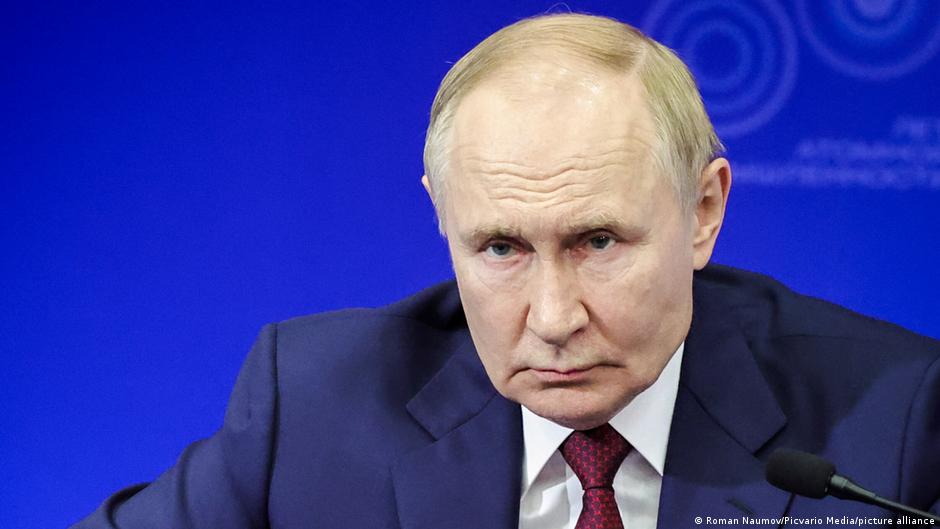
Russian President Vladimir Putin used a high-profile foreign policy forum to portray the situation in Europe and the wider world as “very dangerous,” renewing accusations that Western countries are pursuing aggression against Moscow and again invoking the possibility of nuclear escalation. For financial markets and the digital economy, the remarks add another layer of geopolitical risk at a time when payments infrastructure, cyber resilience, crypto flows and technology shares remain exposed to the fallout from the war in Ukraine.
Speaking at the plenary session of the Valdai Discussion Club on Thursday evening, October 1, Putin said the arsenals of several countries contain weapons “capable of destroying all living things.” Asked by himself whether he could be certain such weapons would not be used, he answered in the negative. He compared nuclear weapons to a gun hanging on a theater stage, which, under the rules of drama, must eventually fire. Putin said “the laws of the struggle for survival” apply not only in nature but also in social communities, while stressing that Russia could be forced to take extreme measures. He added that steps should be taken to ensure that “the gun” does not fire.
“If we want to live, and everyone wants to live, let us live together,” Putin said, warning that further escalation could leave “no school textbooks and no one to study from them.”
The comments come as Russia’s full-scale war in Ukraine is in its fifth year and as the conflict continues to shape the operating environment for banks, payment networks, fintech companies, crypto platforms and cybersecurity providers. Sanctions, cross-border payment disruption, restrictions on Russian financial institutions and heightened cyber activity have already made the war a defining stress test for the global financial technology stack.
Digital Finance Faces a Wider Risk Premium
Putin again denied that Russia started the war, claiming that Moscow’s invasion of Ukrainian territory was a response to NATO and Ukraine. “The truth is that it was not we who wanted and started fighting, but they started fighting against us,” he asserted. According to his version of events, the West had for years encouraged “aggressive nationalism and Russophobia” in Ukraine in order to turn it into a tool against Russia, pushed “radicals in Kyiv” toward a “state coup,” and planned to deploy NATO bases on what he called Russia’s “historical territories.” He described the current situation in Europe and the world as “very dangerous” and again accused Western countries of “aggressive aspirations.”
For investors, the language matters less as rhetoric than as a signal of durable confrontation. Prolonged conflict raises the likelihood that governments and companies will continue to prioritize sanctions compliance, transaction monitoring, fraud controls, data localization and operational continuity. Digital banks and payment firms with exposure to European corridors may face higher compliance costs and closer scrutiny of cross-border flows. Crypto exchanges and blockchain analytics providers are likely to remain under pressure to identify sanctioned wallets, suspicious transfers and attempts to bypass restrictions.
The geopolitical backdrop can also influence technology stocks. Defense technology, cybersecurity and critical infrastructure software companies may benefit from sustained demand, while broader risk sentiment can turn against high-growth tech names during episodes of nuclear brinkmanship or military escalation. The war has already reinforced the idea that software, cloud systems, identity tools and payment rails are strategic infrastructure, not merely commercial services.
War Claims and Battlefield Figures
Commenting on the course of the war in Ukraine, Putin claimed that over the past month Russian forces had seized 3.5 times more territory than in the previous month. He also asserted that Russia now controls 89% of Donetsk region. According to data from the Institute for the Study of War, Russia currently controls 81% of Donbas.
Several days earlier, Kyiv said that during three seasons of the “Vivaldi” counteroffensive operation, Ukraine’s armed forces had retaken 176 square kilometers of Ukrainian territory. At Valdai, Putin again expressed confidence that Russia would capture all of these territories and said Ukraine had no reason to hold on to them.
Such battlefield claims, whether used for domestic messaging or strategic signaling, have financial consequences beyond defense budgets. Continued fighting can increase pressure on European energy systems, insurance pricing, logistics networks and the cost of capital for companies operating near the conflict zone. It also sustains demand for secure communications, anti-fraud tools, cyber insurance and resilience planning among financial institutions and digital platforms.
AI, Nuclear Command and Cybersecurity
In the same speech, the Kremlin leader called for a new convention governing warfare, citing the rapid development of artificial intelligence technologies. He referred to the case of Soviet officer Stanislav Petrov, who in 1983 did not give the order to launch a nuclear strike even though, according to protocol, he was obliged to do so. Putin argued that artificial intelligence would have acted differently.
The remark underlines a concern increasingly relevant to the digital economy: the growing role of automated systems in high-stakes decision-making. In finance, AI is already used for fraud detection, credit assessment, trading, compliance screening and cyber defense. In security and military settings, the stakes are far higher. Putin’s comments point to a policy debate that extends well beyond defense ministries, touching the governance of AI systems whose errors or unintended behavior could have systemic consequences.
Putin also addressed the possibility of strikes against military enterprises in Europe. He said Russia would “not necessarily” take such steps but would “monitor threats.” Moscow, he said, considers the participation of Western countries in strikes on Russian territory to be a direct threat.
This year’s Valdai Club meeting was moved from Sochi to the Moscow region, where Russia has concentrated more air defense assets. The decision was made because of security concerns amid intensified Ukrainian attacks, the Financial Times reported, citing four sources. Two of those sources added that the relocation took place at the insistence of Putin’s security service.
For fintech and digital economy leaders, the broader message is that geopolitical volatility remains embedded in the operating environment. Nuclear signaling, battlefield escalation, AI in warfare and threats to European industrial sites all reinforce the need for resilient payment systems, robust cybersecurity, sanctions-aware compliance architecture and risk models that treat conflict as a continuing variable rather than a temporary shock.