South Korea-Ukraine Prisoner Dispute Adds Risk to Asia-Europe Tech Ties
Seoul’s warning over the disclosure of North Korean prisoners highlights how wartime diplomacy can spill into markets, security policy and digital-economy partnerships.
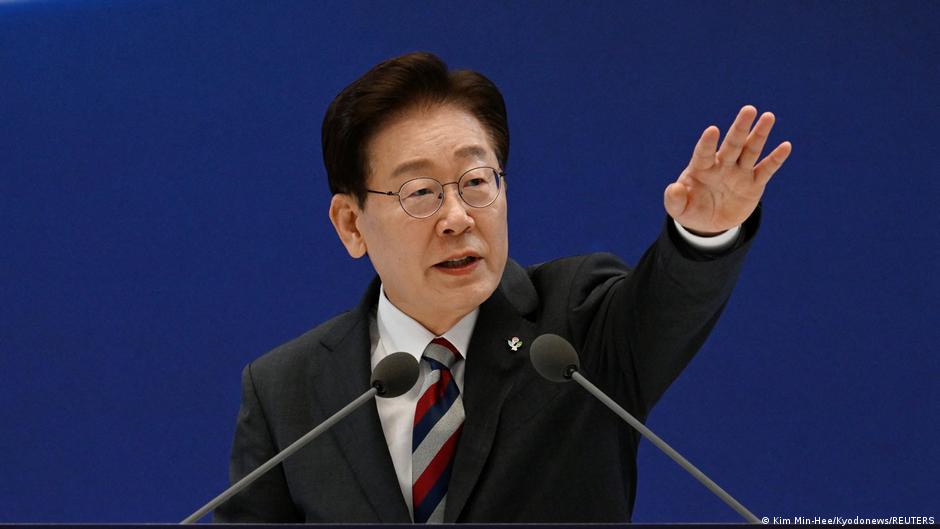
South Korean President Lee Jae Myung has warned that Seoul will take “further measures” if Ukraine refuses to publicly acknowledge the existence of a confidentiality agreement over the transfer of two captured North Korean soldiers to South Korea and issue an apology. Lee did not specify what those measures would be, but he framed the dispute as a matter of national honor and accused Kyiv of making Seoul appear to be a liar.
The diplomatic row, while centered on prisoners of war, is being watched in a broader strategic context. South Korea is a major technology exporter, a key player in semiconductors and digital infrastructure, and an increasingly important partner for countries seeking resilient supply chains, cyber capabilities and advanced defense-linked technologies. Ukraine, meanwhile, has become a wartime test bed for digital public services, battlefield technology, crypto fundraising, cyber defense and secure communications.
For fintech and digital-economy investors, the episode underscores a familiar risk: partnerships built around security and technology can be affected by political trust as quickly as by commercial logic. A prolonged dispute between Kyiv and Seoul would not necessarily disrupt payments, banking technology or crypto markets directly, but it could complicate the climate for cooperation across cyber policy, reconstruction finance, digital identity, defense technology and critical infrastructure.
“If recognition of the facts and a public apology continue to be rejected, we will take further measures,” Lee wrote on X.
A Confidentiality Dispute With Strategic Implications
The disagreement began after Ukrainian President Volodymyr Zelensky said at the United Nations General Assembly in late September that Kyiv had transferred two North Korean prisoners of war to South Korea. Seoul sharply criticized Ukraine after the disclosure. Lee previously said making such information public could endanger relatives of the prisoners in North Korea and negatively affect relations between Seoul and Pyongyang.
South Korea’s First Vice Foreign Minister Park Yoon-joo also said Kyiv’s denial of an agreement undermined mutual trust and demanded formal explanations and an apology from Ukraine. Dmitry Litvin, an adviser to the Ukrainian president on communications, said in response that there had been no agreement between Kyiv and Seoul that information about the prisoners’ fate should not be disclosed. The South Korean presidential administration expressed “deep regret” over those claims.
Ukraine’s Foreign Minister Andrii Sybiha has sought to lower the temperature of the dispute. Speaking to journalists in Kyiv hours before Lee’s post, he said Ukraine was interested in resolving the disagreement quickly and continuing cooperation with Seoul. “I would not like to call this an incident. Let us say it is a diplomatic misunderstanding,” he said, according to RBC-Ukraine.
Sybiha said he had personally spoken every day in recent days with his South Korean counterpart. He emphasized that South Korea was an important country for Ukraine and said Kyiv hoped for momentum, continued engagement and concrete results in the relationship.
Why Digital-Economy Stakeholders Are Watching
The immediate dispute is diplomatic, but its economic setting is larger. South Korea’s technology sector sits at the center of global electronics, chips, telecom equipment, software platforms and cybersecurity supply chains. Ukraine’s wartime economy has relied heavily on digital tools, remote financial infrastructure, online government services and rapid technology adaptation. Any erosion of trust between the two governments could weigh on future cooperation in areas that require sensitive data sharing or security coordination.
That matters for digital banking and payments because postwar reconstruction in Ukraine is expected to involve large-scale financial flows, donor coordination, compliance systems, anti-fraud controls and digital identity infrastructure. South Korean firms and institutions could be relevant partners in such projects, particularly where secure hardware, cloud systems, telecom infrastructure or cybersecurity are involved. A diplomatic standoff may not stop those opportunities, but it could make governments and companies more cautious.
The dispute also lands in a region where cybersecurity is closely tied to North Korea. South Korean authorities and companies face persistent cyber risks linked to Pyongyang, including threats to financial institutions, crypto platforms and technology firms. The disclosure of information about North Korean prisoners therefore has a security dimension beyond traditional diplomacy. Seoul’s concern that relatives in North Korea could be endangered reflects the sensitivity of information flows involving Pyongyang.
For crypto markets, the case is indirect but relevant. Ukraine has used digital channels extensively during the war, while North Korea has long been associated by Western governments and cybersecurity researchers with illicit cyber activity targeting digital assets. A rift between two governments with strong incentives to share security intelligence could complicate coordination around cyber threats, even if no immediate market effect is visible.
Domestic Politics And Defense Policy
Inside South Korea, Lee’s handling of the dispute may also carry political risks. Shin Yul, a political science professor at Myongji University, told AFP that Seoul’s approach to the diplomatic conflict with Ukraine could prove problematic given the current administration’s restrained stance toward North Korea, its nuclear-armed neighbor.
South Korea has so far supplied Ukraine mainly with non-lethal military equipment, including demining equipment. Reuters has noted that some Western countries have recently pressed Seoul to provide lethal weapons to Ukraine as well. That pressure makes trust between Kyiv and Seoul especially important, because decisions on sensitive military support often depend on confidence that information will be handled carefully.
Yonhap reported on September 28 that South Korea’s foreign ministry summoned Ukraine’s ambassador over Kyiv’s disclosure of information about the North Korean prisoners of war. AFP reported on September 30, citing South Korean parliamentarian Youn Kun-young, that both prisoners had arrived in South Korea in mid-September. After interrogation and security checks, authorities in Seoul are expected to decide whether to grant them protection and begin a resettlement process.
The broader security backdrop remains volatile. Last week, Zelensky wrote on social media that, according to his information, about 8,000 North Korean troops were currently in Russia and another 10,000 were preparing to be sent there and then to the war against Ukraine.
For markets, the central issue is not the prisoner transfer itself but the durability of trust among countries that sit at the intersection of defense, technology and finance. South Korea’s next steps, and Ukraine’s response, will determine whether the dispute remains a contained diplomatic misunderstanding or becomes another source of uncertainty around future cooperation in the digital economy.