UK King Charles III Arrives in US Amid Tensions, Meeting Trump to Reinforce Bilateral Ties
King Charles III visits the US to restore strained Anglo-American relations amidst geopolitical and economic challenges impacting transatlantic cooperation.
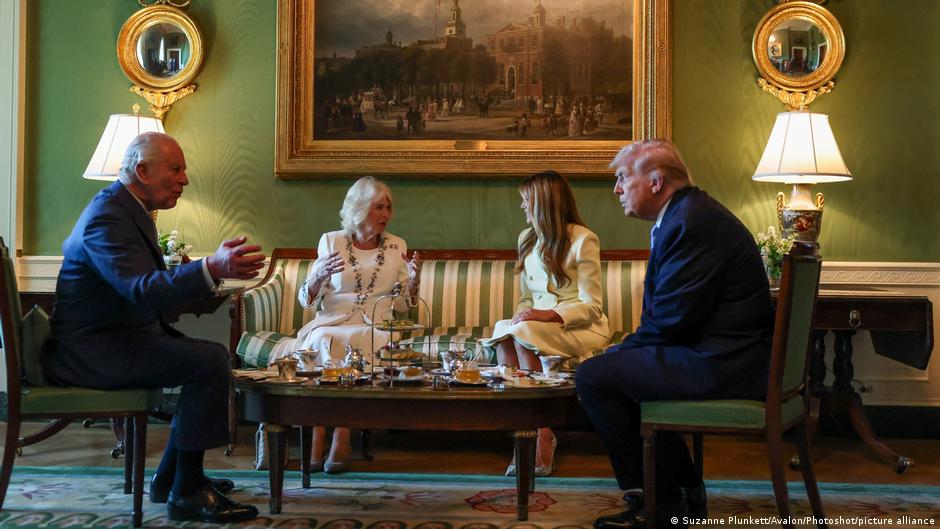
King Charles III and Queen Camilla arrived in the United States on April 27, marking the first official visit by a British monarch since 2007. Their trip comes at a sensitive time, with Anglo-American relations facing strains due to divergent stances on the ongoing conflict involving Iran and its broader geopolitical ramifications.
President Donald Trump and First Lady Melania Trump welcomed the royal couple at the White House in Washington, underscoring the traditional diplomatic significance of the visit. The itinerary includes a historic address by King Charles III to a joint session of the US Congress on April 28, only the second time a British monarch has spoken before the American legislature, following Queen Elizabeth II’s speech in 1991.
Geopolitical Tensions and Economic Impacts on Transatlantic Relations
The visit is set against a backdrop of heightened US-UK diplomatic challenges. The recent conflict between the US, Israel, and Iran has created fissures, with UK Prime Minister Keir Starmer refusing US requests to use British bases for strikes on Iran and declining to send Royal Navy vessels to the strategic Strait of Hormuz. Such decisions signal a cautious UK approach divergent from US foreign policy, complicating traditional alliances.
In March, Trump publicly criticized the UK’s military capabilities, claiming the Royal Navy's ships are "too old" to effectively secure the Strait of Hormuz. He further labeled NATO members as "cowards" for their positions on the Iran conflict, describing the alliance as a "paper tiger" and hinting at a possible US withdrawal from NATO.
These geopolitical disagreements have implications beyond diplomacy, potentially affecting financial markets and sectors tied to defense and cybersecurity. The uncertainty around NATO's cohesion and US-UK military collaboration could influence investor confidence in related tech stocks and cybersecurity firms, given heightened concerns about regional stability and defense preparedness.
Prime Minister Starmer, meanwhile, has emphasized energy security and economic resilience amid global volatility. In an April interview, he expressed frustration with fluctuating energy costs in the UK, which he attributed partly to actions by both Russian President Vladimir Putin and US policies under Trump. Starmer's government is increasing investments in domestic energy infrastructure to reduce dependence on volatile international markets, a strategic shift that could impact financial sectors tied to energy technology and digital infrastructure.
“We are investing to free ourselves from tyrants manipulating gas prices,” Starmer stated, highlighting the intersection between geopolitical risk and economic policy.
Despite tensions, President Trump assured that King Charles III’s visit would remain unaffected, noting the monarch’s apolitical role and personal rapport with the US president. Trump described Charles as a "great guy" and "friend," affirming the enduring symbolic importance of the British monarchy in maintaining bilateral goodwill.
The visit also includes King Charles and Queen Camilla’s participation in a New York event commemorating the victims of the September 11, 2001 attacks, reinforcing shared historical ties and mutual commitments to security cooperation.
From a fintech and digital economy perspective, the visit underscores the complex interplay between geopolitical developments and their ripple effects on financial markets, cybersecurity priorities, and transatlantic technological partnerships. Investors and policymakers alike will be monitoring how diplomatic dialogue translates into cooperation within sectors such as digital banking, defense tech, and energy innovation, which are increasingly critical in a volatile global landscape.