Armenia Recounts Votes on Nearly One-Third of Polling Stations Amid Electoral Disputes
The Armenian Central Electoral Commission reviewed votes on 637 polling stations following opposition demands, affecting key political blocs’ tallies ahead of final results.
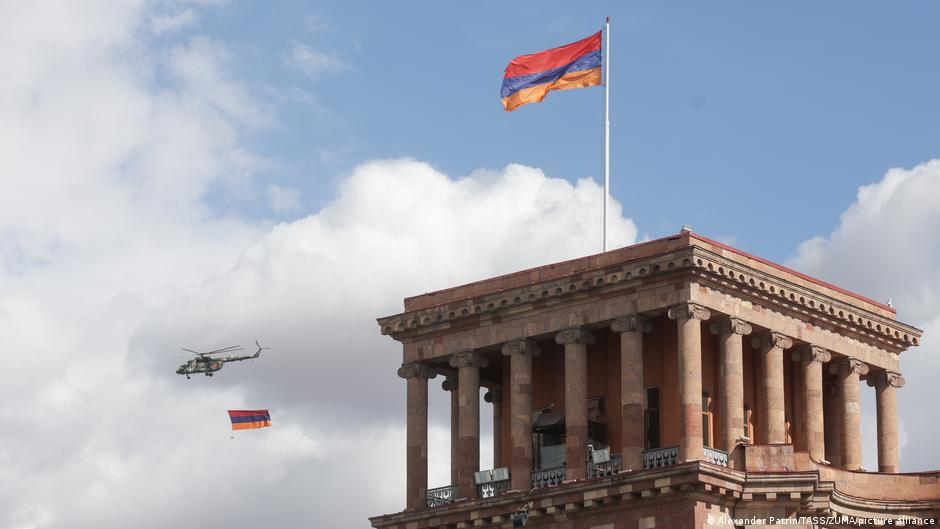
In a significant development following Armenia’s June 7 parliamentary elections, the Central Electoral Commission (CEC) announced a partial recount of votes at 637 out of 2,005 polling stations nationwide. This action came after the opposition bloc "Strong Armenia," led by Russian-Armenian billionaire Samvel Karapetyan, requested a review of the election results, citing alleged voting irregularities.
Impact on Political Bloc Results and Election Integrity
The recount led to adjustments in the vote counts of major political players. The pro-Russian bloc "Strong Armenia" saw an increase of 508 votes, bringing its total to 340,088. "Prosperous Armenia," led by businessman Gagik Tsarukyan, gained 147 additional votes, reaching 58,378. The ruling party "Civil Contract," under Prime Minister Nikol Pashinyan, had its tally rise by 1,148 votes to 727,820, while the opposition bloc "Armenia," headed by former President Robert Kocharyan, increased by 217 votes to 145,113.
The CEC also reported a rise in detected inaccuracies, with the number of procedural discrepancies climbing by 230 to a total of 1,509. Conversely, invalid ballots declined by 859, from 17,097 to 16,238. The commission invalidated results at three polling stations on June 12 and plans to announce the finalized election results on June 14.
"The Central Electoral Commission conducted a comprehensive recount to ensure electoral integrity, addressing possible violations as mandated by law," the commission stated.
The recount process underscores Armenia's efforts to maintain transparency amidst political tensions. Following its electoral defeat, "Strong Armenia" formally requested the vote recount, with party representative Aram Vardevanyan emphasizing the legal obligation of the CEC to act on potential violations. Karapetyan himself has criticized the elections as "shameful," alleging known irregularities. Notably, Karapetyan has been under house arrest since last year on charges of plotting a coup, charges he denies, calling them politically motivated.
Broader Context and Implications for Digital Security in Electoral Processes
On election day, Armenian authorities opened investigations into 59 cases of suspected electoral offenses, including multiple voting. At least nine individuals were detained, reflecting heightened scrutiny of election integrity.
The elections resulted in a decisive victory for the pro-Western ruling party "Civil Contract," which secured 49.81% of the vote according to preliminary CEC data. The turnout was 58.97%, notably higher than in 2018 and 2021. "Strong Armenia" garnered 23.29%, "Armenia" 9.94%, and "Prosperous Armenia" 4%.
From a digital economy and fintech perspective, the recount highlights critical challenges in electoral data management, cybersecurity, and trust in digital vote tabulation systems. Ensuring secure, tamper-proof vote recording and transparent recount mechanisms is paramount in modern elections, particularly in countries with emerging digital infrastructures. The Armenian case serves as a reminder of the need for robust digital verification tools and cybersecurity protocols to uphold democratic legitimacy and public confidence.