Spain Faces Migrant Influx in Ceuta, Raising Security and Economic Concerns
Thousands of migrants entered the Spanish exclave Ceuta, prompting security measures and regional border suspensions amid fears of economic and digital infrastructure impacts.
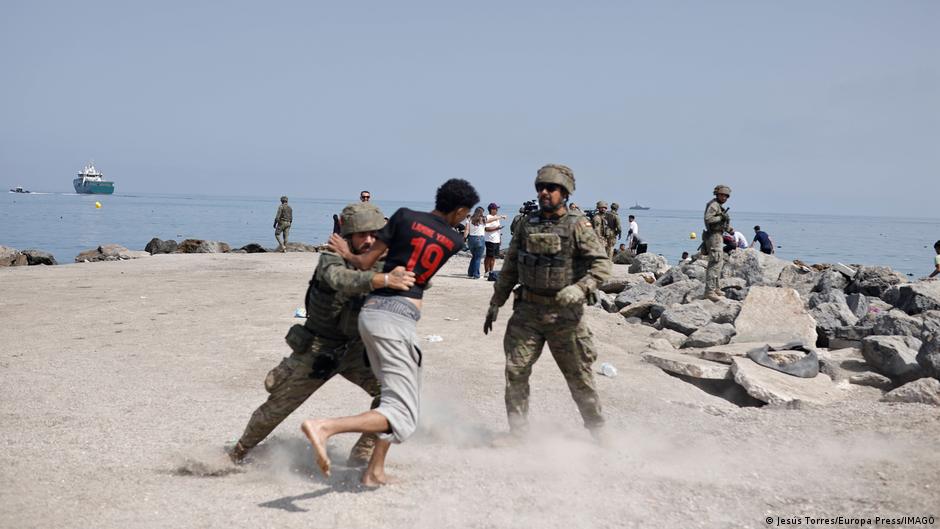
Spain's Prime Minister Pedro Sánchez visited the Spanish exclave of Ceuta in North Africa amid a sudden influx of nearly 60,000 irregular migrants crossing from Morocco over recent days. The large-scale migration wave has been described by Sánchez as an "attack" on Spain and a violation of its territorial integrity.
The unexpected mass entry of migrants has heightened security concerns, prompting Madrid to deploy military forces in Ceuta for the first time since 2021 to restore order and control at the border. These developments have also raised questions about the potential impact on regional economies, digital infrastructure, and cross-border financial transactions.
Regional Security and Economic Implications
Ceuta, with a population of around 85,000, has experienced significant social unrest. Local residents staged protests, blaming the government for losing control amid fears of increased crime and economic disruption. Many businesses temporarily closed to avoid potential looting, reflecting heightened local anxiety.
"Many people fear leaving their homes," a Ceuta resident told RTVE, underscoring the tense atmosphere in the city.
While the immediate humanitarian and security challenges are pressing, the situation also poses risks for fintech and digital economy sectors. Increased irregular migration can strain local banking services, disrupt digital payment ecosystems, and complicate financial oversight in the border region.
So far, Spanish authorities report that nearly all migrants who entered Ceuta have voluntarily returned to Morocco, helping alleviate the immediate crisis. However, the event triggered broader European responses, with Italy unilaterally suspending the Schengen Agreement's free border crossing clause with Spain as a precautionary security measure. Italy’s Foreign Minister Antonio Tajani described the suspension as necessary to protect citizens and secure European borders.
Potential Impact on Digital Payments and Cybersecurity
The influx raises concerns about monitoring and securing financial transactions linked to migrant flows, including remittances and informal cross-border payments. With Ceuta acting as a gateway between Africa and Europe, the event underscores the need for robust digital and cybersecurity frameworks to prevent fraud, money laundering, and other illicit activities exploiting migration pressures.
Moreover, disruptions at such strategic border points can affect tech stocks tied to regional fintech firms and digital infrastructure providers. Investors may view the unfolding crisis as a risk factor influencing cross-border payment volumes and digital banking adoption in affected areas.
As the situation evolves, Spain and EU authorities are likely to intensify coordination to secure not only physical borders but also digital financial frontiers, ensuring resilience in payments systems and protecting consumer data amid heightened migration challenges.