Bosnia Vote Keeps Dodik Allies in Power as Investors Watch Policy Risk
Preliminary results show ruling-party candidates prevailing in Bosnia and Herzegovina, preserving a political landscape closely watched by markets.
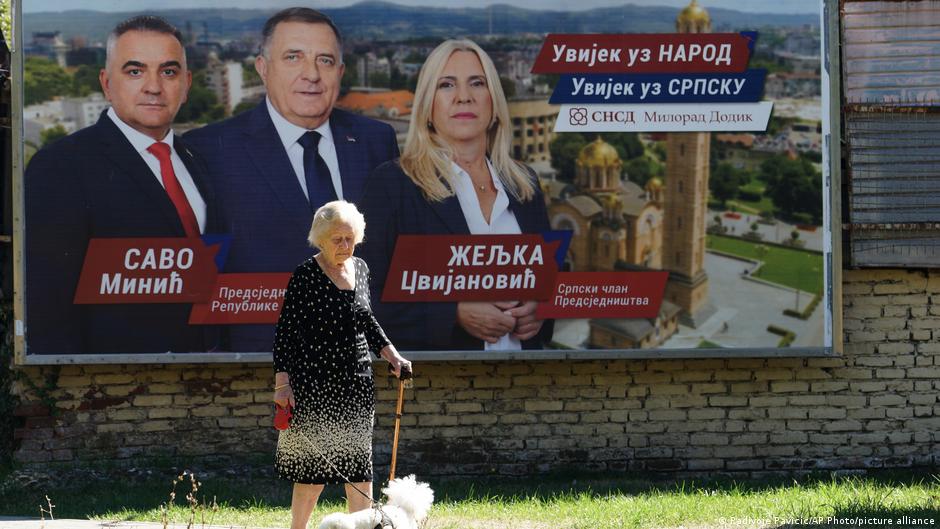
Ruling-party candidates and allies of Milorad Dodik emerged as the winners in Bosnia and Herzegovina’s latest elections, according to preliminary results released by the Central Election Commission on the evening of Sunday, October 4. For financial markets, digital banking providers and technology investors with exposure to Southeast Europe, the vote points to continuity rather than immediate political change.
The elections covered members of the state presidency, the central parliament, two regional parliaments and the presidency of Republika Srpska, the Serb-majority entity within Bosnia and Herzegovina. The central storyline was the performance of candidates linked to Dodik, the former president of Republika Srpska, who is known for his closeness to Russia and remains a major political figure despite being barred by a court ruling from political activity for six years.
Prime Minister Savo Minic won the election for president of Republika Srpska. He was backed by Dodik, and his victory strengthens the position of the Alliance of Independent Social Democrats, or SNSD, the party founded by Dodik. Another Dodik ally, Zeljka Cvijanovic, also secured a place in Bosnia and Herzegovina’s presidency, according to the preliminary count.
Continuity in a Fragmented Political System
After 95% of ballots had been counted, Denis Becirovic remained the leading candidate to represent Bosniak Muslims in the state presidency. Becirovic, who had previously served as chairman of the presidency, received about 38% of the vote. Darijana Filipovic was expected to represent Croats in the presidency with about 48% of the vote, while Serb voters favored Cvijanovic with about 55%.
Bosnia and Herzegovina has a unique presidency system in which the duties of head of state are shared by three representatives: one Croat, one Bosniak Muslim and one Serb. The arrangement was created under the 1995 Dayton Accords, which were concluded to resolve disputes among Bosniak Muslims, Orthodox Serbs and Catholic Croats and brought the civil war to an end. Many analysts consider the resulting system inefficient.
The preliminary results indicate political continuity in Bosnia and Herzegovina’s complex power-sharing structure, with ruling parties retaining key offices at both state and entity level.
For the digital economy, that structure matters. Payments, digital banking, crypto services and cybersecurity policy depend not only on formal regulation but also on institutional coordination. Bosnia and Herzegovina’s layered governance system can affect how quickly authorities respond to financial technology risks, harmonize rules and create predictable conditions for investors. The election results do not signal a sudden shift in that framework.
Republika Srpska Result Was the Main Contest
The main uncertainty in the vote was the outcome of the election for president of Republika Srpska. The contest in the entity centered on opposition candidate Branko Blanusa and Prime Minister Savo Minic. Preliminary results showed Minic ahead in most electoral districts in Republika Srpska. Blanusa won some districts, but according to the Central Election Commission’s data, that did not change the overall result.
Minic and Cvijanovic both ran for the SNSD. The party also won the election for the parliament of Republika Srpska, the National Assembly, according to the Central Election Commission. Most Bosnian Serbs also voted for the SNSD in elections to the lower chamber of the state parliament, the House of Representatives of the Parliamentary Assembly.
Dodik congratulated both Minic and Cvijanovic on their victories. The former Republika Srpska president was forcibly removed from office in 2025 for failing to implement decisions of Bosnia and Herzegovina’s Constitutional Court and international agreements. Under the court decision, he is barred from political activity for six years. Dodik has refused to recognize the court ruling and traveled to Moscow for support. Dodik and Minic met Russian President Vladimir Putin in the Kremlin on September 29.
That context is relevant for fintech and technology investors because political alignment and foreign-policy positioning can influence perceptions of regulatory and sanctions risk. The source results do not describe any new financial restrictions, technology measures or crypto rules. Still, the continued influence of Dodik’s political network may be closely watched by banks, payment firms and cybersecurity vendors operating in or assessing Bosnia and Herzegovina.
For digital banking providers, the central issue is stability versus reform capacity. A familiar political configuration can reduce immediate uncertainty, but Bosnia and Herzegovina’s fragmented institutional design may continue to complicate policy execution. In sectors such as real-time payments, anti-money-laundering controls, crypto oversight and cyber resilience, consistent enforcement often requires coordination across institutions and regions.
Technology stocks with broader emerging Europe exposure are unlikely to be driven by this election alone. The more direct implications sit with regional financial infrastructure, compliance planning and country-risk assessments. Investors will be watching whether the confirmed results reinforce existing political dynamics or create new pressure around Bosnia and Herzegovina’s constitutional order and international commitments.
For now, the preliminary vote count points to a clear conclusion: candidates from ruling parties prevailed, SNSD retained strength among Bosnian Serbs, and Dodik’s allies remain central to the country’s political equation. In financial technology terms, that means the operating environment is more likely to be defined by continuity, institutional complexity and geopolitical scrutiny than by rapid policy change.