China Warns U.S. Against Space War Preparations as Orbital Risks Grow
Beijing’s warning highlights how military competition in orbit could affect satellites that support payments, digital banking and market infrastructure.
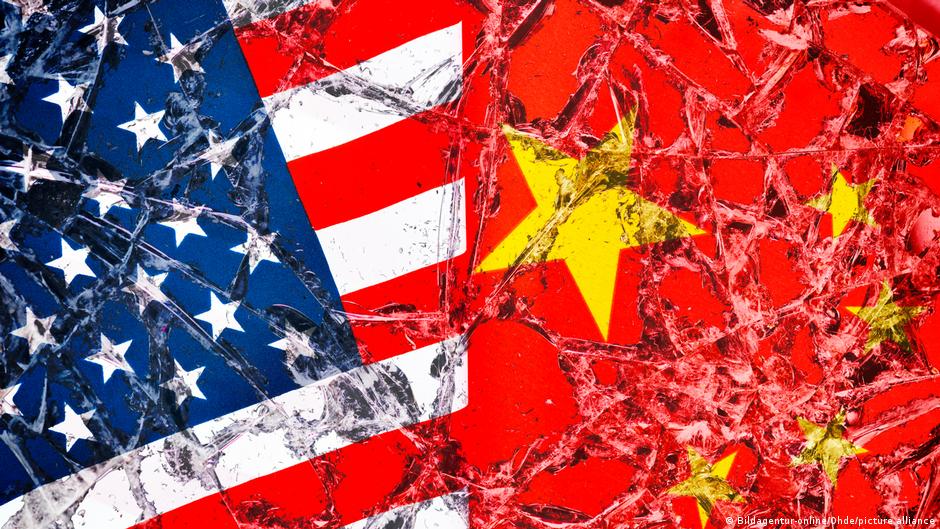
China has urged the United States to stop preparing for military conflict in space after Washington for the first time officially confirmed that it has weapons systems deployed in orbit. The exchange adds a new layer of geopolitical risk for the digital economy, where satellites support communications, navigation, cloud-linked services and the timing systems that underpin payments, financial markets and parts of modern banking infrastructure.
The Chinese Foreign Ministry issued its warning on Tuesday, September 15, after U.S. officials described orbital capabilities held by the U.S. Space Force. The ministry cautioned against the “militarization of space,” turning it into a battlefield, and an arms race beyond Earth. At a briefing, ministry spokesperson Guo Jiakun said Beijing was calling on Washington to halt the build-up of military capacity and preparations for war in space.
“We urge the American side to stop expanding military capabilities and preparing for war in space,” Guo Jiakun said.
The U.S. statement, made a day earlier, marked the first official confirmation that the country has placed weapons in space. U.S. Air Force Secretary Troy Meink said on September 14 that the United States has “space control assets” located in orbit. Those assets, operated by the U.S. Space Force, are capable of protecting a joint combat force from hostile actions, he said, without providing details on the weapons themselves.
According to the U.S. Space Force statement, space control includes capabilities needed to establish and defend control over space. The statement said such capabilities may be used for both offensive and defensive purposes, and referred to the use of kinetic and non-kinetic means. The formulation points to a wide spectrum of potential actions, ranging from physical interference with space objects to electronic disruption and cyber-related methods.
Why Space Security Matters to the Digital Economy
For the financial sector, the strategic importance of space is not abstract. Satellites are embedded in the digital economy through communications links, positioning and navigation services, and precise timing signals. These functions can support card networks, interbank systems, digital banking channels, trading venues, data centers and logistics platforms that depend on resilient connectivity and synchronization.
Any escalation in orbital military competition therefore has implications beyond defense policy. Payments firms, banks, fintech platforms and crypto infrastructure providers all rely on stable communications and trusted data flows. Even where critical financial systems have terrestrial backups, disruption to satellite-enabled services can create operational stress, especially across cross-border transactions, remote connectivity, maritime and aviation commerce, and markets where timing and location data are essential.
The issue is also relevant to cybersecurity. The source article notes that actions such as hacking satellites and interfering with their operation are becoming increasingly important. That trend is especially significant for digital finance, where cyber resilience already sits at the center of regulatory scrutiny. If satellites become targets for hacking, jamming or other forms of interference, the risk map for financial institutions expands from traditional networks and cloud providers to orbital and ground-station infrastructure.
The U.S. Space Force statement specifically mentioned China and Russia. It said China is developing and operating capabilities for actions in space and counter-space defense systems as part of its military modernization strategy. It also said Russia views space as a theater of military operations and proceeds from the view that dominance in space will become a decisive factor in future conflicts.
The creation of the U.S. Space Force dates back to Donald Trump’s first presidential term. In 2019, Trump established the United States Space Force as a separate branch of the armed forces in response to potential threats from Russia and China. The latest confirmation of orbital weapons shows how quickly space has moved from a supporting domain for intelligence, communications and navigation to a contested arena in its own right.
From Nuclear Treaties to Satellite Disruption
Historically, the greatest concern around weapons in space centered on the possibility of deploying nuclear arms beyond Earth. The 1967 Outer Space Treaty prohibited such deployments. The United States, Russia and China are among the parties to that treaty. The agreement requires space exploration to be conducted for peaceful purposes, but it does not apply to conventional weapons placed on satellites or spacecraft.
That limitation is becoming more consequential as states explore options that fall outside the treaty’s nuclear restrictions. The source article notes that Russia, the United States, China and India are studying capabilities beyond the treaty framework, including strikes against enemy satellites that play a major role in military communications, surveillance and navigation. AFP is cited in the source as noting this broader shift.
Russia is also suspected of developing weapons against Starlink satellites used by Ukrainian forces, according to the source. Starlink has become a prominent example of how commercial satellite networks can acquire military significance during conflict. For fintech and digital infrastructure companies, that overlap between private technology networks and state security objectives raises difficult questions about resilience, insurance, regulation and exposure to geopolitical retaliation.
Technology stocks may also be sensitive to the direction of policy. Companies involved in satellite manufacturing, launch services, cybersecurity, communications, defense technology, cloud services and space-based connectivity could face both risks and opportunities as governments spend more on orbital security. At the same time, firms that depend on satellite connectivity may face higher costs for redundancy, cyber protection and continuity planning.
The China-U.S. exchange does not by itself indicate an imminent conflict in space. But it underscores that orbital infrastructure is increasingly treated as critical strategic terrain. For the digital economy, that means space security is becoming part of financial stability, payments resilience and cybersecurity planning, rather than a remote defense issue watched only by military analysts.