ECB Clears UniCredit to Pursue Gradual Takeover of Commerzbank
The approval opens a path to control of Germany’s second-largest commercial bank, with broad implications for Europe’s digital finance market.
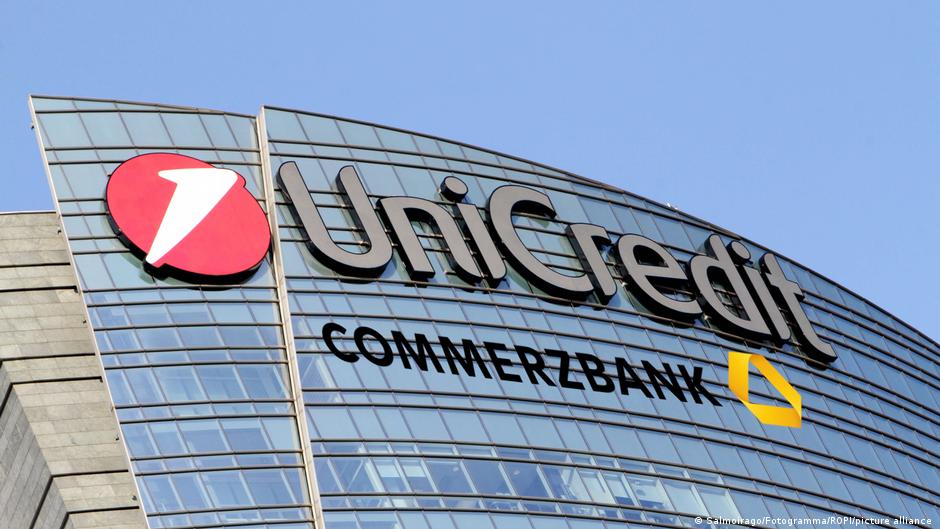
The European Central Bank has approved UniCredit’s acquisition of stakes in Commerzbank, clearing a decisive regulatory hurdle in the Italian lender’s pursuit of Germany’s second-largest commercial bank.
UniCredit representatives announced the ECB’s decision on Thursday, October 15. The authorization allows the Italian group to move beyond the threshold of a 30% holding in Commerzbank and subsequently increase its stake without further limits, according to the dpa news agency. In practical terms, the decision gives UniCredit a route to take over the German lender.
The development carries significance beyond the ownership structure of two major European banks. A combination would reshape competition in digital banking, business payments and technology investment across the eurozone, while placing the integration of cybersecurity systems and customer data among the transaction’s most consequential operational challenges.
The ECB’s decision demonstrates confidence in UniCredit’s “strong position in the European banking sector,” the Italian bank said.
Control could be established by year-end
The transaction is expected to complete supervisory procedures by the end of the current year. By that point, UniCredit is expected to hold half of the voting rights in Commerzbank’s shareholder council and would be able to establish control over the bank, dpa reported.
UniCredit approached Commerzbank shareholders in May with an offer to exchange each share they owned for 0.485 UniCredit shares. Through that proposal, the Italian bank secured access to almost half of the German company’s shares. Completion of the share exchange, however, required authorization from the ECB.
The central bank’s review therefore became a critical stage of the proposed transaction. The regulator’s approval was not considered unexpected, according to dpa, because the ECB has repeatedly signaled support for banking mergers within the eurozone. Such combinations are seen by the regulator as a way to strengthen the European Union’s single internal market.
For financial technology markets, a cross-border bank of greater scale could have more capacity to standardize digital services across national boundaries. Payments infrastructure, mobile and online banking platforms, identity verification and fraud prevention are areas where scale can lower duplication, although integrating large legacy systems can also be technically complex.
Commerzbank’s established position among German corporate clients would give UniCredit a broader base for digital business-banking services. Small and medium-sized companies increasingly depend on banks for online cash management, payment processing and other technology-enabled financial services. The future direction of those offerings will be closely linked to whether Commerzbank retains its existing institutional focus under UniCredit’s control.
German opposition focuses on jobs and corporate banking
Commerzbank’s management and employees, as well as the German authorities, previously opposed UniCredit’s takeover plans. The German government owns slightly more than 13% of Commerzbank and wants to prevent job cuts that could result from post-acquisition optimization measures.
Berlin also wants Commerzbank to remain a publicly listed company headquartered in Frankfurt am Main, according to dpa. The government is seeking assurances that the lender will continue developing services for Germany’s small and medium-sized businesses, a customer segment with an important role in the country’s economy.
Those demands could influence the degree to which UniCredit centralizes technology, operations and product development. Cost-saving programs after bank mergers often focus on overlapping branches and administrative functions, but digital infrastructure can become equally important when lenders operate separate payment engines, customer applications, risk systems and security controls.
Cybersecurity would be a central consideration in any eventual integration. Bringing together customer accounts and banking platforms expands the scope of system migration and requires consistent controls for access, transaction monitoring and data protection. The source announcement did not set out UniCredit’s technology integration plans, leaving the future structure of the combined banks’ digital operations unresolved.
The transaction may also affect Europe’s wider financial sector by reinforcing the ECB’s preference for greater cross-border consolidation. Larger banking groups can compete more broadly for digital customers and spread technology spending across a bigger operation. At the same time, consolidation can reduce the number of independent providers in national banking markets and intensify scrutiny of service continuity, data governance and operational resilience.
The announcement did not detail any plans involving cryptocurrency services. Its clearest digital-economy implications instead lie in conventional banking technology: payments, corporate platforms, online customer services and cybersecurity. For investors in European banks and financial-technology suppliers, the next phase will turn on completion of the supervisory process and on how UniCredit intends to exercise control while responding to Germany’s demands over employment, headquarters and services for domestic businesses.