EU to Fund Ukraine Drones and Missiles as Financing Talks Move to Fore
Brussels says Ukraine will be central to this week's European Council agenda, with defense funding and longer-term support under review.
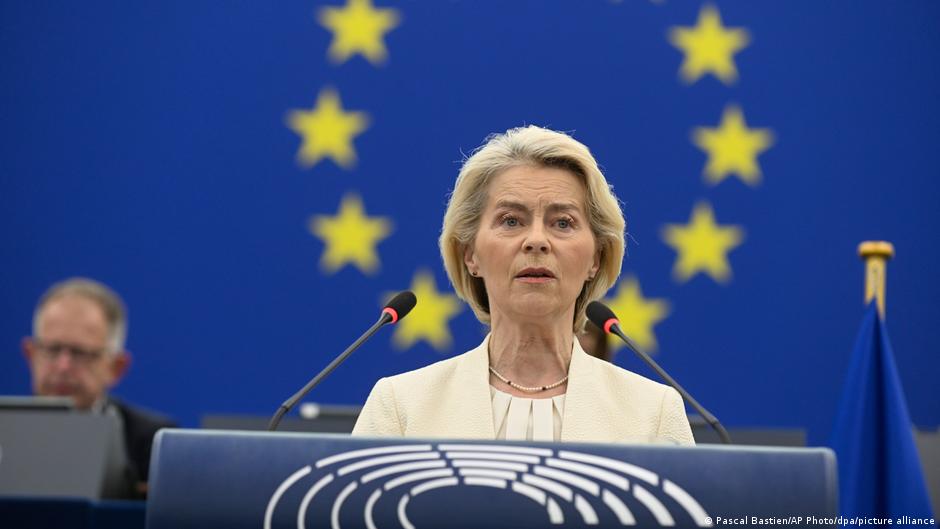
The European Union is preparing to allocate additional funding to Kyiv in mid-October for the purchase of drones and missiles, as Ukraine's defense needs return to the center of the bloc's political and financial agenda. European Commission President Ursula von der Leyen announced the planned support on Sunday, October 11, in a post on X, following a phone call with Ukrainian President Volodymyr Zelensky.
For Europe's digital economy and financial sector, the announcement is another signal that Ukraine-related spending remains a long-duration policy commitment rather than a one-off emergency response. Although the new package is directed at military hardware, the financing will sit alongside broader EU mechanisms that are designed to provide predictable support, protect critical infrastructure and sustain Ukraine's reform path. That mix matters for payments flows, public finance, defense technology suppliers and the wider cyber risk environment across the region.
"This is necessary to strengthen Ukraine's defense and protect its airspace," von der Leyen said.
Von der Leyen did not specify the amount of the new financing or identify its sources. The absence of a figure leaves investors, banks and technology suppliers watching for the details of how the support will be mobilized, whether through existing EU budget instruments, separate member-state contributions or other international funding channels. For markets, the source of financing can shape expectations around sovereign issuance, defense procurement pipelines and the pace at which related contracts move through European supply chains.
Ukraine Funding Returns to the EU Agenda
Officials in Brussels emphasized that the situation in Ukraine will be one of the central topics at this week's European Council meeting. According to von der Leyen, leaders are expected to discuss financing needs for the coming year and ways to mobilize new international support. The meeting will also move forward Ukraine's path toward the EU, with two new clusters of topics to be unlocked in the country's accession negotiations.
The policy agenda carries implications beyond traditional diplomacy. Ukraine's war economy depends heavily on secure cross-border payments, resilient banking rails and the continued functioning of digital public services. EU commitments to stable funding help reduce uncertainty for financial institutions handling aid-related transactions, suppliers involved in reconstruction and companies exposed to Ukrainian infrastructure, including energy and telecommunications networks.
Defense funding for drones and missiles also touches the technology-stock side of the story. The source article does not name any companies or procurement contracts, and no figures were disclosed for the planned allocation. Still, the focus on drones and air defense highlights the continued importance of advanced manufacturing, sensors, software, communications systems and cybersecurity in Europe's security posture. For listed defense and technology firms, investor attention is likely to remain fixed on whether EU support translates into procurement visibility.
Von der Leyen said she fully supported Zelensky's call for a ceasefire that would protect global food supplies and energy infrastructure in Ukraine and Russia. That framing links the conflict directly to global commodity and infrastructure risks. Food exports, power systems and energy assets are not only physical targets; they are also embedded in digital logistics, trading, insurance, payments and monitoring networks. Disruption in those systems can quickly spill into costs for businesses and consumers far beyond the battlefield.
The Commission president also said the war had entered a new and even darker phase. Russia, she said, is waging a protracted war on the battlefield and striking civilians far beyond the front line. That assessment reinforces concerns among European policymakers about long-term resilience, including the protection of airspace, energy infrastructure and public services. For financial institutions, it also underscores the importance of operational continuity, sanctions compliance systems and cybersecurity defenses in a conflict that increasingly intersects with digital networks.
Ukraine Facility Provides the Broader Financial Frame
The new drone and missile funding would come after a separate EU financing step earlier this month. On October 2, the European Commission approved a 2.9 billion euro tranche for Kyiv under the Ukraine Facility, the mechanism created to provide long-term financial assistance to Ukraine.
The Ukraine Facility covers the period from 2024 to 2027 and is designed to allow the EU to provide Ukraine with up to 50 billion euros in what Brussels has described as stable and predictable financial assistance. For the digital economy, predictability is significant. It supports planning by Ukrainian public institutions, helps maintain confidence among service providers and gives banks and payment firms a clearer basis for managing exposure to aid-linked activity.
Payments under the facility are closely linked to Ukraine's implementation of a specific recovery and reform plan, as well as support for democratic mechanisms, the rule of law and human rights, according to the European Commission. Disbursements are made quarterly after verification that the conditions for providing them have been met.
That conditional structure is relevant for fintech and digital banking because reform benchmarks often shape the operating environment for financial services, public procurement, transparency tools and anti-corruption controls. The source does not detail the specific reform measures tied to the latest tranche, but the quarterly verification model indicates that EU support remains linked to institutional performance, not only wartime need.
The immediate headline is defense funding: more EU money for Ukraine to purchase drones and missiles. The broader financial signal is that Brussels is preparing for another year in which Ukraine's security, reconstruction and reform financing remain intertwined. For payment networks, banks, cybersecurity teams and technology investors, the European Council discussions this week may offer the next clues on how the EU intends to fund that commitment and how quickly new support can be mobilized.