Flavio Bolsonaro Leads Brazil Vote as Runoff Raises Market and Fintech Stakes
The senator and son of former President Jair Bolsonaro led the first round with 47.03%, setting up an Oct. 25 runoff against Lula da Silva.
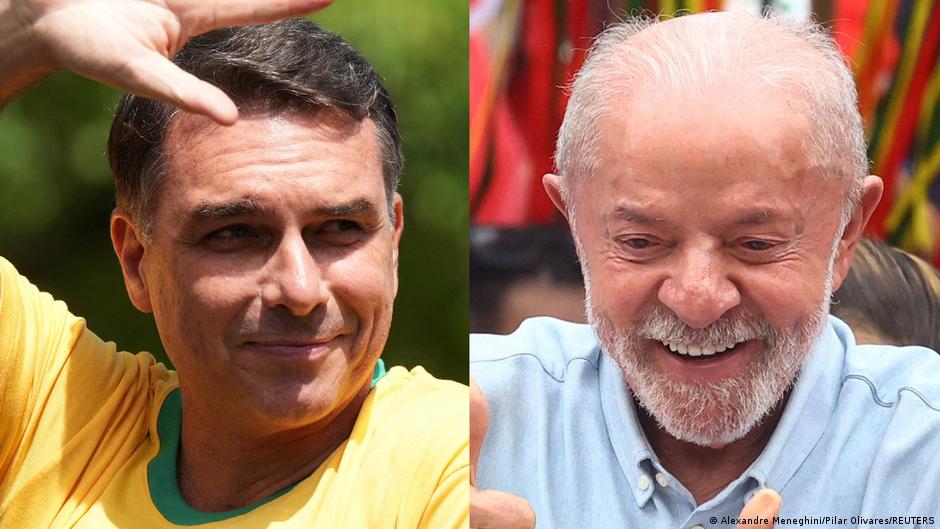
Brazil’s presidential election is headed to a second round after Flavio Bolsonaro, a senator from Rio de Janeiro state and the eldest son of former President Jair Bolsonaro, emerged as the first-round leader with 47.03% of the vote. Incumbent President Luiz Inacio Lula da Silva followed closely with 45.16%, according to data from Brazil’s Central Electoral Commission after 99.99% of ballots were counted overnight into Monday, Oct. 5.
Turnout stood at 78.92%, underscoring the scale of political engagement in Latin America’s largest economy. Because no candidate crossed the 50% threshold required for an outright victory, Brazilians will return to the polls on Oct. 25. Runoffs have become a familiar feature of Brazilian presidential politics: since the start of the 2000s, every presidential election in the country has required a second round.
For investors, banks, payment companies and digital-asset firms, the vote opens a compressed period of political risk assessment. Brazil is one of the world’s most important emerging markets for instant payments, mobile banking, fintech credit, digital wallets and crypto adoption. A close runoff between Lula and Bolsonaro’s son is likely to sharpen debate over regulation, public security, state institutions and the business climate for financial technology.
A Close Race With Financial-Market Implications
The first-round result puts Flavio Bolsonaro in the position of frontrunner, but the margin over Lula remains narrow. That matters for markets because the two candidates carry sharply different political brands, and Brazil’s financial sector has often been sensitive to signals on fiscal policy, institutional stability and regulatory direction.
Brazil’s digital economy has become a central part of daily life, from real-time payments to online banking and investment platforms. Any change in political leadership can affect expectations for bank oversight, fintech licensing, consumer protection, cybersecurity enforcement and the state’s approach to private-sector innovation. Even without new policy announcements, a contested political environment can influence valuations of Brazilian tech stocks, investor appetite for financial-sector exposure and the cost of capital for startups.
The contest also comes against a backdrop of intense political memory. In 2022, Lula defeated Jair Bolsonaro, Flavio Bolsonaro’s father, also in a second-round vote. The elder Bolsonaro refused to recognize the result, and his supporters took to the streets in protest. He was later sentenced to a lengthy prison term for an attempted coup.
Brazil’s Oct. 25 runoff is not only a political contest; it is also a test of institutional confidence in a country central to Latin America’s digital-finance ecosystem.
That history is likely to be watched closely by market participants. For payment networks, banks and crypto platforms, confidence in electoral institutions can be as important as tax or regulatory policy. Political uncertainty can affect currency expectations, equity flows and cross-border investment decisions, particularly in sectors that depend on long-term infrastructure spending and regulatory predictability.
Bolsonaro Family Legal Pressures Remain in Focus
The Bolsonaro family’s legal troubles are a prominent part of the campaign context. In June 2026, Brazil’s Supreme Court sentenced Eduardo Bolsonaro, another son of the former president and also a political figure, to four years and two months in prison. The criminal case stemmed from Eduardo’s calls for the United States to impose sanctions on Brazil over the sentence handed to his father. Eduardo lives in the United States, and the case against him was heard in absentia.
Flavio Bolsonaro, 45, has campaigned in part on promises to fight crime. Yet he has also faced past suspicions of corruption and misappropriation of funds. In 2019, cases were opened against him over alleged payments to nonexistent people listed among his subordinates, as well as suspicious transfers into his bank account.
Those allegations could carry particular weight for financial-sector observers. Brazil’s fintech and digital-banking boom has expanded access to financial services, but it has also increased the importance of anti-fraud controls, transaction monitoring and public trust in financial integrity. A presidential candidate associated with past investigations into payments and transfers may draw additional scrutiny from compliance officers, banking regulators and investors focused on governance risk.
At the same time, Flavio Bolsonaro’s public-security message may resonate with voters concerned about fraud, organized crime and personal safety. In digital finance, crime policy intersects with cybercrime, identity theft, payment scams and illicit money flows. A government elected on a law-and-order platform could seek tougher enforcement in areas that affect banks, crypto exchanges and payment processors, though the source article does not specify any detailed policy proposals from Bolsonaro on those sectors.
Banco Master Probe Adds a Fintech-Relevant Thread
The election is also unfolding as Brazil continues an investigation into Banco Master and its largest shareholder, Daniel Vorcaro, over the alleged fraudulent raising of tens of millions of dollars from state and private funds through promises of high returns that could not be fulfilled. In practical terms, the allegations concern the possible creation of a financial pyramid scheme.
Vorcaro is also known as one of the producers of “Dark Horse,” a favorable biographical film about Jair Bolsonaro. The film’s storyline develops the former president’s claims about “stolen elections.” Media outlets have previously published correspondence between Vorcaro and Flavio Bolsonaro that may indicate the politician knew of the alleged fraudulent scheme and could have helped implement it, including through “cover” in the form of supposedly expensive film production.
For FinPulse readers, the Banco Master thread is especially relevant because it touches several fault lines in Brazil’s financial system: investor protection, fund governance, politically connected finance and the reputational risk that can surround banks operating in fast-growing markets. Allegations involving public and private funds, high-return promises and political proximity are likely to be monitored by both domestic regulators and international investors.
The runoff now gives both Lula and Flavio Bolsonaro less than three weeks to consolidate support. For Brazil’s technology and financial sectors, the immediate question is not only who wins on Oct. 25, but whether the next phase of the campaign strengthens or weakens confidence in the institutions that underpin payments, digital banking, capital markets and the broader digital economy.