German Military Opt-Outs Surge as Draft Reform Tests Digital State Capacity
More than 12,000 people in Germany sought to refuse military service in the first eight months of 2026 as new recruitment questionnaires reshaped the Bundeswehr pipeline.
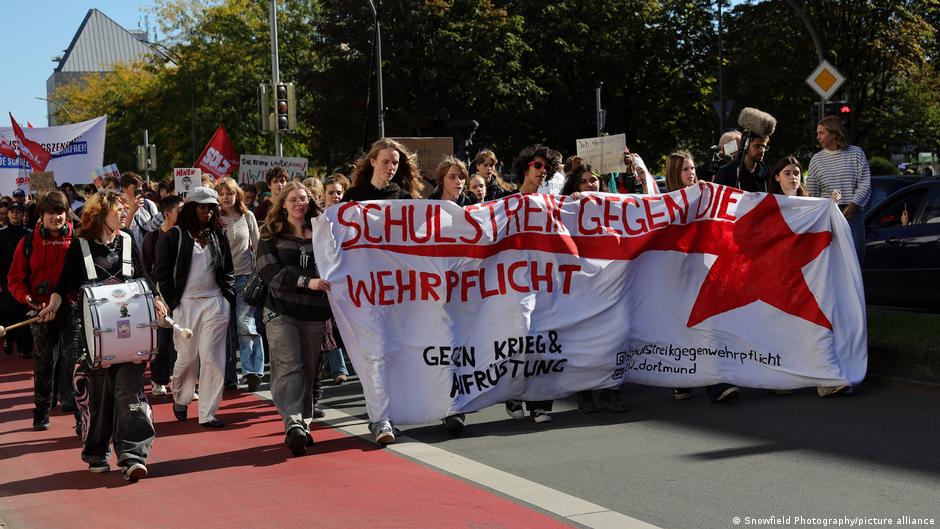
Germany has recorded a sharp rise in declarations of unwillingness to serve in the armed forces, a development that carries implications beyond defense policy and into the country’s digital public administration, workforce planning and cybersecurity posture.
From January through the end of August 2026, at least 12,102 people in Germany submitted statements saying they did not wish to serve in the country’s armed forces. The applications were received by the Federal Office for Family and Civil Society Tasks, or BAFzA, according to a report published on Monday, October 5, by the Funke media group.
The scale of the increase is striking. In all of 2025, German authorities received 3,879 applications refusing military service. That means the number of objectors recorded in only the first eight months of 2026 was more than three times the total for the previous full year.
The immediate driver is partly procedural. Germany’s Defense Ministry has begun sending out questionnaires under a recruitment reform that came into force on January 1. From 2026, 18-year-old men are required to complete a questionnaire asking whether they are willing to join the German armed forces. Young people are allowed to state in advance that they refuse military service.
BAFzA said many applications contain errors and do not meet the requirements for recognizing a refusal as justified, meaning they have to be returned without consideration.
For FinPulse readers, the episode is also a reminder that large-scale state digital workflows can quickly become strategic infrastructure. A questionnaire sent to hundreds of thousands of young people is not only a defense recruitment tool; it is also a data-collection, identity-verification and case-management challenge. The efficiency and security of that process will determine whether Berlin can turn policy intent into operational capacity without creating administrative bottlenecks.
Recruitment Reform Meets Digital Administration
The law behind the reform reflects Germany’s effort to rebuild military readiness after years of suspended compulsory service. Mandatory service was suspended in 2011, but it could be partially reintroduced by a decision of the Bundestag. The planned mechanism, described as a form of “military obligation if necessary,” would be activated if Germany fails to reach the required number of volunteers.
The Defense Ministry’s target is ambitious: by 2035, up to 260,000 people should be serving in the Bundeswehr at the same time. Against that backdrop, even a seemingly bureaucratic process such as distributing and processing questionnaires becomes a core element of national capacity.
The ministry has said that about 378,000 people had been sent questionnaires since the start of 2026. In July alone, around 2,630 people went through the procedure to assess their fitness for service, a figure 35% higher than in the previous month.
Such volumes matter for the digital economy because they require reliable public-sector platforms, secure databases, automated document handling and resilient communication channels. Errors in refusal applications, as flagged by BAFzA, suggest that user experience and process design are not secondary details. If forms are difficult to complete correctly, public institutions face higher processing costs, slower decisions and greater public frustration.
The same lessons apply to digital banking, payments compliance and fintech onboarding. Whether a bank is verifying a customer or a ministry is assessing service eligibility, the underlying challenge is similar: collecting sensitive personal data at scale while minimizing errors, fraud risks and manual review.
Cybersecurity and Labor Market Signals
The rise in opt-out declarations comes amid what the source article describes as a tense security environment. That context heightens the importance of cybersecurity around recruitment systems. Personal information about hundreds of thousands of young citizens, their eligibility, preferences and potential service status would be a valuable target for hostile actors, disinformation campaigns or criminal groups.
For technology vendors, this creates a market signal. Governments expanding defense and civil-service systems are likely to need secure cloud infrastructure, identity tools, encrypted communications, analytics and workflow automation. European technology and cybersecurity firms may find increased demand from public-sector clients as defense readiness becomes more digitally administered.
The Bundeswehr has also widened its search for recruits in recent years. Its outreach has included a stand at Gamescom in Cologne, one of the world’s largest video-game trade fairs. The presence of the military at a major gaming event shows how recruitment increasingly overlaps with digital culture, online communities and technology-driven talent pools.
At the same time, the reform has triggered resistance. German school students have criticized the possible return of a “military obligation if necessary,” and large protests took place in several German cities in September. For policymakers, this creates a dual challenge: expanding recruitment while maintaining trust among digitally native citizens who expect transparent, user-friendly and secure public services.
Bundeswehr Numbers Continue to Rise
The surge in refusal declarations does not mean Germany’s recruitment effort has stalled. In late July 2026, the German Defense Ministry reported that the Bundeswehr had reached its highest troop level in 13 years, with 186,700 service members. Compared with July 2025, that represented growth of more than 2%, or 3,700 personnel.
By that point, under the new recruitment system, about 12,100 volunteers and short-term contract service members were already serving in the Bundeswehr. That was around 6% more than a year earlier.
The ministry also recorded a significant increase in applications and admissions for contract military service. In July 2026, 47,300 people submitted applications for contract service, 26% more than in the same month of the previous year. As of the end of July, the number of recruits stood at 15,400, up 12% compared with 2025.
These figures present a mixed but important picture for markets watching Europe’s security shift. Germany is seeing both stronger recruitment momentum and a surge in formal refusals. That tension points to a larger transformation: defense policy is becoming a data-heavy, digitally mediated public-sector process with consequences for technology budgets, cybersecurity demand and the broader allocation of young labor in Europe’s largest economy.