Hungarian Premier Viktor Orban Declines Parliamentary Mandate Amid Political Transition
Orban steps back from parliamentary role to reorganize his party as Hungary’s new government signals policy shifts impacting EU relations and economic ties.
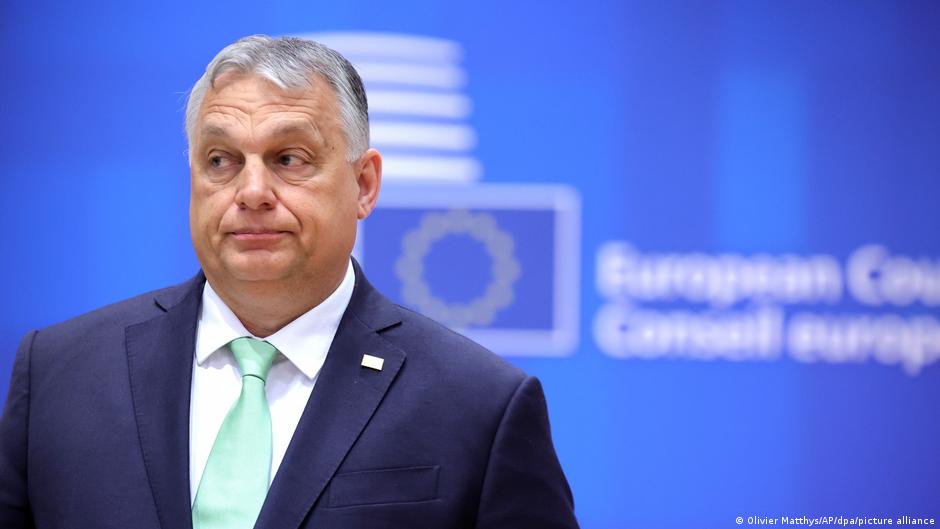
Viktor Orban, the outgoing Prime Minister of Hungary and longtime leader of the Fidesz-Christian Democratic People's Party (KDNP) coalition, announced that he will not take up his parliamentary seat following his party's defeat in the recent elections. This decision marks a significant shift in Hungary's political landscape, with implications for the country's economic and geopolitical orientation.
Orban's Withdrawal and Party Leadership Changes
In a statement released on April 25, Orban declared that he is renouncing the parliamentary mandate he received as the lead candidate of Fidesz-KDNP. He emphasized that the mandate effectively belongs to the party rather than to him personally, and he intends to focus on reorganizing the national movement outside the parliament.
"The mandate I received as the main candidate of the Fidesz-KDNP coalition is, in effect, the party's mandate. Therefore, I have decided to give it up. I am needed now not in parliament, but to rebuild the national movement," Orban said.
Orban confirmed that Gergely Gulyás, former head of the Prime Minister's Office, will succeed him as the parliamentary leader of the Fidesz-KDNP faction. Meanwhile, Orban plans to remain the party chairman, with the question of his leadership to be discussed at the party congress in June.
New Government Promises Policy Reversals Affecting EU Relations and Economic Policy
The election victory of the opposition party Tisza, led by Péter Magyar, sets the stage for Hungary to undergo key political and economic policy changes. Magyar is expected to officially assume the premiership on May 9 and has pledged to reverse several of Orban's decisions that had strained Hungary's relations with the European Union and other international partners.
Notably, Magyar intends to halt Hungary's withdrawal from the International Criminal Court (ICC), a process initiated by Orban after the ICC issued an arrest warrant for Israeli Prime Minister Benjamin Netanyahu, a close ally of Orban. Despite the warrant, Orban hosted Netanyahu in Hungary in April 2025, signaling Budapest's refusal to comply with the ICC demand and escalating tensions with the EU.
In terms of economic policy and EU relations, the new government plans to end Hungary's veto on the allocation of a €90 billion EU credit package to Ukraine and lift sanctions against Russia. Media reports indicate that Hungary reversed its blockade after Ukraine resumed the flow of Russian oil through the Druzhba pipeline to Hungary. However, Magyar has stated that Hungary will not participate directly in providing funds to Ukraine.
Geopolitical and Economic Implications for Fintech and Digital Economy
Orban's tenure was marked by a pragmatic, if controversial, approach to international relations, including close ties with Russia and a resistance to certain EU policies. The shift in leadership could impact Hungary's digital economy and fintech sectors, particularly in areas like cross-border payments, EU funding for digital projects, and cybersecurity cooperation.
With Hungary moving towards greater alignment with EU mandates and relaxing its resistance to sanctions on Russia, there may be increased opportunities for integration within the European digital single market. This could lead to enhanced funding for digital infrastructure, financial technology innovation, and improved cybersecurity frameworks aligned with EU standards.
However, the political transition also introduces uncertainty for investors in Hungary's tech and financial sectors, as policy reversals may affect existing agreements and international partnerships, especially those linked to Russia. The lifting of the veto on EU financial aid could also direct new capital flows into Hungary's economy, potentially fostering growth in digital banking and fintech startups.
In conclusion, Viktor Orban's withdrawal from parliamentary duties signals a new chapter for Hungary's political and economic direction. The incoming government under Péter Magyar is poised to reorient Hungary’s policies closer to EU frameworks, with significant implications for the country's digital economy, fintech innovation, and cybersecurity cooperation within the region.