Kyiv Mayor Urges Temporary Departures as Russian Strikes Hit Critical Systems
Vitaliy Klitschko warned that intensified Russian attacks on Kyiv could disrupt water, heating, transport and communications infrastructure.
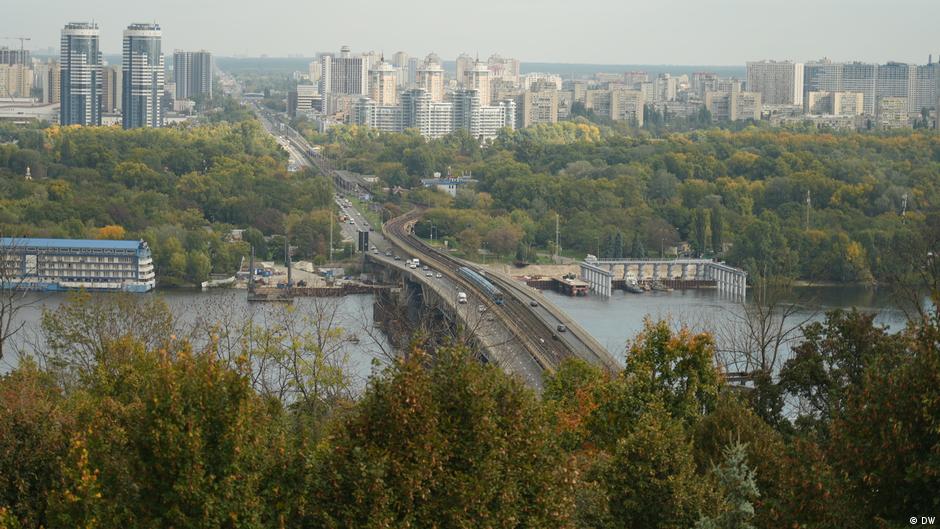
Kyiv Mayor Vitaliy Klitschko has advised residents of the Ukrainian capital who have friends or relatives elsewhere in Ukraine to consider leaving the city temporarily, as intensified Russian attacks raise the risk of severe disruption to essential urban systems.
In an interview with AFP published on Wednesday, October 8, Klitschko said the mounting strikes had changed the immediate calculation for civilians in Kyiv. The warning carries particular weight for Ukraine’s digital economy and financial infrastructure, where continuity of electricity, telecommunications, transport links and basic municipal services underpins payments, banking access, cybersecurity operations and business resilience.
“Today it is a matter of survival,” Klitschko said, describing daily reports of damaged buildings, wounded civilians and deaths as shelling of the city intensifies.
The mayor said he was not calling for a full evacuation of Kyiv. Instead, he framed temporary relocation as an option for residents who have somewhere safe to go inside Ukraine. He warned that a large-scale crisis could emerge if Russian attacks disrupt the city’s water supply system.
Klitschko also said that a mass departure from Kyiv would serve Moscow’s aims. “That is Putin’s goal,” he said. “The best scenario for him is for all of us to leave and give him our empty cities and the whole country.”
Critical infrastructure becomes the pressure point
The latest warnings come as Russia has intensified attacks on Kyiv since September. In early October, Russian forces began striking bridges across the Dnipro River that connect the right-bank and left-bank parts of the capital. Those bridges had not previously been attacked. Targets have also included energy and communications facilities, as well as railway infrastructure.
For Ukraine’s financial and technology sectors, those categories of infrastructure are not peripheral. Power supply, mobile networks, broadband connectivity, rail logistics and cross-city transport routes all support the daily functioning of digital banking, card payments, cash distribution, data centers, merchant acquiring, cybersecurity teams and remote work. Even when core banking systems remain technically operational, local outages can prevent consumers and businesses from accessing them reliably.
The mayor said Kyiv authorities are building reserve heating systems ahead of winter and stockpiling fuel, food and drinking water. Those preparations reflect the broader challenge facing Ukrainian cities: sustaining urban life and economic activity while strikes focus on the systems that make dense, digitally connected cities work.
Klitschko cautioned, however, that preparation has limits if air defenses fail to intercept incoming attacks. “If air defense does not work, we could find ourselves in a bad scenario,” he said.
Digital economy risks rise with winter approaching
The warning from Kyiv’s mayor lands at a sensitive moment for Ukraine’s digital economy. Since the start of Russia’s full-scale war, Ukraine has relied heavily on digital public services, online banking, electronic payments, crypto fundraising channels, distributed technology teams and cyber defense capabilities. Those systems have helped households, businesses and the state maintain continuity under pressure.
But intensified strikes on energy and communications assets can create cascading risks. Power outages can interrupt point-of-sale terminals, ATMs, branch operations and home internet access. Communications damage can weaken mobile banking access and emergency coordination. Rail and bridge strikes can complicate the movement of people, repair crews, equipment, cash logistics and supplies. Cybersecurity teams may also face more difficult operating conditions if physical infrastructure disruptions coincide with digital attacks.
The financial impact is not limited to banks. Merchants depend on electronic payments and stable connectivity. Technology companies rely on power and networks to keep staff online. Crypto and digital asset activity, while decentralized in design, still depends on internet access, devices and exchanges or wallet services reachable by users. For investors watching regional tech exposure, the key risk is not only direct physical damage but the gradual increase in operational friction across the economy.
On October 3, Ukrainian President Volodymyr Zelensky said Russia had adopted a new strategy of airstrikes aimed at forcing Ukrainians to leave Kyiv and other major cities. Klitschko’s comments align with that assessment, presenting the attacks as an attempt to pressure civilian life by targeting the infrastructure that supports it.
For Kyiv, the immediate policy challenge is to keep essential systems functioning through winter while avoiding the strategic outcome the mayor says Moscow wants: empty cities. For Ukraine’s banks, payment networks, technology firms and cybersecurity operators, the same challenge translates into redundancy, backup power, distributed staffing and continuity planning.
Klitschko’s message was therefore both a civil defense warning and a signal to the broader economy. Residents with alternatives may reduce personal risk by temporarily relocating, but the city is not being abandoned. Kyiv is preparing for winter under intensified attack, and its ability to maintain water, heat, communications and transport will shape not only civilian resilience but also the durability of Ukraine’s digital and financial systems.