Moldova Drone Incursions Raise Risks for Digital and Financial Infrastructure
Five airspace violations in one day underscore operational and cybersecurity risks facing Moldova’s expanding digital economy.
Drones violated Moldova’s airspace five times on Friday, October 16, and one aircraft crashed and exploded, according to the country’s Defense Ministry. The incidents add a physical-security dimension to the risks confronting Moldova’s digital economy, including the resilience of payment systems, online banking, telecommunications and other technology-dependent services.
The Moldovan Defense Ministry said a drone entered the country’s airspace illegally at 4:22 p.m. local time. At 5:06 p.m., authorities announced that the aircraft had fallen and exploded near the village of Novye Kodryany, about 50 kilometers from the Ukrainian border.
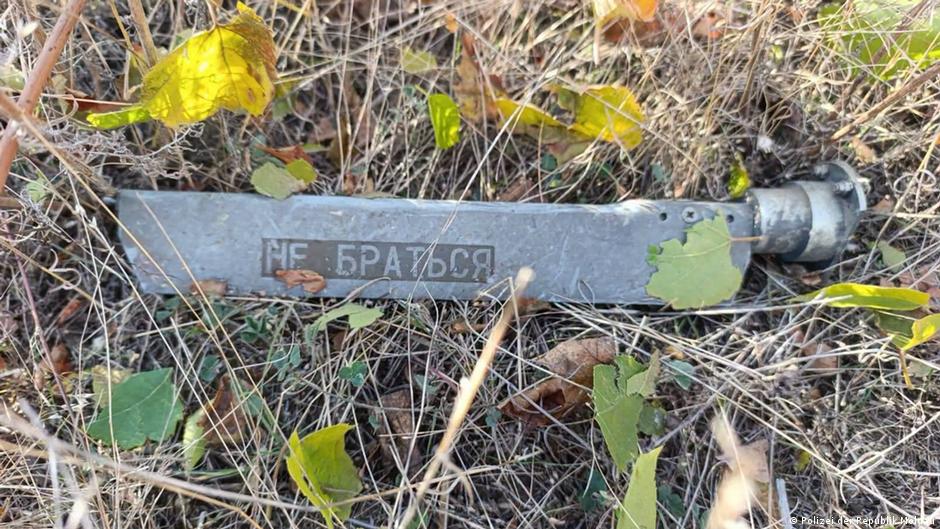
Moldovan police subsequently published a photograph of wreckage from the fallen drone on their Facebook page. No casualties or injuries were reported in connection with the incident described by the authorities.
Infrastructure resilience moves up the agenda
Although the official statements focused on territorial security and civilian safety, repeated aerial incursions may also sharpen attention on the continuity of Moldova’s critical digital infrastructure. Banks, payment processors, mobile networks, data centers and government platforms depend on reliable electricity and communications, making operational resilience particularly important during periods of heightened regional instability.
For financial institutions and fintech companies, the immediate issue is not a reported disruption to payments or banking services—none was cited by Moldovan authorities—but the growing need to plan for overlapping physical and cyber risks. A nearby explosion, power interruption or telecommunications outage can affect access to mobile banking, merchant payment terminals and cash-distribution networks even when the financial system itself is not directly targeted.
The incidents may therefore reinforce the case for redundant communications, backup power, geographically distributed data infrastructure and tested business-continuity procedures. They also highlight the value of coordinated incident reporting between defense agencies, telecommunications operators, banks and cybersecurity teams, especially when incomplete information can generate fraud attempts or public confusion.
Moldova’s Foreign Ministry said such incidents “endanger the safety of citizens,” among other consequences.
The ministry “strongly condemned” the repeated violations of Moldovan airspace. It also called on Russia to “immediately cease attacks on Ukraine and comply with international law,” including respect for Moldova’s sovereignty and territorial integrity.
Incidents accumulate near the Ukrainian border
Several hours before the drone fell, the Defense Ministry said Moldova’s airspace had been violated seven times since October 10 “against the background of attacks by the Russian Federation on Ukraine.” Six of those cases involved drone flights: two occurred on October 15 and another four during the night of October 16.
A separate incident took place on October 10, when a drone carrying explosives fell in the locality of Geamana, also approximately 50 kilometers from the Ukrainian border.
The Defense Ministry said Moldova has recorded 64 airspace violations since the beginning of the year. Sixteen of them, including the October 16 incidents, occurred during October. Since 2022, when Russia began its full-scale war against Ukraine, the total number of recorded violations has reached 101.
On the morning of October 3, three missiles and two drones entered Moldovan airspace. All five fell inside the country, with no deaths or injuries reported. Moldova’s Defense Ministry said that episode resulted from Russia’s large-scale strikes on Ukraine.
Cybersecurity and market implications
Repeated security alerts can create opportunities for cybercriminals to exploit public anxiety through false emergency notices, phishing messages, fraudulent donation requests or impersonation of government agencies and financial institutions. Digital banks and payment companies operating in Moldova may need to monitor for social-engineering campaigns linked to breaking news while ensuring that legitimate customer communications remain clear and verifiable.
Crypto services can face similar exposure because transfers are difficult to reverse and users may respond quickly to purported emergencies. Exchanges, wallet providers and compliance teams may therefore treat regional security incidents as periods of elevated fraud and sanctions-monitoring risk, even when no direct connection to digital assets has been established.
For investors in banks, telecom operators and technology companies with exposure to Moldova or the wider region, the incidents underscore geopolitical risk rather than a documented financial-market shock. The source statements did not report outages, payment failures, cyberattacks or movements in technology stocks. Still, the frequency of airspace violations could influence assessments of infrastructure spending, insurance costs and operational safeguards.
Moldova’s latest incident ultimately illustrates how physical security and digital resilience increasingly overlap. As financial activity moves toward mobile platforms and real-time payments, the ability to maintain electricity, connectivity, secure communications and public trust becomes central to economic continuity during regional emergencies.