North Korean Missile Launch Raises Market-Risk Watch Across Northeast Asia
South Korea said North Korea fired at least one ballistic missile toward the Sea of Japan after Seoul accused Pyongyang of violating the armistice.
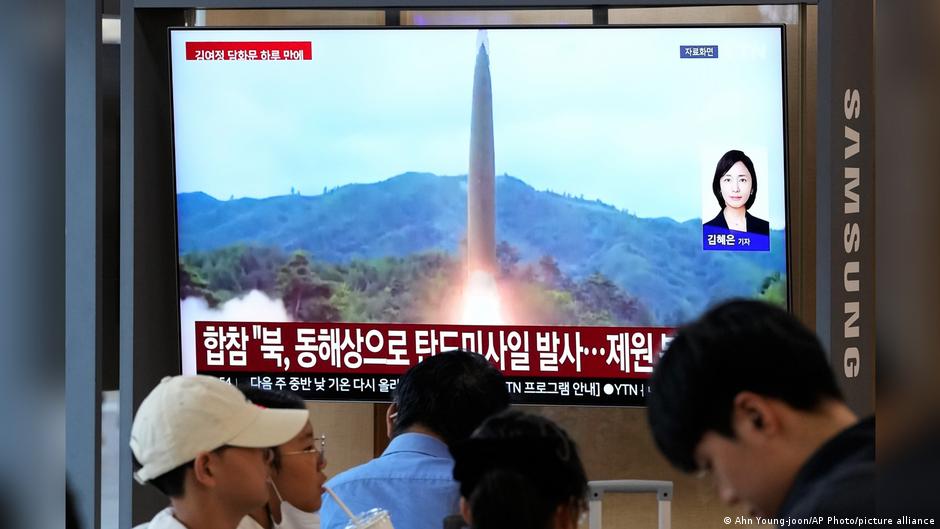
North Korea fired at least one ballistic missile toward the Sea of Japan, South Korea’s military said on Saturday, October 3, adding a fresh geopolitical risk signal for financial markets and digital-economy operators across Northeast Asia.
The announcement came from South Korea’s Joint Chiefs of Staff, which said Seoul, Washington and Tokyo were maintaining a high level of military readiness while closely sharing information on North Korean ballistic missiles. The launch followed a separate incident in the inter-Korean border area on September 21, when an explosion injured three South Korean service members.
For fintech firms, digital banks, payments processors and crypto platforms with exposure to South Korea and Japan, the immediate significance is not only military. Episodes of heightened tension on the Korean Peninsula can sharpen operational-risk planning, increase attention to cyber resilience and influence investor sentiment toward technology and financial stocks in the region.
“South Korea, the United States and Japan are maintaining a high level of combat readiness, while maintaining close information exchange on North Korean ballistic missiles,” Seoul said.
Payments and Digital Banking Face a Risk-Sentiment Test
The missile launch adds to a tense backdrop for one of Asia’s most digitally advanced financial corridors. South Korea and Japan are both major hubs for electronic payments, mobile banking, securities trading and digital-asset activity. While the source report did not describe any disruption to financial infrastructure, the security environment matters because payments and digital banking depend on uninterrupted connectivity, confidence and cross-border coordination.
In practical terms, banks, card networks, remittance providers and payment gateways operating in the region may treat the development as another reminder to review continuity procedures. That includes monitoring settlement systems, customer-facing applications, incident-response channels and vendor dependencies. The underlying factual event is a military one, but the risk map extends into digital finance because modern financial services are deeply networked.
South Korea’s military statement emphasized coordination among South Korea, the United States and Japan. That trilateral information-sharing posture is relevant to markets because the same three economies are closely linked through technology supply chains, digital services and capital flows. A missile launch toward the Sea of Japan can therefore be read by investors as a regional risk event, even when there is no immediate evidence of damage or economic disruption.
The launch also arrived after Seoul accused Pyongyang of violating the armistice following the September 21 border explosion. According to AFP, citing South Korean military sources, Seoul believes the incident resulted from the detonation of North Korean anti-personnel mines. South Korean Defense Minister Shin Won-sik accused Pyongyang of violating the armistice and announced an intention to take response measures. South Korea’s Joint Chiefs of Staff demanded an apology from North Korea.
Cybersecurity Concerns Move Back Into Focus
North Korea rejected the accusations over the border explosion. Kim Yo Jong, sister of North Korean leader Kim Jong Un, called the South Korean assertion “extremely low and dirty,” according to North Korea’s state news agency KCNA.
The exchange underscores the communications volatility that often accompanies security incidents on the peninsula. For financial institutions and technology companies, such volatility can heighten scrutiny of cybersecurity posture, even where a specific cyber incident has not been reported in connection with the missile launch. The digital economy’s exposure lies in its reliance on authentication systems, cloud infrastructure, customer support operations, real-time payments and online trading platforms.
Fintech and crypto companies are especially sensitive to confidence shocks. Digital-asset markets trade continuously, and platforms serving customers in Asia must be prepared for sudden surges in activity, risk-off behavior or customer demand for withdrawals and transfers. Again, the source report does not state that crypto markets moved or that exchanges were affected. The relevant point is that geopolitical escalation can change the operating environment for firms whose services run around the clock.
Technology stocks may also face renewed attention if investors reassess regional risk. South Korea and Japan host large technology, electronics, financial-services and platform companies. Even when military incidents remain contained, markets often evaluate the potential for wider disruption, especially in sectors tied to chips, payments, telecoms, cloud services and consumer finance. The latest launch adds one more data point to that broader risk calculus.
The legal and military backdrop remains unresolved. South Korea and North Korea are formally still at war because the 1950-1953 Korean War ended with an armistice agreement rather than a peace treaty. The two countries are separated by the Demilitarized Zone. Through the middle of that mined strip runs the military demarcation line, part of one of the world’s most fortified and heavily mined borders.
That status matters for financial readers because it turns each new incident into a potential trigger for risk-management reviews. The peninsula’s unresolved security architecture is not a temporary variable; it is a standing condition under which banks, payment companies, investors and technology firms operate. The missile launch toward the Sea of Japan, coming after accusations over the border explosion, reinforces that geopolitical risk remains embedded in Northeast Asia’s digital economy.
For now, the confirmed facts remain limited: South Korea says North Korea launched at least one ballistic missile; Seoul, Washington and Tokyo are maintaining readiness and information-sharing; South Korea has linked an earlier border explosion to North Korean mines; Pyongyang denies the allegation; and the inter-Korean border remains among the most militarized in the world. For markets and fintech operators, the immediate task is to monitor whether the incident remains a contained military signal or develops into a broader regional risk event.